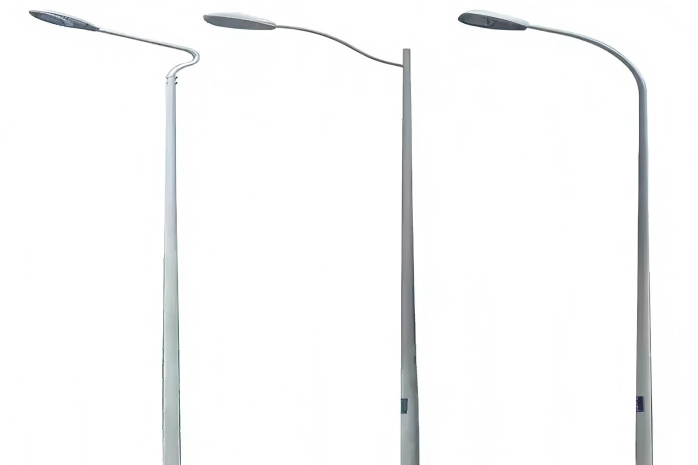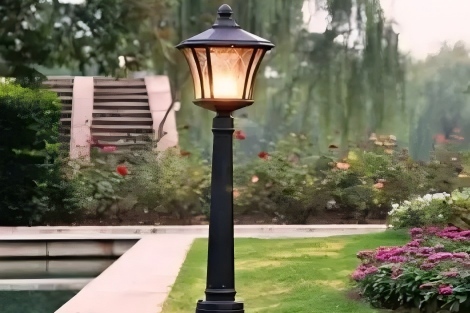


Imagine this: your lighting project is ready to start, and you have one choice left. Should you order square or round poles? The answer depends on your site, your fixtures, and your budget. Round steel poles usually work better in windy places and weigh less. Square steel poles make it easier to mount fixtures and give a clean, modern look. Neither shape is best everywhere. A lighting pole works best when its design fits the job. Wind zone, arm setup, and soil conditions all affect the final choice. This comparison will help you pick the right pole for your next project.
Key Takeaways
- Round poles handle wind better and weigh less, so they work well in windy areas.
- Square poles make it easier to attach fixtures and give commercial spaces a modern look.
- Think about wind zone, fixture needs, and budget to pick the right pole shape.
- Round tapered poles work best in windy coastal spots; square steel poles fit parking lots.
- Morelux offers custom poles and engineering help for wind load and structural needs.
What Are the Main Differences Between Square and Round Light Poles?
The main difference between these two pole types is their shape. A square pole has four flat sides and sharp corners. A round pole has a smooth, curved surface with no edges. This shape difference affects everything from how the pole handles wind to how you attach a fixture.
Both shapes come in several versions. You can find tapered, straight, and stepped types for each one. A tapered steel pole is wider at the base and narrower at the top. A straight pole stays the same width from bottom to top. A stepped pole changes diameter in clear sections. These versions let engineers fine-tune performance for specific site conditions.
As a custom manufacturer, Morelux offers steel pole structures. Various custom shapes are available to suit project needs. This range means you are not limited to just two options. The right shape depends on your project requirements.
The choice between a square and round lighting pole also affects how a site looks. Square poles give a modern, architectural look. Their straight lines suit commercial spaces and parking lots. Round poles offer a more traditional appearance. They blend well into roadways and residential areas. Neither look is inherently better. The decision comes down to the design intent of your project.
How Do Square and Round Light Poles Compare in Strength?
Strength is a key factor when you pick a lighting pole. The shape of the pole affects how it handles stress, wind, and the weight of fixtures. Square and round poles each have their own structural features. Knowing these differences helps engineers and project managers make smart choices.
How Pole Shape Affects Stress Distribution and Structural Strength
A square pole has four flat sides joined by sharp corners. These corners act like stiff points. They resist bending and twisting forces better than a smooth curve. This stiffness makes square poles good for taller setups. A square pole can hold heavier loads at greater heights without bending too much.
A round pole spreads stress evenly across its curved surface. No single point carries more load than another. This even spread lets round poles use less material while keeping enough strength. The result is a lighter pole that uses material more efficiently. Round poles work well when weight matters, like rooftop setups or sites with soft soil.
The trade-off is clear. Square poles give more stiffness for tough height and load needs. Round poles save weight and use material better. Neither shape is always stronger. The right pick depends on the specific load and height needs of the project.
Why Diameter, Wall Thickness, and Material Also Affect Pole Strength
Shape alone does not decide pole strength. Diameter, wall thickness, and material grade matter just as much. A larger diameter boosts the pole’s resistance to bending. A thicker wall adds stiffness and load capacity. Higher-grade steel gives greater yield strength.
These factors mix with shape in complex ways. A round pole with a large diameter and thick wall can beat a smaller square pole. A square pole made from high-strength steel can match a larger round pole. Engineers must weigh all variables together.
As a manufacturer, Morelux provides structural calculations and design drawings. This engineering support makes sure every pole meets the specific strength needs of its use. The company’s team of professionals checks each project to confirm that the chosen pole shape, diameter, wall thickness, and material grade work together safely. This careful approach gives project managers confidence that their lighting pole installations will perform reliably for years.
Which Light Pole Shape Performs Better Under Wind Loads?
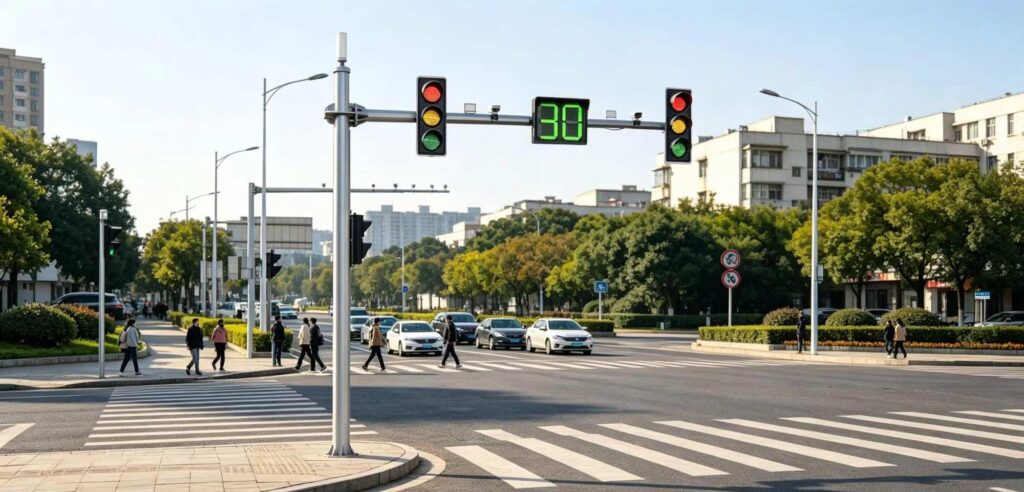
How Pole Shape Influences Wind Resistance and Structural Performance
Round poles let wind flow around them more easily than square poles. Their curved surface creates less resistance. Square poles have flat sides and sharp corners. These shapes give wind more area to push against. This difference really matters in coastal or open areas.
The table below shows how each shape handles wind loads.
| Aspect | Round Light Poles | Square Light Poles |
|---|---|---|
| Aerodynamics | Wind flows around the pole smoothly | More surface area catches wind |
| Stress distribution | Stress spreads evenly across the pole | Stress builds up at 90-degree corners |
| Base stress under high winds | Stress spreads evenly at the base | Corners of the base take heavy stress |
| Torsional strength | Handles twisting forces better | Twisting is a real problem |
| Weight efficiency | About 20% lighter for the same size | Heavier for the same size |
| Vibration tendency | Less likely to vibrate from wind | More likely to vibrate |
| High-wind suitability | Round tapered poles resist wind best | Standard square is the weakest choice |
Coastal cities can get wind speeds up to 110 MPH. A round tapered lighting pole handles these conditions much better than a standard square pole.
Vortex shedding adds another problem. Steady winds create swirling air pockets around a pole. Poles with the same diameter all the way up, both round and square, vibrate the most. Tapered poles break up these swirls because their diameter keeps changing.
Square poles can crack from fatigue stress because stress builds up at the corners, especially where the base plate and hand hole connect.
The ranking for wind-induced vibration from highest to lowest is:
- Straight square poles — vibrate the most
- Straight round poles — vibrate the second most
- Round tapered poles — vibrate less
- Round tapered embedded poles — vibrate the least
Why Wind Load Calculations Matter More Than Pole Shape Alone
Pole shape matters, but it is only one factor. Wind load calculations combine height, diameter, wall thickness, material grade, and arm setup. A larger round pole can beat a smaller square pole. A tapered square pole works better than a standard square pole.
Professional analysis looks at all these factors. Morelux offers wind load analysis as part of its engineering support for custom and wholesale lighting pole projects. This analysis uses wind speeds and terrain conditions for each site. It helps buyers pick the right pole shape and size for each location.
The engineering team provides structural calculations and design drawings tested to BS EN, AASHTO, AS/NZS, and MS standards. For project managers and contractors, this support takes out the guesswork. A custom pole design backed by proper wind load analysis ensures reliable long-term performance.
How Does Pole Shape Affect Mounting and Fixture Installation?
The shape of a pole decides how easily you can attach fixtures. Square poles have four flat sides. These flat surfaces give crews a stable base for mounting equipment. Round poles have a curved surface. This curve makes some mounting tasks harder.
How Different Pole Shapes Affect Brackets, Arms, and Fixture Mounting
Square poles are ideal for mounting multiple fixtures because their flat sides provide ample mounting surfaces. A crew can bolt brackets, arms, and control boxes directly to the flat face. This direct attachment removes the need for special clamps or adapters. Installation time drops. Maintenance also becomes simpler.
The flat sides of a square pole support several fixtures at different heights and angles. This flexibility helps complex lighting schemes. A parking lot may need lights aimed in four directions. A square pole handles this setup with ease.
Round poles need curved brackets or clamps that match the pole surface. These parts cost more and take longer to install. However, round poles still work well for single-arm setups. A round pole with one arm looks clean and performs well.
As a manufacturer, Morelux offers custom arm configurations. A supplier can match the arm setup to the pole shape and the project needs. This support helps buyers avoid mounting problems before they start.
What to Consider When Matching Fixtures With Different Pole Shapes
Several factors matter when you pair fixtures with poles. First, check the mounting surface. A flat side accepts standard brackets. A curved side needs a curved adapter. Second, think about the number of fixtures. A square pole supports multiple fixtures on one pole with ease. A round pole may need extra hardware for the same job.
Third, consider the fixture weight and arm length. A long arm puts more stress on the mounting point. A flat surface spreads this stress across a wider area. Fourth, review the lighting plan. A Lighting Pole must hold each fixture at the right height and angle. The wrong shape can limit your options.
Morelux provides design drawings for each project. This support helps contractors pick the right pole and arm combination. The result is a clean install and reliable performance.
Which Light Pole Shape Is Best for Different Applications?
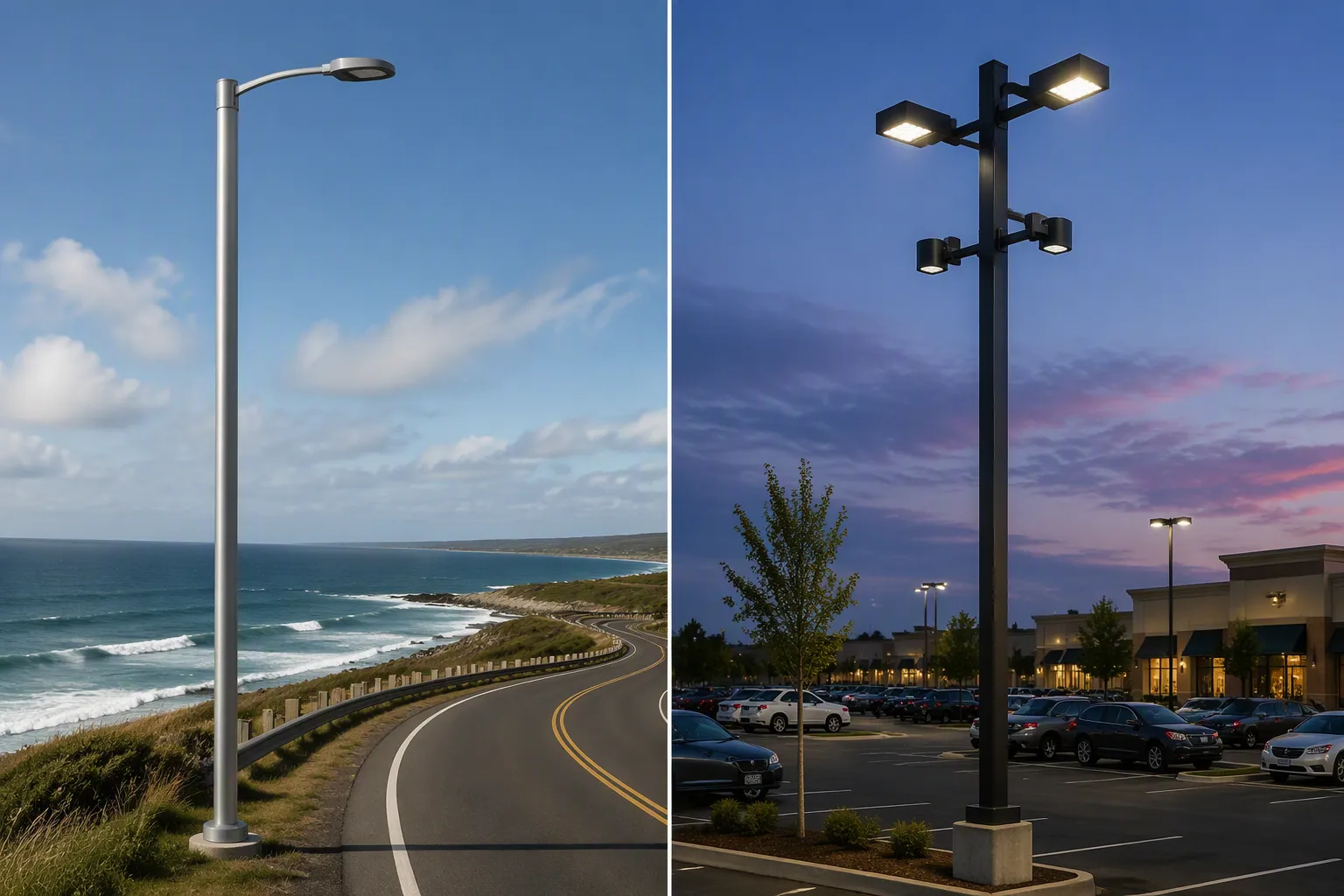
The right light pole shape depends on the application, mounting requirements, structural loads, and installation environment. Round and square steel light poles each suit different project needs, so the selection should be based on the complete lighting design rather than shape alone.
When Round Light Poles Are a Better Choice for Outdoor Lighting
Round light poles are commonly used for roadways, highways, streets, parking areas, and general outdoor lighting. Their smooth profile provides a practical solution for projects where wind exposure, pole height, and overall structural performance are important.
Round steel light poles can also accommodate different arm and fixture configurations. MORELUX manufactures customized round poles with dimensions and structural specifications based on fixture loads, wind conditions, and project requirements.
When Square Light Poles Are a Better Choice for Commercial Projects
Square light poles are well suited to parking lots, commercial properties, pathways, and other areas requiring straightforward fixture mounting. Their flat surfaces can simplify the installation of brackets, arms, and accessories.
MORELUX provides square steel light poles with customized heights, dimensions, mounting configurations, and finishes. This allows commercial lighting projects to select a pole configuration that fits both the lighting layout and site requirements.
How Application Requirements Determine the Right Pole Shape
Pole shape should be selected together with pole height, fixture quantity, wind load, mounting method, and aesthetic requirements. A single-fixture roadway project may require a different configuration from a commercial site with multiple luminaires.
MORELUX supports round, square, tapered, octagonal, and other steel pole configurations. Its engineering team can evaluate the project’s structural and mounting requirements to develop a suitable light pole design.
How Do Square and Round Light Poles Compare in Cost and Maintenance?
Cost often decides which pole shape a project uses. Square straight poles may have different cost implications than round poles due to design complexity and material needs. Square poles may require more steel to reach the same stiffness. Their flat sides and sharp corners also may require extra welding and finishing work. Round poles use material in a better way. Their curved shape spreads stress evenly, so they can use less steel for the same strength. This can affect manufacturing and shipping costs.
How Manufacturing and Installation Affect Light Pole Project Costs
Manufacturing costs depend on pole shape, height, and wall thickness. Different shapes require different manufacturing processes, which can affect labor and material costs.
Installation costs also differ. Square poles make fixture mounting easier. Crews can bolt brackets right onto flat surfaces. This saves time on site. Round poles need curved adapters for some fixtures. These parts add cost and installation time. However, round poles weigh less. Lighter poles need smaller cranes and fewer workers to install. This can make up for the higher hardware costs.
As a manufacturer, Morelux offers OEM and customized production based on project requirements. Buyers can specify pole height, material thickness, base plate design, surface treatment, and other specifications. This flexibility helps project managers control costs. A supplier can match the pole to the exact needs of each site. Wholesale orders benefit from this approach because buyers get the right pole without paying for features they do not need.
How Coatings, Corrosion, and Maintenance Affect Long-Term Value
Surface treatment affects long-term costs. Both square and round poles need protection from rust and weather. Galvanized coatings and powder coated finishes extend pole life. The shape of the pole may affect coating application, requiring different techniques.
The initial price of a Lighting Pole is only part of the total cost. Project managers should weigh purchase price, installation labor, and long-term maintenance together. A cheaper pole that rusts early costs more over its lifetime.
FAQs About Square and Round Light Pole Selection and Applications
Are Round Light Poles Stronger Than Square Light Poles?
Neither shape is automatically stronger. The structural performance of a light pole depends on its material, dimensions, wall thickness, pole height, fixture load, and wind-load design.
MORELUX engineers can customize both round and square steel light poles according to the required structural loads and installation conditions.
Which Light Pole Shape Is Better for High-Wind Areas?
Both round and square light poles can be designed for high-wind applications when properly engineered. The selection should consider pole geometry, height, fixture size, mounting configuration, and local wind conditions.
MORELUX uses wind-load calculations to develop steel pole designs suited to specific project conditions rather than relying on pole shape alone.
Are Square Light Poles Better for Fixture Mounting?
Square light poles can be convenient for mounting brackets, arms, and accessories because their flat surfaces provide straightforward attachment points. However, the mounting method and fixture configuration ultimately determine which pole is suitable.
MORELUX can customize mounting arrangements for square and round steel light poles based on fixture type and project requirements.
Which Light Pole Shape Is Better for Commercial Applications?
Square light poles are commonly suitable for commercial applications such as parking lots, commercial properties, pathways, and multi-fixture installations. Their shape provides practical mounting surfaces and a clean architectural appearance.
Round light poles can also be used for commercial outdoor lighting where a more streamlined pole profile or specific structural configuration is preferred. The final choice should consider lighting layout, mounting requirements, site conditions, and design preferences.
Our Steel Square and Round Light Poles for Outdoor Applications
Custom Steel Light Poles Designed for Different Project Requirements
MORELUX manufactures custom steel square and round light poles for roadways, parking areas, commercial properties, sports facilities, and other outdoor applications. Pole height, dimensions, wall thickness, base configuration, and finish can be customized according to fixture loads, wind conditions, and site requirements.
With OEM and ODM capabilities, MORELUX supports project-specific pole designs rather than limiting customers to standard configurations.
Engineered Mounting Solutions for Square and Round Light Poles
MORELUX provides mounting solutions for different fixture types and pole configurations. Arms, brackets, tenons, crossarms, and other components can be designed to match square or round steel light poles and the required fixture arrangement.
Its engineering team considers fixture weight, mounting position, wind load, and pole structure when developing the complete lighting pole solution. This helps ensure the pole and mounting system work together for reliable outdoor installation.