Choosing the Right Round steel Light Pole can turn a dark driveway into a safer entry for a homeowner or help a contractor pin down accurate costs for a parking lot—and it shapes both projects. Height controls how far light spreads, while diameter and wall thickness determine strength. Material choice, installation method, environment, maintenance needs, and total cost round out the key decisions. Round steel poles deserve a close look because their circular shape lets wind pass smoothly around the shaft, reducing stress during storms and lasting longer than flat-sided poles in open sites. Tapered round poles offer the best wind resistance and a clean, modern look. Ultimately, choosing the right round steel light pole means balancing those strengths with your site conditions and budget.
Key Takeaways
- Choose round steel poles for open areas. Their curved shape lowers wind resistance and beats square poles.
- Pick tapered round poles. They cut down vortex shedding and keep fixtures safe from vibration and fatigue.
- Choose hot-dip galvanized steel for coastal or industrial areas. It stops rust for many years.
- Match the pole height, wall thickness, and foundation to the local wind speed, soil, and fixture weight.
- Work with a manufacturer that has a lot of experience. Ask for design drawings, structural calculations, and wind load analysis.
Key Factors When Choosing a Round Steel Light Pole
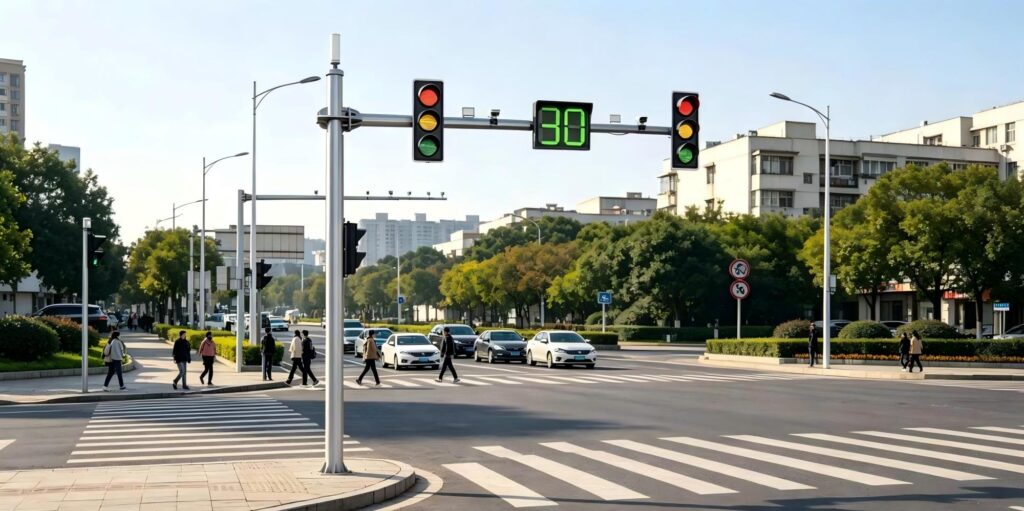
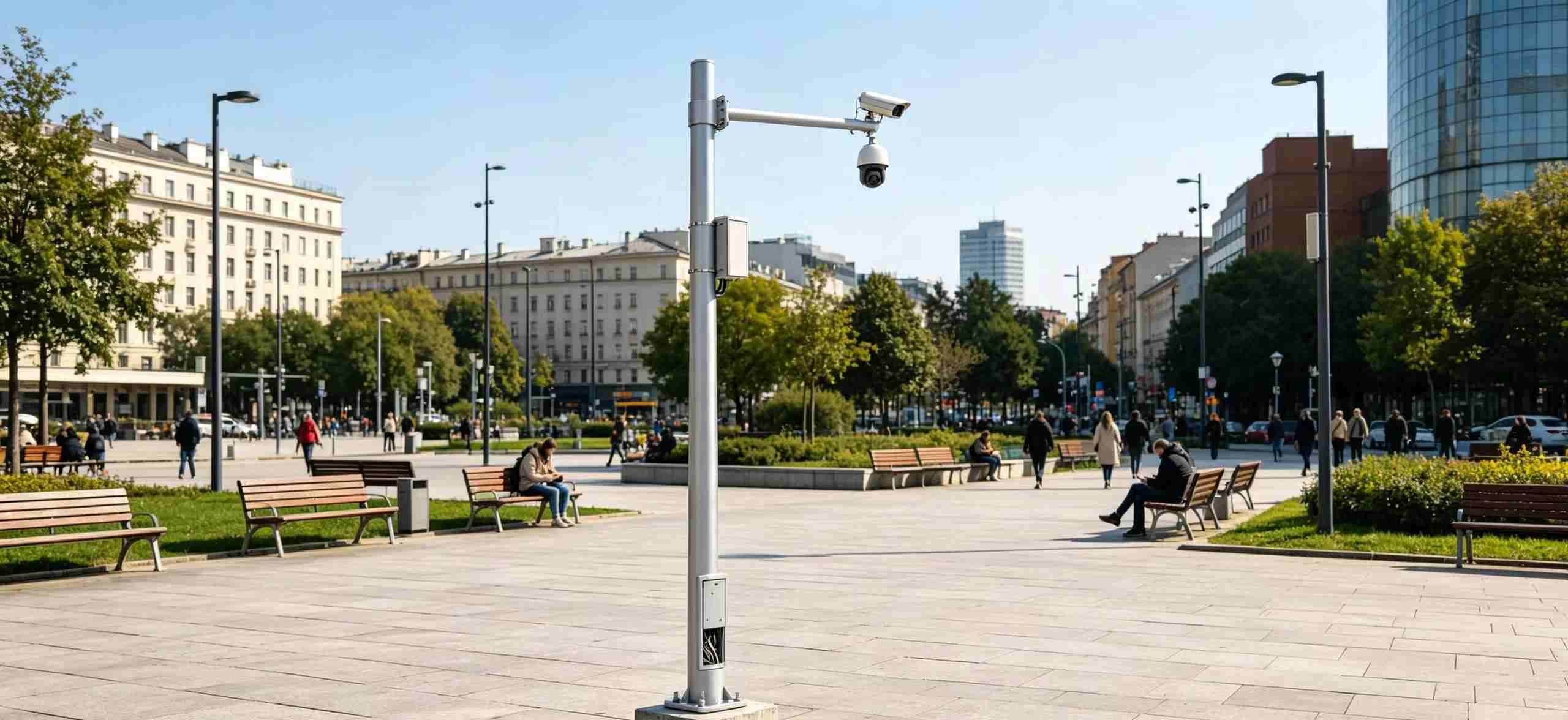
Choosing a round steel light pole starts with its aerodynamic shape. Round shafts allow wind to flow more smoothly than square steel poles, creating less turbulence and wind resistance. Their smaller effective projected area can also reduce wind loads, making round poles suitable for exposed and high-wind sites.
Tapered round poles provide another structural advantage. Their wider base places more material where bending stress is higher, while the narrower upper section reduces unnecessary weight. This design is commonly used for streets, parks, and commercial areas.
Material and wall thickness also affect pole performance. Steel provides higher strength and stiffness than aluminum, making it suitable for heavier fixtures and longer arms. Thicker steel walls increase stiffness and load capacity but also increase weight and cost, so the wall thickness should match the structural requirements.
Site conditions must be considered before final selection. Wind speed, pole height, fixture weight, soil conditions, and corrosion exposure all affect the required design. MORELUX provides custom round, tapered, and tubular steel poles with structural calculations and wind load analysis to help match pole specifications to project requirements.
Part 1: Match Round Steel Light Poles to Project Requirements
Choose Pole Height, Diameter, and Mounting Configuration
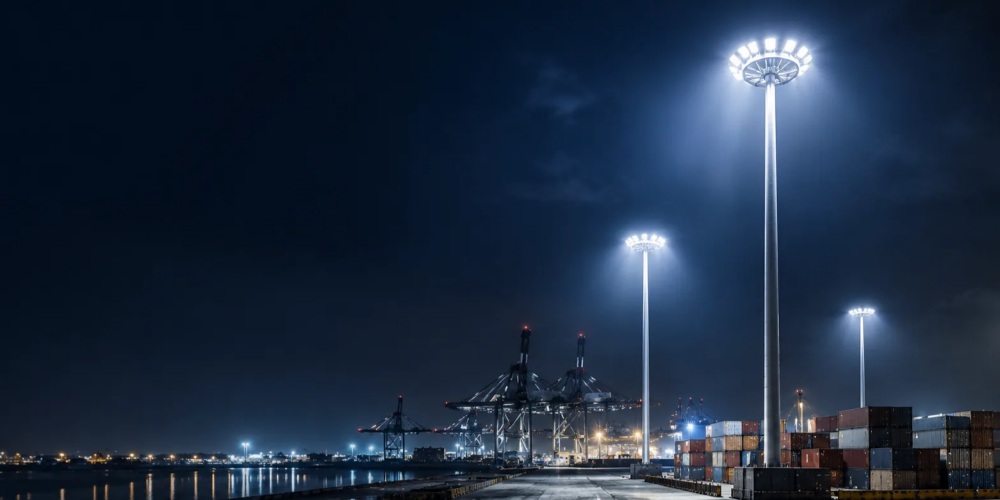
Pole height sets the reach of the light. Pole height is matched to the application. A residential driveway often needs a shorter pole. A commercial lot needs a taller one. The table below shows the general guidance.
| Application | Typical pole height |
|---|---|
| Residential driveway | Shorter pole |
| Commercial parking lot | Taller pole |
The right pole size depends on several inputs. First, the area to be illuminated. Second, the lighting fixture’s EPA rating and weight. Third, local environmental conditions. A large lot with a heavy fixture demands a taller, stronger pole. A small yard with a light fixture needs less.
Round poles are typically tapered. The largest diameter sits at the base. The top is smaller. This shape puts more material where bending stress is highest. The result is optimal wind resistance and a clean look.
Morelux allows customers to specify pole height, material thickness, arm configuration, and flange design. This flexibility matters for Choosing the Right Round steel Light Pole. A buyer can match the pole to the site instead of forcing a standard product onto a custom job.
Consider Lighting Application and Fixture Requirements
The lighting application drives the fixture choice. A driveway light aims at a small area. A parking lot light must cover a wide span. Each fixture has an EPA rating. EPA stands for effective projected area. This value measures how much wind the fixture catches. A high EPA rating adds load to the pole. The pole must handle that load at the mounting height.
Fixture weight matters too. A heavier fixture pulls down on the arm. It also raises the bending moment at the base. The pole wall thickness and base diameter must support both the weight and the wind load. A designer should never pick a pole by height alone.
Mounting configuration affects performance as well. A single arm suits a roadside pole. A double arm serves a median or a wide lot. The arm length changes the load on the shaft. A longer arm creates more leverage. That leverage increases stress at the base.
Local conditions complete the picture. Coastal sites face salt and strong gusts. Inland sites may see calmer air. Soil type affects the foundation. Soft soil needs a larger base or a deeper burial. Morelux engineers review these inputs and provide structural calculations. They also supply wind load analysis. This support removes guesswork from the selection process.
A buyer should gather key facts before ordering. The area size, the fixture EPA and weight, the wind zone, and the soil condition. With those facts, the pole height, diameter, and mounting setup fall into place.
Part 2: Evaluate Round Steel Pole Strength and Wind Performance
Assess Wind Load, EPA, and Structural Requirements
Wind is the biggest force pushing on a light pole. When wind hits a fixture on a 25-foot pole, it acts like a lever. The bending force is strongest at the base. Every pole must follow local wind load rules. A site with 90 mph gusts needs a pole built for that EPA workload. A pole that is too small may break in extreme weather.
Engineers use the Effective Projected Area, or EPA, to figure out wind load. The steps follow a clear order:
- Find EPA by multiplying Projected Area × Drag Coefficient × Gust Factor.
- The drag coefficient shows how shape matters. Round surfaces are near 0.5. Rectangular objects reach about 1.2. That difference creates about 60% more wind resistance.
- Multiply EPA by velocity pressure to get wind force.
- Use industry rules. Most inland areas use 90 mph. Hurricane coastlines may need 150 mph.
- Round, tapered steel poles fight Aeolian vibrations. Smooth airflow helps stability in open areas.
These calculations protect the fixture and the people below it. Choosing the Right Round steel Light Pole starts with this structural review. Morelux uses this method when sizing custom poles.
Compare Straight and Tapered Round Steel Pole Designs
| Structural Aspect | Straight Round Steel Pole | Tapered Round Steel Pole |
|---|---|---|
| Wind stress distribution | Wind stress spreads evenly over the smooth circular surface | The changing diameter breaks up wind patterns even more |
| Vortex shedding behavior | A non-tapered cylinder makes alternating low-pressure whirlpools downstream | The gradual narrowing stops wind from forming uniform vortex patterns |
| Harmonic oscillation risk | Matching vortex frequency can cause violent swaying and humming | Tapering stops harmonic oscillation completely |
| Fatigue and long-term durability | Steady vibration causes tiny metal fatigue at the base, loosens wiring, damages LED drivers | Protects the lighting investment from structural fatigue |
| Typical high-wind suitability | Has trouble in coastal zones, industrial yards, mountain corridors | Built for tough high-wind environments |
The table shows why tapered designs work well in exposed sites. They stop vortex shedding from syncing up, so harmonic oscillation never forms. No humming or swaying. No slow fatigue at the base. Wiring and LED drivers stay secure.
That is what Choosing the Right Round steel Light Pole means in real life. Straight poles work well in sheltered spots. Tapered poles give reliable service in coastal and industrial environments. Both share the round cross-section that cuts wind resistance. The taper adds wind performance while keeping the clean look.
Part 3: Select Materials and Finishes for Outdoor Durability
The steel grade and finish determine how long a pole lasts. Weak steel bends easily. Poor coating rusts quickly. Choosing the Right Round steel Light Pole includes picking the material, thickness, and protection.
Specify Steel Grade, Wall Thickness, and Pole Construction
Two steel grades are used most often for pole shafts.
| Steel Grade | Type | Minimum Yield (ksi) | Minimum Yield (MPa) |
|---|---|---|---|
| ASTM A36 | Carbon structural steel | 36 | 250 |
| ASTM A572 Grade 50 | High-strength low-alloy (HSLA) steel | 50 | 345 |
A572 Grade 50 has a higher strength-to-weight ratio than A36. A smaller section can carry the same load. Using less steel brings down shipping cost. Actual tested material is typically 10–20% higher than the published minimums, but design relies on published minimums.
Wall thickness works together with the grade. Thicker walls add stiffness but increase cost and weight. The best wall is the thinnest one that handles wind and fixture loads. Pole construction also matters. Direct burial puts the pole in concrete — it is simpler and cheaper. An anchor base bolts to a footing — it is adjustable and easier to replace. Soil and wind conditions decide which one to use.
Choose Galvanizing and Coating for Corrosion Protection
Salt spray testing shows where coatings fail. ASTM B117 copies coastal salt fog.
| Coating system | ASTM B117 result | Field observation after 5 years |
|---|---|---|
| Powder-coated steel | Failed at 500 hours | ~40% of rental fleet showed visible rust |
| Hot-dip galvanized steel | Passed 3,000+ hours, no red rust | Zero red rust on same fleet type |
Galvanizing wins. The zinc-iron alloy sticks to the steel. Zinc corrodes first if the surface gets scratched. Powder coating is only a barrier on the surface. Moisture spreads under the paint after a breach.
ASTM A123 sets coating thickness. Structural shapes with steel thickness greater than 1/4 inch and less than 5/8 inch need 3.9 mils on average. Plate and pipe in the same thickness range need 3.0 mils. Lighting columns usually need at least 86 micrometers.
Hot-dip galvanizing often lasts 25 to 50+ years, depending on the environment.
Morelux provides design drawings, structural calculations, and wind load analysis. Their engineers match pole grade, wall thickness, coating, and foundation to site conditions. That completes the job of Choosing the Right Round steel Light Pole with confidence.
Part 4: Check Installation and Buying Needs
Match Foundations and Anchoring to Pole Specs
Every load a pole takes goes to the foundation. A base plate made for a light can break under a heavy double-arm setup. The pole, base plate, soil, and wind loads all have to match. Soft ground calls for a wider footing. Hard rock may need an anchor cage. Base plate design must follow AASHTO LTS-6 or EN 40 rules, depending on the project region.
Direct burial fits simple, low-cost jobs. The pole sits in a concrete pier. An anchor base costs more at first but lets you adjust after pouring and replace later. Check anchor bolt size, bolt circle, and projection against the pole drawing before concrete is poured. A mismatch slows the whole installation.
Check Standards, Drawings, and Supplier Documents
International bids usually need at least two standards: a local structural standard and an international coating standard. The table below lists the common ones.
| Standard | Place | What it covers | Main requirement |
|---|---|---|---|
| EN 40 | European Union | Design and testing of lighting columns | Wind load, fatigue, deflection |
| AASHTO LTS-6 | United States | Supports for light fixtures | Combined load analysis |
| ISO 1461 | International | Hot-dip galvanizing | Coating thickness at least 45μm |
| GB/T 17460 | China | Lighting column structures | Load testing, size tolerances |
| CE Marking | European Union | Market access approval | Meets EN 40 series |
The pole shape matters, and so does welding quality. Long seam welds must reach full penetration under AWS D1.1 or EN ISO 5817 Grade B. Every production pole gets magnetic particle testing on its base plate welds. More and more public projects ask for third-party test reports from approved labs like TÜV Rheinland, SGS, or Bureau Veritas.
The supplier package should be complete: technical drawings, pole drawings, base plate and anchor bolt details, material information, inspection documents, packing lists, and installation guidance. Structural calculations lower the risk of wrong specs on commercial orders. Morelux provides these documents as standard practice.
Our Round Steel Light Pole Engineering and Manufacturing Support
Custom Round Pole Design and Wind Load Engineering Services
MORELUX is a steel pole manufacturer in Malaysia offering custom round steel poles for lighting, infrastructure, and industrial projects. Buyers can specify pole height, wall thickness, arm configuration, and flange design for different project needs.
Its engineering team provides drawings, structural calculations, and wind load analysis based on wind speed, soil conditions, and fixture loads. MORELUX also designs to standards such as EN 40 and AASHTO LTS-6 for international projects.
OEM Manufacturing and Corrosion Protection for Outdoor Projects
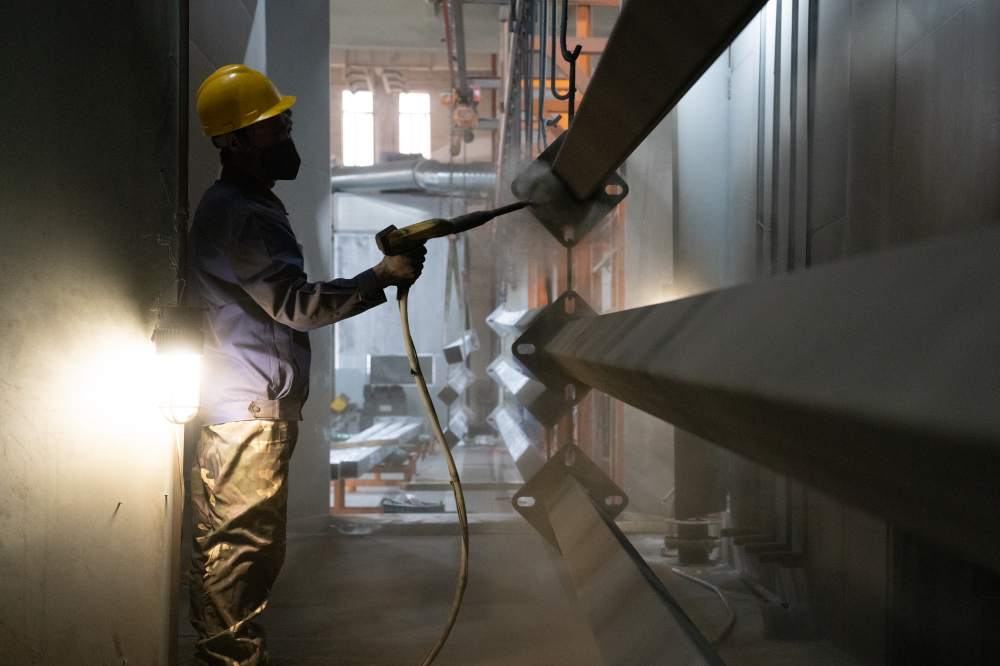
MORELUX supports OEM manufacturing with in-house engineering and production capabilities, including cutting, bending, welding, polishing, and coating. Quality checks are carried out from raw materials through finished pole inspection.
For outdoor durability, MORELUX provides hot-dip galvanizing to ISO 1461 and ASTM A123. Contractors can also specify pole dimensions, finishes, and other requirements to match project conditions.
Frequently Asked Questions About Round Steel Light Poles
Are Round Steel Light Poles Better for Windy Outdoor Projects?
Round steel light poles can perform well in windy areas because their curved surface creates less turbulence and wind resistance than many flat-sided designs. However, the final selection should also consider design wind speed, pole height, fixture load, wall thickness, and foundation conditions.
How Do I Choose the Right Diameter for a Round Steel Pole?
The required diameter depends on pole height, wind load, fixture weight, mounting configuration, and structural requirements. A larger diameter can provide greater stiffness, but the design should balance strength, material use, and project cost through structural calculations.
Should I Choose a Straight or Tapered Round Steel Pole?
A straight round steel pole provides a consistent shaft diameter, while a tapered design is wider at the base and narrower toward the top. Tapered round poles can place more material where bending stress is higher and reduce unnecessary weight in the upper section.
What Finish Is Best for Round Steel Light Poles Outdoors?
Hot-dip galvanizing is a common choice for outdoor steel light poles because it provides corrosion protection. MORELUX offers hot-dip galvanizing to ISO 1461 and ASTM A123, with additional coating options available for projects requiring enhanced corrosion protection.
What Information Should I Provide When Ordering a Round Steel Pole?
Provide the required pole height, diameter or shape, wall thickness, fixture weight, arm configuration, foundation or anchoring requirements, design wind speed, and site environment. These details help the manufacturer determine the appropriate round steel light pole specifications.