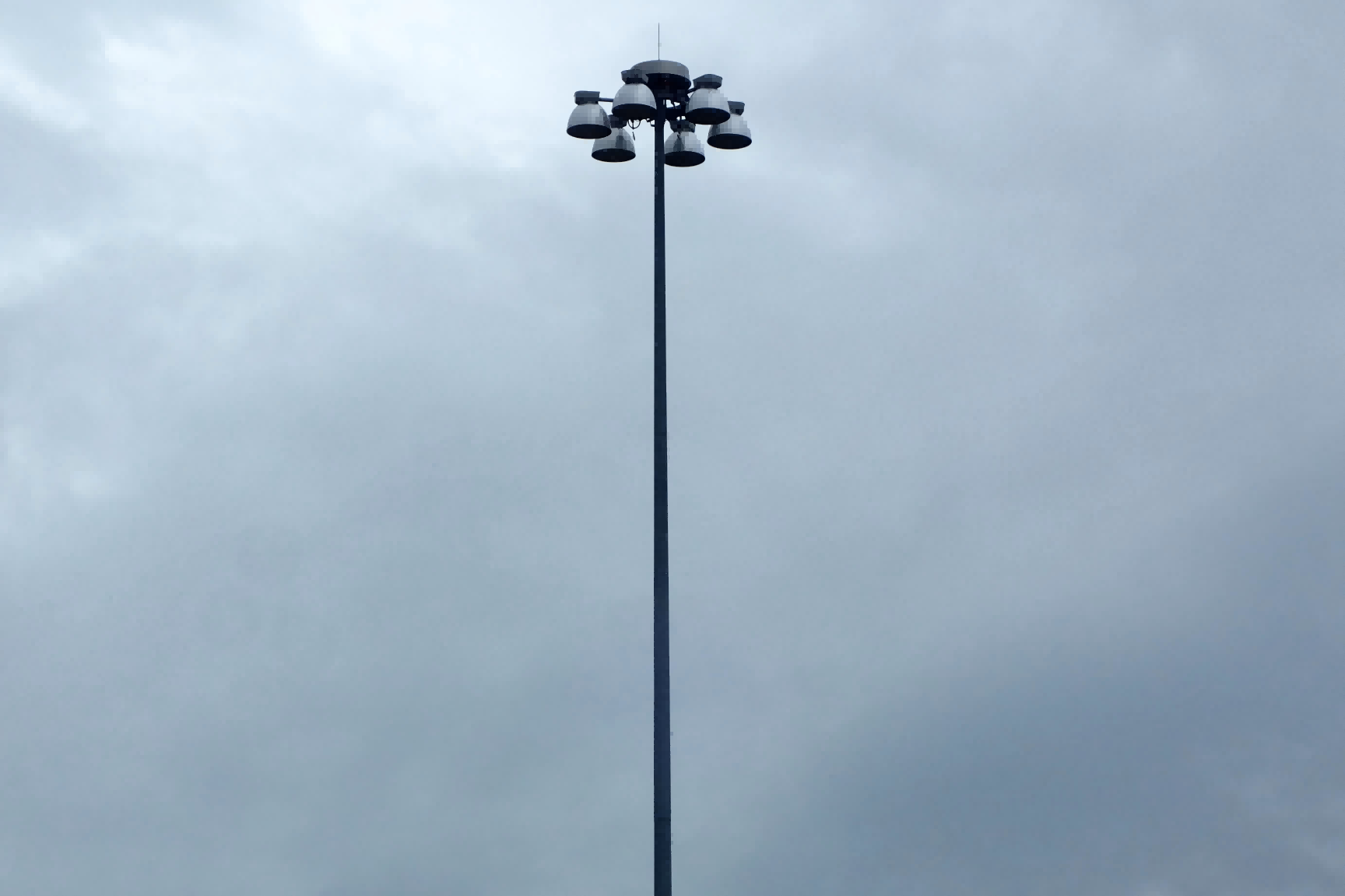
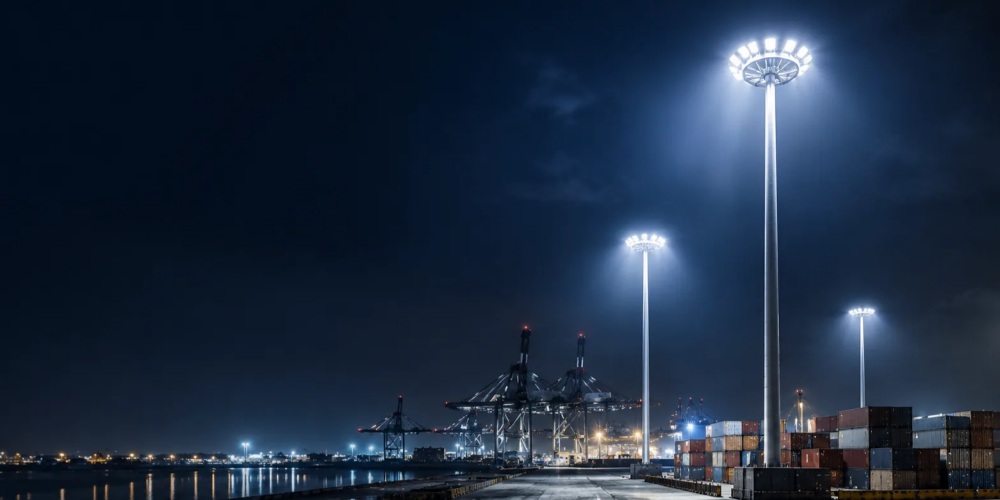
Installing a high mast light pole the right way keeps people safe, keeps the pole strong, and keeps the light working well for years. Before work starts, crews must check several things. A site survey and soil test show what the ground is like. Utility clearance stops damage to buried lines. All accessories should be on-site and counted. The anchor bolt pitch circle diameter must match the pole base. Foundations need to be installed well before the pole goes up. This gap lets concrete cure and reach full strength. This guide uses industry best practices and the know-how of experienced manufacturers. A high mast lighting pole project succeeds through careful preparation.
Key Takeaways
- Site surveys and soil tests help design the foundation for high mast poles.
- Anchor bolts must fit the pole base exactly and be level in the concrete.
- Workers use a lift plan to safely lift and place the put-together pole.
- Final tests check that the pole is straight, safely grounded, and the lights work.
Pre-Installation Checks for High Mast Light Pole Projects
Reviewing Site Conditions, Drawings and Foundation Requirements
A complete site survey and underground study are needed before any foundation work starts. Foundation studies for high mast structures should be done as near as possible when other borings are not close by. Normal boring depth runs from 30 to 70 ft, based on current and planned ground lines, soil strength, and structure loading. When nearby structure borings are not there, borings should be placed at no more than 200 ft apart and to a depth of 40 to 50 ft.
Soil bearing capacity guides foundation design. The table below shows early values for different foundation types.
| Foundation Type | Minimum Soil Bearing Capacity | Notes |
|---|---|---|
| Unreinforced Concrete – Passive | 150 kN/m² | Resists overturning via vertical and lateral soil bearing |
| Unreinforced Concrete – Non-Passive | >75, >100, >150 kN/m² | Resists overturning via vertical bearing only |
| Reinforced Concrete Pad | >75, >100, >150 kN/m² | Standard designs accommodate three bearing capacity levels |
These values are for early design only. Actual bearing capacity must be confirmed by site-specific geotechnical testing.
Confirming Pole Sections, Lifting Equipment and Installation Tools
All accessories must be at the erection site before installation starts. Check the pitch circle diameter of anchor bolts to make sure the pole fits right. A lift plan should be made by the lifting contractor based on total assembled weight and height.
Pole height and aiming location decide required lift height and working reach. Fixture or assembly weight affects rigging and lift capacity, and may require a crane. Site conditions such as soft ground, slopes, fences, bleachers, and utilities affect equipment access and setup. Qualified operators, a lift plan, and site-specific safety procedures are required. For high mast systems without a lowering device, a crane, bucket truck, or specialty lift is needed for installation or removal.
A written lift plan includes total assembled weight, center of gravity, crane position, working radius, wind conditions, and ground support. Lifting points and rigging method must fit the steel pole structure. Protective materials should be used where slings touch galvanized or coated surfaces. Tag lines may control unwanted rotation. During erection, only required personnel enter the controlled area. No one stands under the suspended mast. The crane operator and signal person keep clear communication. The pole is raised slowly. Weather conditions stay within lift-plan limits.
High Mast Foundation Construction and Installation Requirements
Excavating and Preparing the Foundation for High Mast Poles
Foundation excavation should follow the approved high mast foundation drawing and site conditions. The excavation must have stable walls, a clean bottom, and adequate drainage before reinforcement and concrete work begins.
Foundation depth and diameter should be verified against the pole height, soil conditions, and structural design. Any deviation from the approved dimensions should be reviewed before proceeding.
Installing Reinforcement, Anchor Bolts and Electrical Conduits
Reinforcement should be positioned according to the foundation design, with sufficient cover and spacing. Anchor bolts must match the high mast pole base plate and remain accurately aligned during concrete placement.
Electrical conduits should also be installed before pouring concrete. Their routing and positions need to allow cables to pass from the foundation to the lighting system without interference.
Checking Concrete Strength and Foundation Alignment Before Erection
Before installing the high mast lighting pole, confirm that the concrete has reached the required design strength. The foundation surface, anchor bolts, bolt projection, and overall alignment should also be inspected.
A level foundation and correctly positioned anchor bolts help ensure that the steel high mast can be erected vertically and securely. Any significant deviation should be corrected before lifting the pole.
High Mast Pole Assembly and Erection Procedures
Assembling Steel Pole Sections and Mechanical Connections Safely
High mast poles are often delivered in multiple sections and assembled at ground level before erection. This reduces work at height and makes connection checks easier.
Sections should be placed on stable supports and aligned according to the approved drawings. Crews should inspect slip joints, bolts, and contact surfaces before tightening each connection to the specified requirements.
Lifting and Positioning High Mast Sections With Proper Rigging
Lifting should follow an approved rigging and crane plan based on the pole weight, lifting points, crane capacity, and site conditions. Slings and protective pads should be positioned to prevent damage to the steel surface.
During lifting, tag lines can help control movement and rotation. The lifting area should remain clear of personnel until the high mast section is safely positioned on the foundation.
Securing the Pole and Checking Vertical Alignment After Erection
Once the steel high mast is positioned, crews secure the base connection and check the pole’s vertical alignment. A level, laser, or surveying equipment can be used to verify the shaft position from multiple directions.
After alignment is confirmed, anchor nuts and other connections are tightened according to the approved procedure. The base connection should then be inspected before the pole is released from the lifting equipment.
Luminaire Ring and Lighting Equipment Installation Procedures
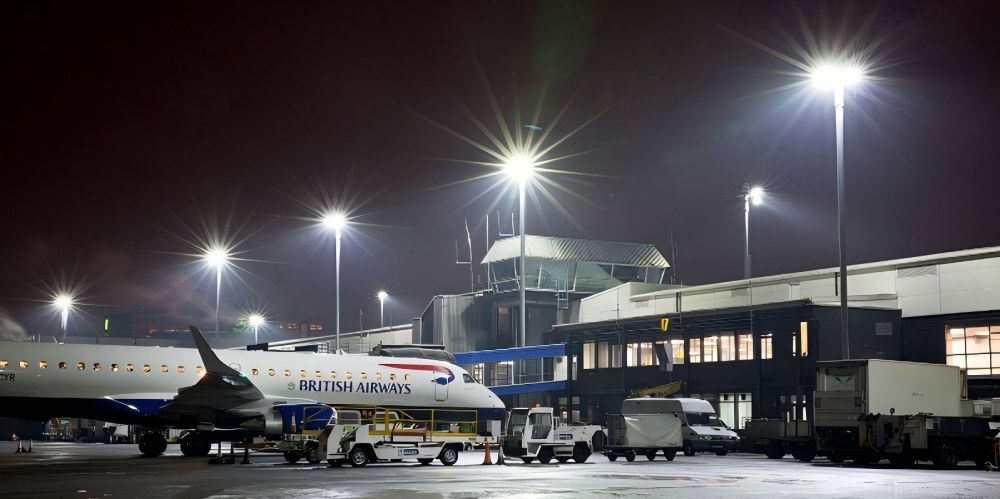
Installing the Luminaire Ring and High Mast Lighting Fixtures
The luminaire ring should be assembled and mounted according to the high mast pole design and fixture layout. Its mounting points must remain secure and evenly distributed to maintain stable support for the lighting equipment.
Before raising the ring, crews should confirm that each fixture is correctly attached and that mounting hardware is properly secured. The arrangement should follow the approved lighting layout to provide consistent coverage across the target area.
Connecting Electrical Cables and Grounding Systems for Operation
Electrical connections should be completed according to the approved wiring diagram and applicable electrical requirements. Cables should be protected from abrasion and excessive tension as they pass through the high mast pole and lifting system.
All metallic components that require bonding should be connected to the grounding system. After installation, electricians should verify cable insulation, grounding continuity, and connection integrity before energizing the high mast lighting system.
Checking Fixture Positioning and Aiming Before System Testing
Before system testing, each high mast lighting fixture should be checked against the approved photometric layout. Crews verify the horizontal and vertical aiming angles so that the beam is directed toward the intended lighting zone.
The fixture positions should also be inspected for secure mounting, consistent orientation, and adequate clearance from the luminaire ring. Any fixture that has shifted during lifting or installation should be repositioned before testing.
A final visual check should confirm that the high mast lighting system covers the required area without obvious glare or unwanted light spill. The completed aiming positions can then be recorded as a reference for commissioning and future maintenance.
High Mast Raising and Lowering System Installation and Testing

Installing the Winch, Cable and Raising-Lowering Components
The winch and cable system should be installed according to the high mast pole design and approved equipment specifications. Mounting points must provide stable support and allow the winch to operate without excessive vibration.
Wire ropes should be routed through the designated sheaves and guide components without twisting or crossing. Crews should also verify cable tension, pulley alignment, and attachment points before connecting the luminaire ring to the raising and lowering system.
Testing Mechanical Movement and Locking Mechanisms Before Use
Before operation, the complete raising and lowering mechanism should be checked for smooth movement and proper engagement. The winch, sheaves, guide tracks, locking devices, and limit controls should work together without binding or abnormal movement.
The locking mechanism should securely hold the luminaire ring at its operating position. Any unusual noise, excessive vibration, uneven travel, or incomplete locking should be corrected before the high mast lighting system is placed into service.
Verifying Safe Operation Through Complete Raising-Lowering Cycles
A complete operating cycle should be performed to confirm that the luminaire ring can travel from its raised position to the maintenance position and return safely. Crews should monitor cable movement, ring stability, travel limits, and locking engagement throughout the cycle.
After testing, the system should be inspected for cable displacement, loose connections, or signs of mechanical wear. Recording the test results provides a useful reference for future inspection and maintenance of the high mast raising and lowering system.
Final Testing and Commissioning After High Mast Installation
Checking Pole Alignment, Structural Connections and Fasteners
After erection, the high mast pole should be inspected as a complete structural system rather than only checking individual components. Crews should confirm that the shaft, base plate, anchor bolts, flange connections, and fasteners remain properly positioned after tightening.
Any visible gaps, loose hardware, damaged coatings, or connection movement should be corrected before commissioning. The final inspection should also confirm that the installed lighting pole matches the approved drawings and specified dimensions.
Testing Electrical Systems, Grounding and Lighting Performance
Once structural checks are complete, the high mast lighting system can undergo final electrical and operational testing. Crews should verify circuit operation, fixture switching, cable connections, grounding continuity, and protection devices before full energization.
After the fixtures are switched on, lighting levels should be checked against the approved photometric design. Measurements can identify insufficient coverage, excessive brightness, or uneven illumination that may require final fixture adjustment.
Completing Final Inspection Before High Mast System Operation
The final inspection brings together structural, mechanical, electrical, and lighting checks before the high mast system enters service. Crews should verify that all inspection points have been completed and that outstanding installation issues are resolved.
Commissioning records should include inspection results, electrical test data, lighting measurements, equipment checks, and any corrective actions. After approval, the completed documentation can support future maintenance and safe operation of the high mast lighting system.
Our Steel High Mast Pole Support for Installation Projects
Providing Engineered Steel High Mast Poles for Project Requirements
Morelux provides engineered steel high mast poles for infrastructure, roadway, industrial, and large-area lighting projects. Pole dimensions, section configurations, mounting arrangements, and surface finishes can be developed according to project requirements.
Our manufacturing process covers steel fabrication, welding, surface treatment, and quality inspection to help ensure consistent pole quality. OEM and customized solutions are also available for projects with specific drawings, loading conditions, or installation requirements.
Supporting Foundation, Wind Load and Structural Design Preparation
Morelux supports project teams with technical information for high mast pole foundations, anchor bolt arrangements, and structural design preparation. Pole design can consider site conditions, wind loads, fixture loads, and applicable standards to help coordinate the pole with the supporting foundation.
Engineering support also helps contractors review key interfaces before installation, including base plates, anchor bolts, foundation dimensions, and fixture loads. This preparation can reduce installation issues and simplify coordination between the pole and civil works.
Supplying Installation Guidance for Pole Assembly and Commissioning
Morelux can provide technical guidance for steel high mast pole assembly, erection, lighting equipment installation, and commissioning. Installation information helps crews understand section connections, lifting arrangements, luminaire ring installation, and raising-lowering system operation.
Before handover, project teams can use inspection and commissioning procedures to verify structural connections, mechanical movement, electrical systems, and lighting performance. This provides a practical reference for completing installation and preparing the high mast lighting system for operation.
FAQs About High Mast Light Pole Installation and Testing
How Deep Should a Foundation Be for a High Mast Light Pole?
There is no universal foundation depth for a high mast light pole. The required depth and diameter depend on pole height, wind loads, soil conditions, foundation loads, and the project design. A structural engineer should determine the foundation dimensions based on site-specific calculations.
What Equipment Is Needed to Erect a High Mast Light Pole?
Typical equipment includes a crane with suitable lifting capacity, certified slings, spreader or lifting accessories, tag lines, alignment tools, and torque tools. The equipment should be selected according to the pole weight, section length, lifting points, and site conditions.
How Do You Check High Mast Pole Alignment After Installation?
Check the verticality of the high mast pole using a laser level, surveying equipment, or other approved alignment tools. Measurements should be taken from multiple directions and compared with the project tolerance before finalizing the base connections.
How Is a High Mast Raising and Lowering System Tested?
Operate the raising and lowering system through a complete cycle while checking the winch, wire ropes, sheaves, guide components, travel limits, and locking mechanism. The luminaire ring should move smoothly and remain stable without abnormal noise, binding, or incomplete locking.
What Tests Should Be Completed Before Operating a High Mast?
Final commissioning should include structural and fastener inspections, electrical and insulation testing, grounding verification, raising-lowering system checks, and lighting performance testing. Test results should be recorded and reviewed before the high mast lighting system is placed into service.