
Today’s cities need modern physical and digital systems to run well. A smart lighting pole acts as the main physical and digital network base for modern cities. Local governments now turn regular streetlights into multi-use structural hubs. These strong steel poles combine fast wireless internet, weather sensors, and smart power controls into one single unit.
City planners use these multi-purpose poles to support busy digital networks and improve local services. Strong steel designs protect delicate equipment while handling harsh outdoor weather. This technology change turns basic street lighting poles into useful digital communication centers. It helps cities use real-time data to run smoothly, keep people safe, and save power across growing city networks.
Key Takeaways
- Smart lighting poles combine streetlights, wireless internet, weather sensors, and security cameras into one strong unit.
- Modular steel builds let workers set up, fix, and update digital parts in less than an hour.
- Main management software uses flexible LED controls to lower public energy use and cut city power bills.
- Cities make extra money by leasing pole space to phone companies for 5G wireless gear.
The Role of Smart Lighting Poles in Modern Cities
Smart lighting poles support a range of urban functions that traditionally required separate infrastructure. Their role extends from providing nighttime illumination to creating convenient locations for communication, monitoring, public information, and other connected services.
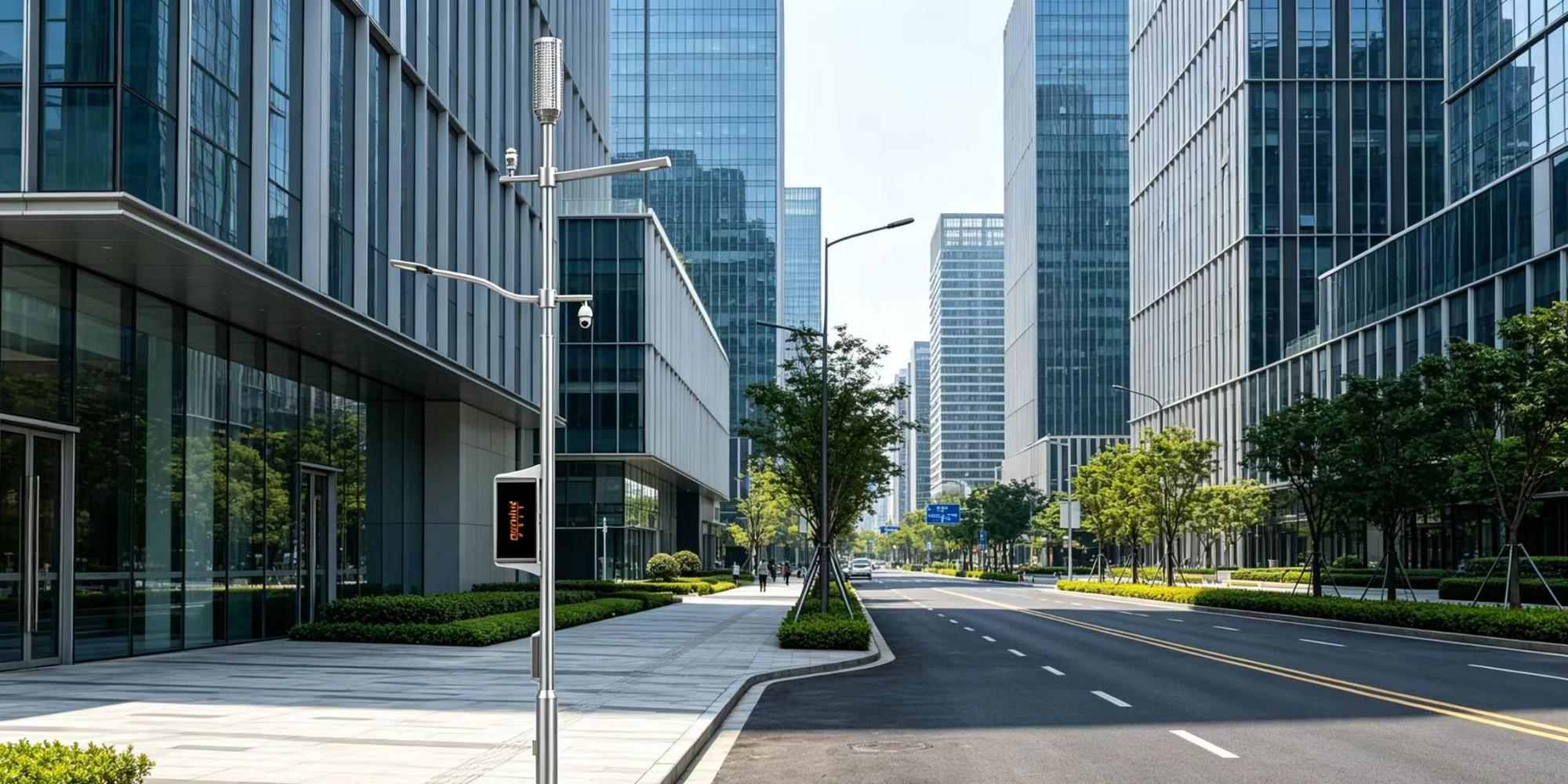
One important role is to provide a shared infrastructure point for multiple urban devices. Cameras can support public-space monitoring, sensors can collect environmental or traffic information, and wireless equipment can extend network coverage. Bringing these functions together can reduce the need for multiple standalone structures across streets and public areas.
Smart lighting poles also help cities manage infrastructure more efficiently. Connected lighting systems can be monitored remotely, while sensor data can provide information for traffic management, environmental monitoring, and public-space planning. As new urban technologies become available, existing poles can be adapted with additional equipment, allowing cities to expand smart services without redesigning their entire infrastructure network.
Smart Capabilities of Steel Lighting Pole Systems
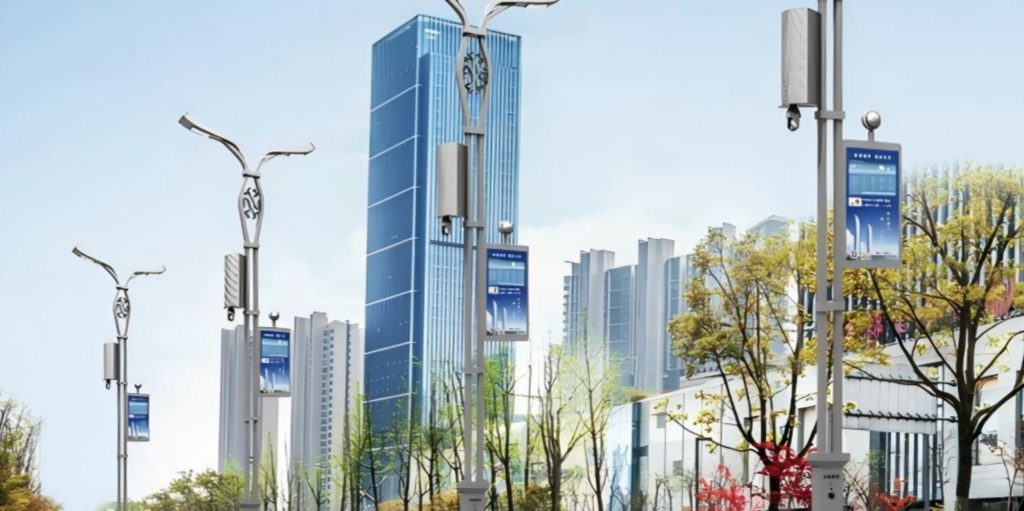
Smart lighting poles combine outdoor lighting with connected technologies on a single infrastructure platform. In addition to supporting LED fixtures, steel poles can accommodate communication equipment, sensors, cameras, controllers, and other smart-city devices. This allows cities to expand digital infrastructure without installing separate structures for every function.
Communication and Control Systems for Smart Lighting Poles
Communication systems connect individual smart lighting poles with lighting management platforms and other urban infrastructure. Wired or wireless connections can transmit information between lighting controllers, sensors, and centralized management systems.
With networked control, operators can monitor lighting status, adjust operating schedules, and identify equipment problems remotely. This is particularly useful for large road networks and public areas where manually checking individual lighting points would require significant time and resources.
LED Lighting Controls for Energy Efficient Urban Illumination
Smart LED controls allow lighting output to respond to actual conditions instead of operating at the same brightness throughout the night. Dimming schedules can reduce output during periods of low activity, while sensors can trigger higher illumination when vehicles or pedestrians are detected.
Centralized controls also allow operators to manage groups of fixtures from a single platform. Lighting status, operating schedules, and equipment faults can be monitored remotely, helping improve energy management and making maintenance planning more efficient.
Cameras and Sensors for Intelligent Urban Data Collection
Smart lighting poles can provide elevated mounting positions for cameras and environmental or occupancy sensors. Depending on the project, these devices can monitor traffic conditions, pedestrian activity, air quality, weather conditions, noise levels, or public-space usage.
Because the equipment is positioned above ground level, sensors and cameras can collect information across a wider area without requiring additional standalone structures. The collected data can then support traffic management, public safety, environmental monitoring, and urban planning.
5G and WiFi Connectivity for Connected City Infrastructure
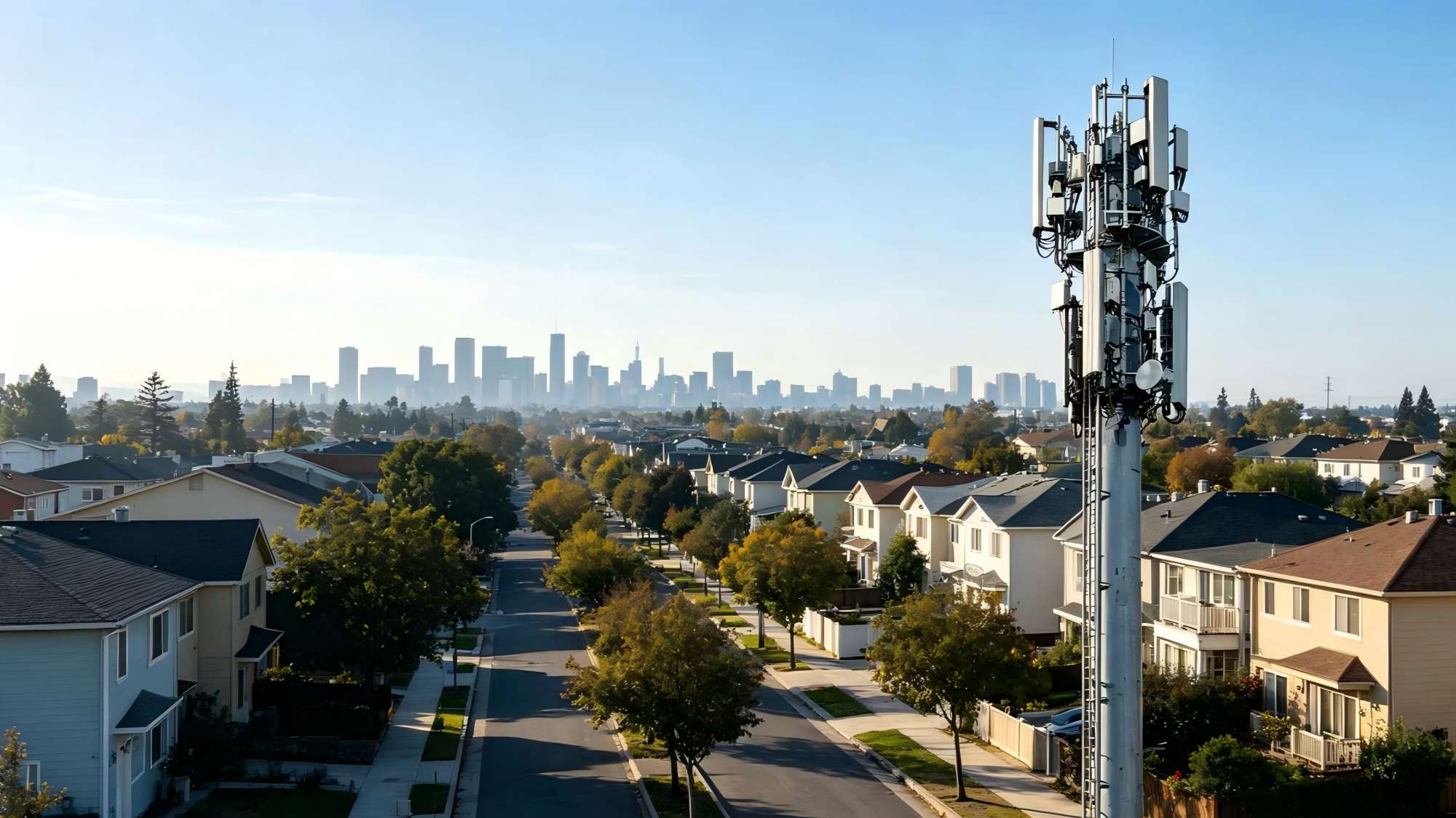
Smart lighting poles can also serve as mounting structures for wireless communication equipment. Small-cell 5G equipment, WiFi access points, antennas, and related network hardware can be installed where additional connectivity is required.
This approach is useful in busy streets, commercial districts, transportation areas, campuses, and other locations with growing wireless demand. When communication equipment is added, the pole design needs to account for equipment weight, mounting position, cable routing, and additional wind exposure.
EV Charging Integration for Smart Urban Mobility Solutions
Smart lighting infrastructure can be combined with EV charging equipment in suitable urban locations. A lighting pole and charging system can share part of the site’s electrical and physical infrastructure, which can be useful in parking areas, commercial districts, public facilities, and other locations where EV drivers already stop.
The integration requires consideration of electrical capacity, charging equipment, cable management, pedestrian access, and the structural requirements of the pole. Combining these functions can help cities make better use of existing roadside and parking infrastructure.
Smart Lighting Pole Applications Across Urban Environments
The value of smart lighting poles depends on where they are deployed. Different urban environments require different combinations of lighting, communication, monitoring, and connectivity functions. Steel lighting poles can be configured around the specific activities and infrastructure requirements of each location.
Smart Lighting Poles for Traffic Monitoring and Road Safety
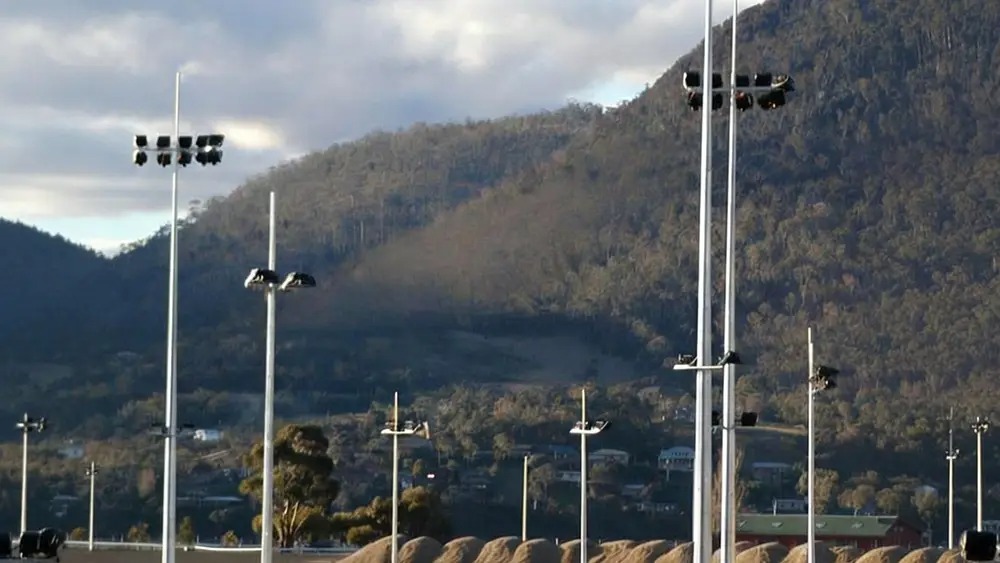
Traffic-focused smart lighting poles are positioned where real-time information can improve road management and visibility. Cameras and traffic sensors can monitor vehicle movement, pedestrian activity, congestion, and conditions around intersections.
The collected information can support traffic management systems and help identify areas that require changes to signal timing, lighting levels, or road planning. Smart LED controls can also respond to traffic conditions, providing appropriate illumination without keeping every fixture at maximum output throughout the night.
Smart Lighting Poles for Parks and Public Landscape Areas
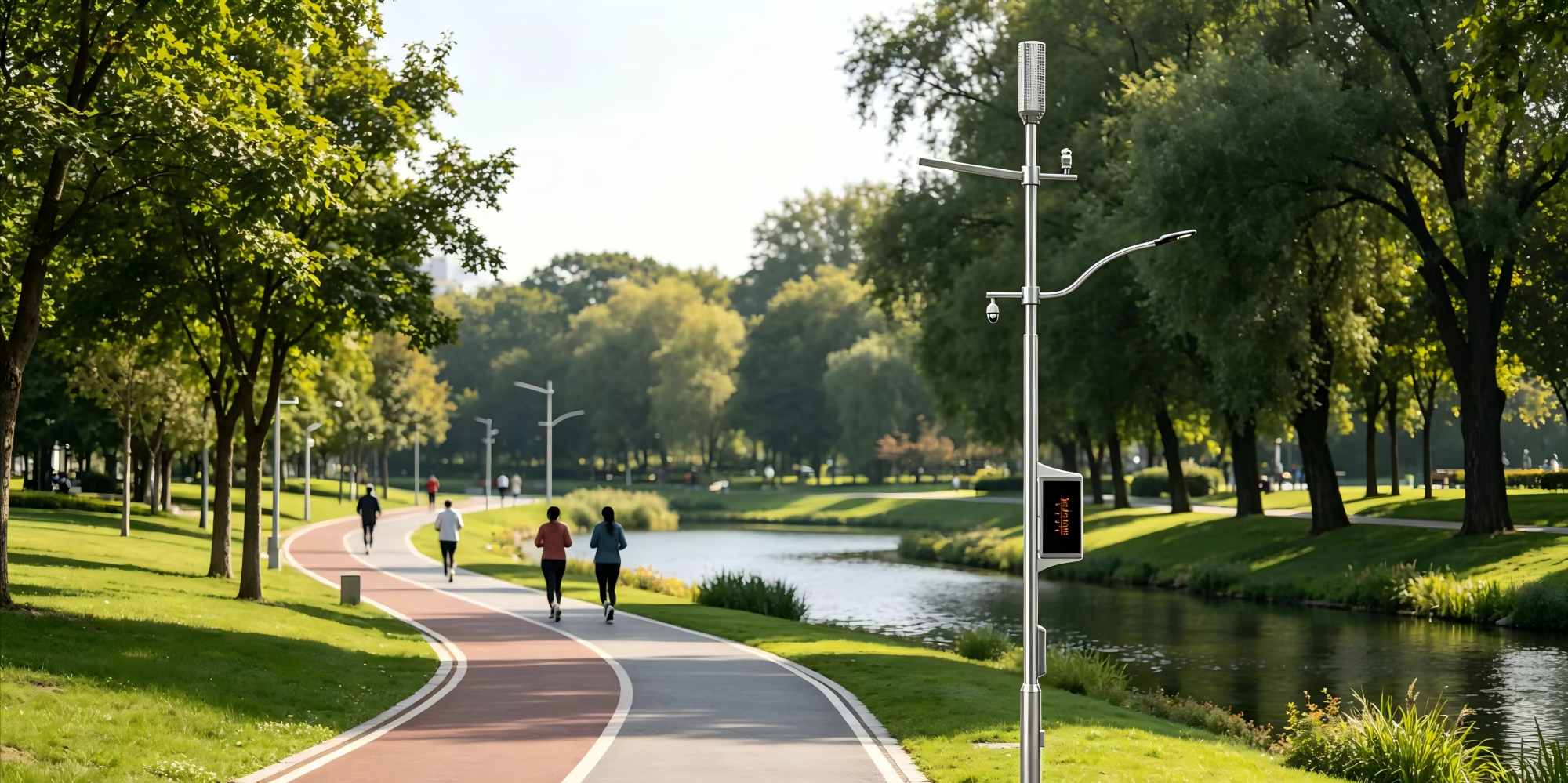
Parks and public landscapes can use smart lighting poles to combine nighttime illumination with visitor and environmental monitoring. Cameras, pedestrian sensors, WiFi equipment, and connected lighting controls can be integrated around entrances, walking routes, recreational areas, and gathering spaces.
Lighting can be adjusted according to park opening hours, pedestrian activity, or specific events. Sensors can also provide information about how different areas are being used, helping municipalities plan lighting schedules and future improvements without adding separate structures throughout the park.
Smart Lighting Poles for Parking and Commercial Facilities
Parking lots, shopping areas, business parks, and commercial facilities can use smart poles to combine lighting with security and connectivity. Cameras can monitor vehicle and pedestrian movement, while sensors can support occupancy monitoring and other facility management functions.
Connected LED controls can adjust lighting according to parking activity and operating hours. Where EV charging is required, charging equipment can be incorporated into the surrounding infrastructure, making smart poles particularly useful in commercial parking environments.
Steel Lighting Poles for Campuses and Community Infrastructure
Universities, schools, hospitals, residential communities, and public facilities often have multiple pedestrian routes, parking areas, buildings, and shared outdoor spaces. Smart lighting poles can connect these areas through lighting, communication, security, and environmental monitoring functions.
For example, campus pathways can combine LED lighting with emergency communication or WiFi equipment, while community spaces can use cameras and sensors for security and facility management. A connected pole network allows different functions to be managed across the site while maintaining a consistent infrastructure design.
Benefits of Steel Lighting Poles for Smart City Infrastructure
Durable Steel Lighting Poles for Long Term Outdoor Performance
Engineers select strong steel lighting poles to handle harsh weather for many decades. Steel posts easily withstand heavy hits, wild storms, and constant shaking along busy streets. Tough factory coatings protect internal and external metal parts against damp air, surface rust, and damaging chemicals.
Thick zinc layers help these metal posts last much longer near salty oceans. Protective surface treatments keep internal electrical equipment safe from early damage caused by bad weather. The table below outlines verified maintenance timelines for hot-dip galvanized steel poles operating inside severe C5-M marine zones.
| Metric | Value for C5-M Marine Environment |
|---|---|
| Zinc coating exhaustion | 3–5 years |
| Expected life to first maintenance | 5–10 years |
Flexible Steel Pole Infrastructure for Future Technology Upgrades
Modular steel designs help city workers swap out old technology parts with great ease. Simple matching parts drop factory build costs and lower future repair bills over time. Workers change small post parts quickly without removing full poles, closing roads, or using big cranes.
Smart step-by-step plans help city leaders protect long-term investments while saving public funds. Cities put up basic steel poles first, then attach smart tech later as budgets grow. Local governments gain extra money by renting pole space to phone companies for fast 5G units. Cities also place electronic signs on smart poles to show local business ads. These smart setup options bring in steady money that pays back initial building costs.
Centralized Control for Efficient Smart City Infrastructure
Connected lighting poles can be linked to a centralized management platform, allowing operators to monitor and control lighting across multiple locations. Instead of checking individual fixtures manually, city teams can manage operating schedules, adjust lighting levels, and receive equipment status information remotely.
Centralized control can also coordinate lighting with traffic conditions, pedestrian activity, or scheduled events. When combined with LED fixtures and smart sensors, this approach can help reduce unnecessary energy consumption and identify maintenance issues earlier. For large urban networks, centralized management makes it easier to operate lighting infrastructure consistently across roads, public spaces, parking areas, and other connected environments.
Customized Steel Lighting Pole Solutions for Smart Cities
Smart city projects often combine lighting with communication, monitoring, and other connected technologies. Because these systems vary by location, a standard pole configuration may not suit every project. Custom steel lighting poles can be adapted to the required height, fixture arrangement, and equipment mounting points while maintaining the structural requirements of the installation.
Custom Steel Pole Heights for Different Urban Infrastructure
Pole height should reflect the function and scale of the urban environment. Lower poles can be suitable for pedestrian paths, residential streets, and community areas, while taller poles may be required along major roads, open intersections, parking facilities, and other locations that need wider lighting coverage.
For smart infrastructure, height also affects the position and coverage of connected equipment. Cameras and sensors may require a specific elevation, while wireless equipment may need to be mounted higher to improve signal coverage. Custom pole dimensions allow the lighting and smart-device requirements to be considered together.
Custom Pole Arms for Different Lighting Fixture Configurations
Pole arms determine how lighting fixtures extend from the shaft and where illumination is directed. Single-arm configurations can serve one side of a road or pathway, while double-arm arrangements can illuminate opposite sides from one pole. Other arm styles can be selected for wider roads, intersections, or specialized urban lighting layouts.
Arm dimensions should match the fixture size, weight, mounting method, and required projection. Designing the arm together with the pole helps maintain the intended lighting position while accounting for the additional structural and wind loads created by the fixture.
Custom Mounting Structures for Smart City Devices and Equipment
Smart poles may need to support more than lighting fixtures. Depending on the application, mounting structures can accommodate cameras, environmental sensors, WiFi access points, 5G equipment, digital displays, public address systems, or other connected devices.
Each device has different mounting and access requirements. Custom brackets, equipment plates, attachment points, and internal cable provisions can be incorporated into the pole design to keep devices securely positioned and wiring organized. This approach allows multiple smart functions to share one steel infrastructure platform instead of requiring separate structures throughout the urban site.
Smart Lighting Pole FAQs for Urban Infrastructure Projects
What Smart Devices Can Be Integrated Into a Lighting Pole?
Depending on the project, smart lighting poles can support equipment such as surveillance cameras, environmental sensors, wireless communication devices, public address systems, and smart lighting controllers. Equipment placement should be planned according to its weight, power requirements, connection method, and required coverage.
Can Steel Lighting Poles Support 5G and Wireless Equipment?
Yes. Steel lighting poles can be designed to support wireless communication equipment, including antennas and other network devices. For 5G or similar installations, engineers need to consider equipment weight, mounting height, wind exposure, cable routing, and the additional load created by the communication hardware.
Can Smart Lighting Pole Dimensions Be Customized for Projects?
Yes. Smart lighting poles can be customized in terms of height, shaft dimensions, wall thickness, base plate, mounting points, and arm configuration. These specifications can be adjusted according to the number and type of devices installed, required lighting coverage, available space, and project-specific structural requirements.
How Are Steel Lighting Poles Protected Against Corrosion?
Steel lighting poles can be protected with surface treatments such as hot-dip galvanizing and powder coating. Hot-dip galvanizing provides a protective zinc layer against outdoor corrosion, while powder coating can provide additional surface protection and a specified finish. The appropriate treatment depends on factors such as humidity, coastal exposure, and the surrounding environment.
Can Steel Poles Be Designed for Different Wind Load Requirements?
Yes. Wind load requirements vary according to location, pole height, fixture size, mounted equipment, and site exposure. Smart lighting poles carrying cameras, antennas, or other devices may have greater wind-exposed areas than standard lighting poles. Engineers can account for these additional loads when determining pole dimensions, wall thickness, mounting arrangements, and foundation requirements.