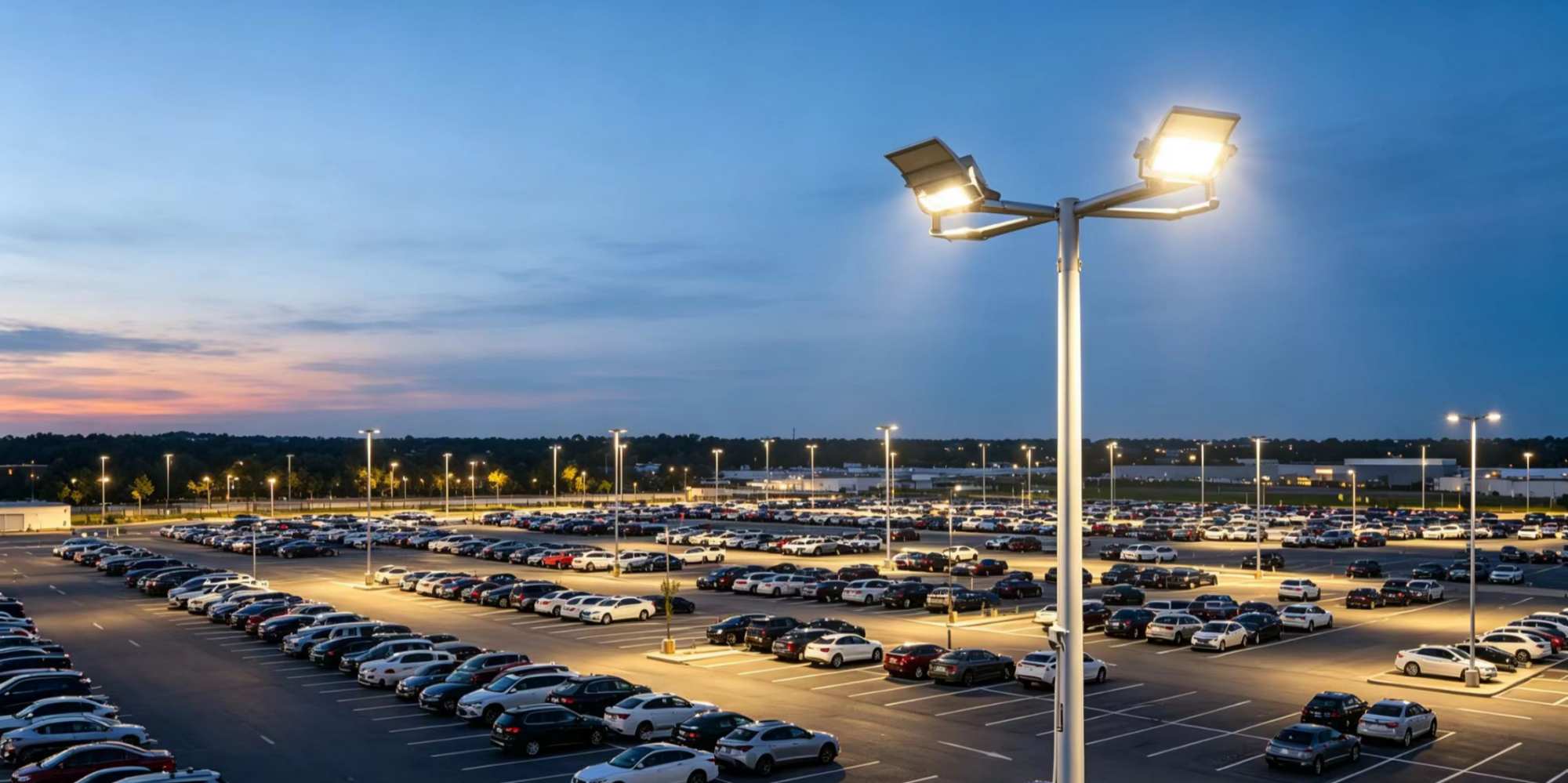
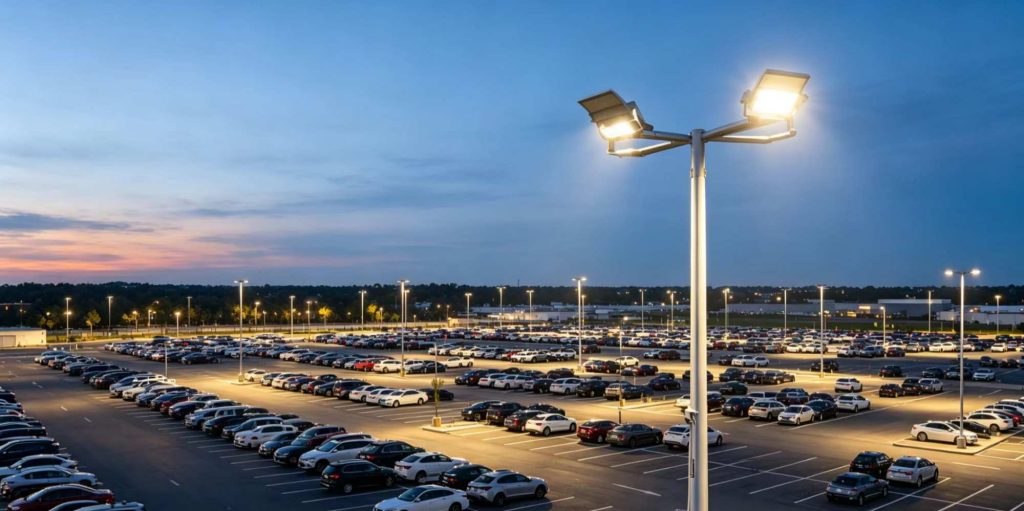
A light pole can last anywhere from 15 to 50+ years. How long it lasts depends on the material, the environment, and maintenance. Galvanized steel poles often reach 30–50 years. Aluminum and prestressed concrete poles can exceed 50 years. Fiberglass poles typically fall between 20 and 40 years. In this post, we’ll break down typical lifespans by material. We’ll also cover the factors that can shorten or extend them, and simple steps to maximize your pole’s life. You will learn how weather, corrosion, installation quality, and routine care shape real-world performance. The goal is clarity and actionable guidance, not vague promises.
Key Takeaways
- Light poles last 15 to 50+ years. The material and coating decide the exact lifespan.
- Protective coatings like galvanizing make steel poles last 3 to 5 times longer.
- Coastal air and road salt speed up corrosion. They can cut pole life by half or more.
- Yearly inspections catch small problems early. This prevents big structural failures.
- Choose the right material for your site. Aluminum works best near the ocean. Steel works well inland with proper coating.
Average Lifespan of Light Poles by Material and Construction
How Steel Light Pole Lifespan Compares With Other Materials
The material you pick sets the starting point for how long a light pole lasts. Steel poles usually last 15–30 years. Steel that resists rust can reach 50 years or more. Aluminum poles often go past 50 years and can be fully recycled. Fiberglass poles last between 20 and 30 years. Concrete poles last 30–50 years.
| Material | Average Lifespan |
|---|---|
| Steel Light Poles | 15–30 years |
| Aluminum Light Poles | Up to 50 years |
| Fiberglass | 20–30 years |
| Concrete | 30–50 years |
Aluminum poles outlast fiberglass poles, usually by 20–30 years. This gap is important for buyers who compare upfront cost with replacement cycles.
Protective treatment changes how steel holds up in a big way. Untreated steel lasts only 10–15 years in moderate climates, 5–8 years in coastal or industrial areas, and 3–6 years in tropical humidity. Paint or powder coat alone extends this to 15–25 years in moderate conditions. Hot-dip galvanizing pushes steel to 40–50 years in moderate climates, 25–35 years in coastal zones, and 20–30 years in tropical settings. Combining galvanizing with paint delivers 50+ years in moderate climates and 35–45 years in coastal areas. Galvanized steel poles last 3–5 times longer than untreated steel across all environments.
A reputable steel pole manufacturer like Morelux applies these protective systems under strict quality control. Their 15+ years of experience shows how production standards directly affect real-world lifespan.
How Pole Design and Wall Thickness Affect Light Pole Lifespan
Design details decide whether poles stay straight for 10–20 years. The hidden structure—base plates, anchor bolts, and foundations—matters as much as the visible shaft.
Flange connections suit steel poles over 20 ft for stability. Direct burial works better for shorter poles in minimal wind exposure areas. Coastal sites may need stainless steel hardware due to salt corrosion. Urban settings favor flange connections for precise height alignment.
Anchor bolt sizing follows pole height. A 10–15 ft pole uses 3/4″ bolts on an 8.5–10″ bolt circle with 4 bolts. Poles 40+ ft require 1-1/4″ to 1-1/2″ bolts on a 17–25″ circle with 6–8 bolts. Matching bolts to height, wind load, and soil conditions prevents premature failure.
Protective coatings must comply with ISO 1461 for hot-dip galvanized coatings. Mean coating thickness exceeding 85 microns ensures corrosion resistance for coastal or industrial municipalities. A dimensional tolerance of 1mm is the threshold for base plate fit-up without oversize holes.
⚠️ Critical Pitfall: The most common cause of installation failure is confusing the measurement method for a four-bolt square base. A standard light pole base has four anchor bolts arranged in a square pattern, but this can be measured either as a “bolt circle” (diagonal distance) or as a “bolt square” (side-to-side distance). Mixing these up leads to base plate mismatches.
Custom engineering support from an experienced supplier helps buyers avoid these costly errors. Morelux provides wind load analysis and design drawings to match each project’s climate and soil conditions.
Key Factors That Influence Light Pole Lifespan Over Time
How Weather and Environmental Exposure Affect Light Pole Life
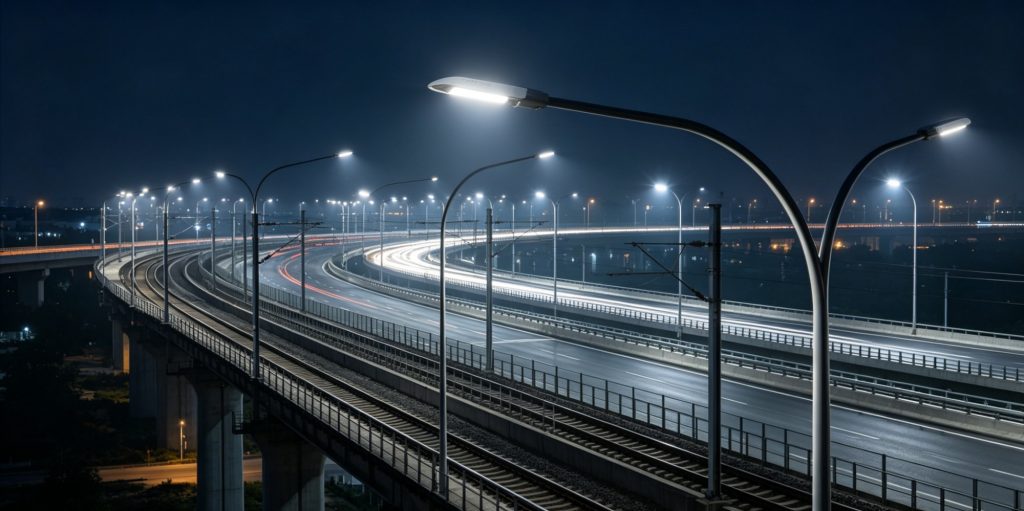
Weather conditions can affect a light pole through wind, rain, humidity, temperature changes, and airborne pollutants. Coastal and industrial environments can be particularly demanding because salt and pollutants increase surface exposure and corrosion risk.
Pole design should therefore account for local wind conditions and environmental exposure. MORELUX uses wind-load calculations when designing steel light poles, helping determine suitable pole dimensions and structural requirements for different installation environments.
How Corrosion and Moisture Can Shorten a Light Pole Lifespan
Moisture and corrosive substances can gradually damage steel surfaces, especially around base plates, joints, welds, and other areas where water or contaminants can accumulate. Without suitable surface protection, corrosion can eventually reduce the structural performance of a light pole.
MORELUX uses hot-dip galvanizing to protect steel poles against corrosion. Its galvanized steel poles follow ISO 1461 requirements, while duplex systems combining galvanizing with paint or powder coating can provide additional protection for demanding environments.
How Installation Quality Affects Long-Term Light Pole Performance
Correct installation is essential for maintaining a light pole’s structural performance over time. Poor foundation work, incorrect anchor bolt positioning, inadequate leveling, or improper connections can create unnecessary stress on the pole and shorten its service life.
Installation should follow the pole’s engineering specifications, including foundation requirements, anchor bolt arrangement, vertical alignment, and connection details. MORELUX provides engineered pole designs and installation guidance to help ensure the pole is installed according to its structural requirements.
Maintenance Practices That Can Extend Light Pole Lifespan
How Regular Inspections Help Prevent Light Pole Structural Damage
A yearly inspection catches small problems before they become structural failures. Qualified personnel should check the foundation and base plates for cracks, spalling, leaning, and anchor bolt integrity. They must also verify nut tightness, torque, hole sizing, bearing surface, and washer condition. These checks prevent load-transfer failure and wind-induced tipping.
The pole shaft needs a visual inspection for corrosion, dents, and coating failure. Ultrasonic thickness gauges can detect hidden interior corrosion that is not visible from the outside. Brackets and cross arms should be examined for fatigue cracks caused by vibration, loading, or temperature cycling. On square steel poles over 30 ft, qualified welding inspectors should evaluate pole-to-base welds for cyclical wind-load cracking.
Routine cleaning is also preventive maintenance. It removes dirt, salt deposits, and organic growth that hold moisture against protective coatings. In polluted urban environments, regular cleaning lowers the risk of rust formation. Watch for humming, visible movement, or loose hardware. These signs point to problematic vibration. Early detection of corrosion or damage can add years to a light pole’s service life.
How Protective Coatings Help Reduce Corrosion on Steel Light Poles
Protective coatings form the main barrier against corrosion on steel poles. Hot-dip galvanizing sacrifices its zinc layer to protect the steel core. This protection lasts 10–20 years in general industrial or coastal environments. In highly corrosive settings, or within 1 km of a shoreline, galvanized poles last 5–10 years before the coating needs attention.
Maintaining the galvanized zinc layer preserves this defense. Keep pole interiors clean and dry, and promote ventilation and drainage around bases. Avoid covers that trap moisture, since trapped water speeds up corrosion of base plates and anchor bolts. Apply corrosion-inhibiting coatings when the zinc layer shows wear.
A trusted manufacturer like Morelux, with over 15 years of steel pole expertise, can supply durable galvanized and powder-coated solutions. As a custom steel pole supplier serving wholesale and infrastructure projects, Morelux also offers technical support for coating selection and inspection schedules.
Signs That a Light Pole May Need Repair or Replacement
How to Identify Corrosion and Surface Damage on Light Poles
Regular inspections can identify early signs of corrosion before they develop into more serious damage. Pay particular attention to the pole base, welds, mounting connections, and areas where moisture or debris can collect.
Common warning signs include rust, damaged galvanizing, peeling coatings, surface pitting, and exposed steel. For galvanized steel light poles, surface condition should be assessed together with the condition of the protective zinc coating. MORELUX uses hot-dip galvanizing to ISO 1461 requirements, with duplex coating systems available for higher corrosion protection.
How Cracks, Bending, and Leaning Indicate Structural Problems
Cracks, deformation, excessive bending, or leaning can indicate structural or foundation problems rather than normal surface aging. These signs should be checked around the pole shaft, base connection, welds, anchor bolts, brackets, and crossarms.
A leaning light pole may result from foundation movement, loose connections, or structural damage. Any significant deformation should be professionally assessed before the pole remains in service. MORELUX considers wind loads, fixture loads, pole geometry, and connection requirements during structural design to reduce these risks.
When Aging Light Poles Should Be Repaired or Replaced
Age alone does not determine whether a light pole needs replacement. The decision should consider corrosion severity, structural condition, foundation performance, coating condition, and the pole’s current load requirements.
Minor surface or coating damage may be suitable for repair and recoating, while severe corrosion, cracks, deformation, or compromised structural connections may require replacement. For older poles, a structural inspection can determine whether the existing pole remains suitable for its current lighting equipment and environmental conditions.
How to Choose Light Poles for Long-Term Performance and Value
How Material Selection Affects Light Pole Durability and Service Life
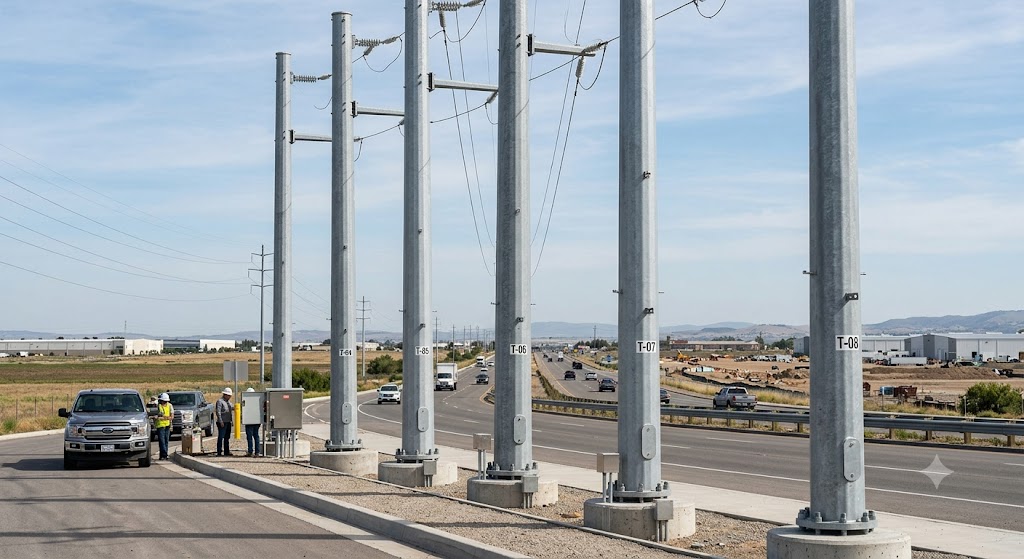
Material selection should match the pole’s structural load, installation environment, and expected service life. For outdoor applications, steel provides the strength and stiffness needed for lighting fixtures, while the appropriate grade and thickness should be selected according to the project requirements.
MORELUX uses structural steel such as BS EN 10025 or approved equivalent grades and can customize pole dimensions according to fixture loads, pole height, and wind conditions. This helps balance structural performance with long-term durability.
Why Proper Wind Load Design Matters for Long-Lasting Light Poles
Wind load design directly affects the structural performance and service life of a light pole. Pole height, shape, fixture size, mounting position, and local wind conditions all influence the forces acting on the structure.
MORELUX uses certified design software for wind and fixture load calculations. Its engineers can develop pole designs and foundation requirements based on project-specific conditions, helping reduce excessive movement, structural stress, and premature damage.
How Protective Finishes Can Improve Steel Light Pole Durability
Protective finishes help steel light poles resist moisture and corrosion throughout their service life. The right system depends on the installation environment and required corrosion protection level.
MORELUX provides hot-dip galvanized steel poles according to ISO 1461, with zinc coating protection. For more demanding environments, a duplex system combining hot-dip galvanizing with epoxy and polyurethane coatings can provide additional protection. This helps maintain the pole’s surface and structural integrity over long-term outdoor exposure.
FAQs About Light Pole Lifespan and Long-Term Maintenance
What Is the Average Lifespan of a Steel Light Pole?
The service life of a steel light pole depends on its steel grade, protective finish, structural design, installation environment, and maintenance. Rather than using one fixed lifespan for every project, buyers should evaluate expected corrosion exposure and structural loads.
MORELUX uses structural steel such as BS EN 10025 or approved equivalent materials and provides hot-dip galvanizing to ISO 1461. For demanding environments, duplex coating systems can provide additional corrosion protection and support long-term light pole durability.
How Often Should Light Poles Be Inspected for Structural Damage?
Light poles should be inspected regularly, with inspection frequency adjusted for site conditions and exposure. Key areas include the pole shaft, base plate, anchor bolts, welds, mounting connections, and foundation.
More frequent inspections may be appropriate for coastal, high-wind, industrial, or otherwise corrosive environments. Checking for corrosion, cracks, deformation, loose connections, and coating damage helps identify structural problems before they become more serious.
What Causes Light Poles to Fail Before Their Expected Lifespan?
Premature light pole failure can result from corrosion, excessive wind loads, incorrect fixture loading, poor installation, foundation problems, or inadequate maintenance. Damage around welds, base plates, and connections can become more serious when left untreated.
Proper structural design and suitable corrosion protection can reduce these risks. MORELUX considers wind loads, fixture loads, pole dimensions, and environmental conditions when designing steel light poles for specific projects.
When Should an Old Light Pole Be Repaired or Replaced?
An old light pole may be suitable for repair when damage is limited to the protective coating or other non-critical components. Replacement may be necessary when severe corrosion, structural cracks, significant deformation, foundation failure, or inadequate load capacity affects the pole’s safety.
A professional structural assessment can help determine whether an existing light pole can continue in service. For replacement projects, the new pole should be evaluated against current fixture loads, wind conditions, mounting requirements, and corrosion exposure.
Our Steel Light Poles for Long-Term Outdoor Applications
Engineered Steel Light Poles for Different Environmental Conditions
MORELUX manufactures steel light poles designed for different outdoor environments, including roadways, parking areas, sports facilities, and other demanding applications. Pole height, shape, wall thickness, and structural design can be customized according to fixture loads, wind conditions, and project requirements.
With more than 15 years of manufacturing experience, MORELUX provides engineering support for site-specific wind-load calculations and structural design. This helps ensure the steel light pole is properly matched to its intended installation environment.
Galvanized Steel Protection for Longer Light Pole Service Life
Protective finishing is essential for maintaining steel light pole durability in outdoor environments. MORELUX uses hot-dip galvanizing according to ISO 1461 to provide corrosion protection for steel surfaces.
For higher-corrosion environments, duplex protection combining hot-dip galvanizing with epoxy and polyurethane coatings can provide an additional protective barrier. The appropriate coating system can be selected according to environmental exposure, helping reduce maintenance requirements and support longer light pole service life.