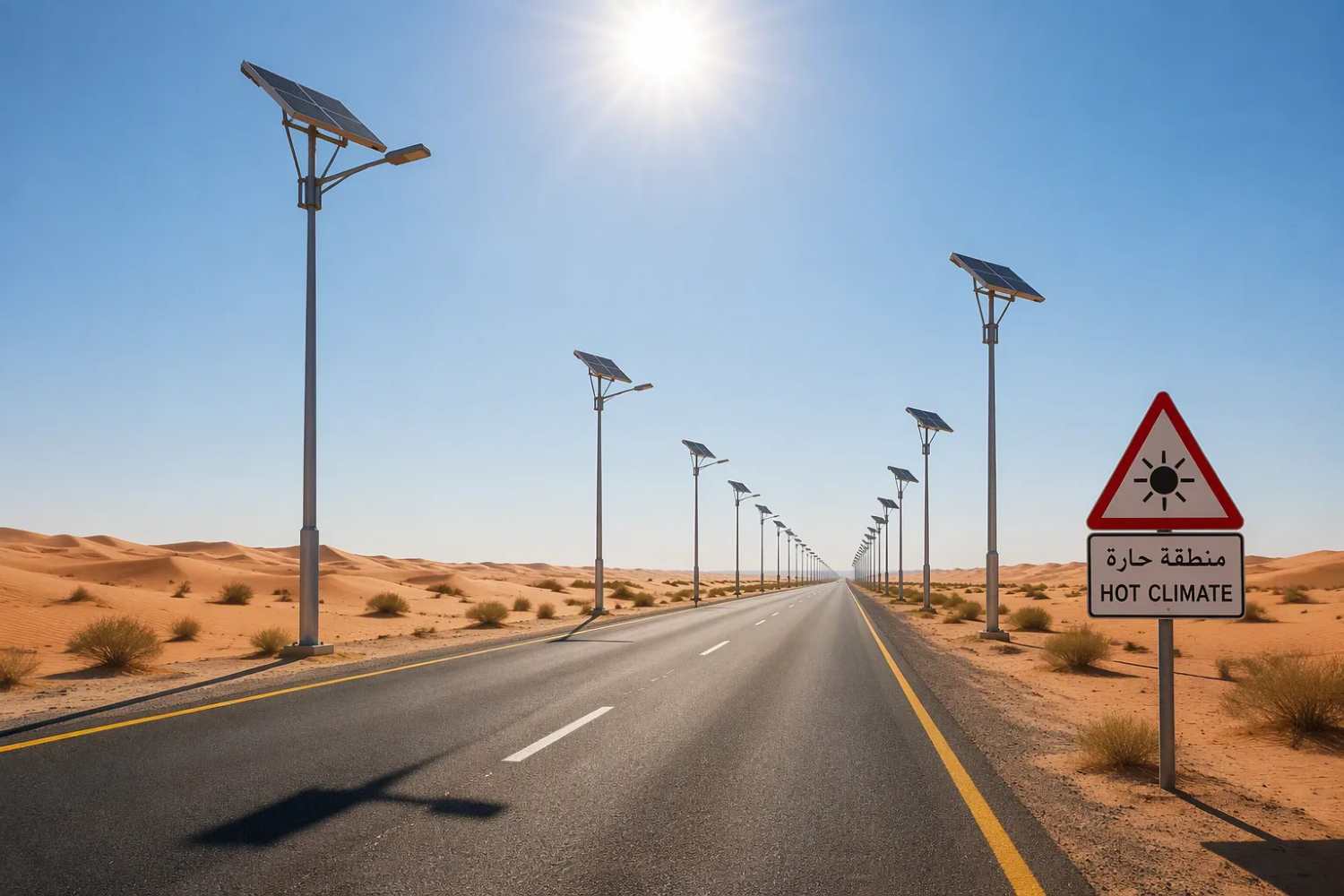
Lighting poles for desert highway projects work best when made from hot-dip galvanized steel or aluminum. They need heat-resistant coatings and properly engineered foundations. Desert environments create special stressors: extreme daytime heat, powerful ultraviolet radiation, and constant sand abrasion. High heat makes parts expand, which can stress joints and welds. Ultraviolet radiation can slowly break down outdoor finishes. Blowing sand scrapes exposed surfaces. These conditions speed corrosion, ruin finishes, and threaten structural integrity. Ordinary poles fail fast under such demands. So specialized equipment is essential. This article is a practical guide for choosing, installing, and maintaining these structures to ensure safety and long-term performance in hot climates.
Key Takeaways
- Pick hot-dip galvanized steel or aluminum for lighting poles in the desert.
- Make poles to handle thermal expansion and daily temperature changes.
- Use coatings that block UV rays and resist wear to protect against sun and sand.
- Design foundations and anchor bolts for desert soils that move and wind loads.
- Set up regular check-ups and repairs so things keep working well for a long time.
What Challenges Do Lighting Poles Face in Desert Highway Environments?
Desert highways expose lighting poles to conditions that accelerate wear and threaten structural safety. Two forces dominate: intense heat and abrasive airborne particles combined with strong sunlight.
How Extreme Heat and Temperature Changes Affect Steel Lighting Poles
Steel expands when heated. This property, called thermal expansion, creates mechanical stress in any rigid structure. For ASTM A36 steel, a common material for lighting poles, the linear thermal expansion coefficient is approximately:
- 12.3 × 10⁻⁶ per degree Celsius in one reference
- 12.0 × 10⁻⁶ per degree Celsius in a comparison table
These values mean that a 10-meter pole can grow by several millimeters when surface temperatures climb from a cool night to a scorching afternoon. Repeated daily cycles push and pull at welds, base plates, and anchor bolts. Over years, this movement can loosen connections and initiate cracks. Designers must account for this expansion by specifying slip joints, slotted holes, or flexible base details that absorb movement without transferring stress to the foundation.
How UV Exposure and Sandstorms Affect Pole Coatings and Finishes
Ultraviolet radiation breaks down organic molecules in paints and powder coatings. The finish first chalks, then loses adhesion, and finally exposes bare metal. Once the protective layer fails, corrosion begins. Sandstorms add a second attack. Wind-driven particles act like sandpaper, scouring surfaces and thinning coatings at edges and corners where the film is weakest. Together, UV and abrasion shorten coating life dramatically compared to temperate climates. Specifying thicker galvanized layers or UV-stable powder formulations helps, but regular inspection remains essential. Any sign of chalking, color shift, or exposed substrate signals that recoating is due.
How to Select Steel Materials for Hot-Climate Lighting Pole Projects

Lighting poles for desert highways need a good mix of strength, weight, and cost. Morelux is a top Malaysian manufacturer with over 15 years of experience. They build custom steel poles for lighting and infrastructure. Their products include solar lighting poles, high mast poles, and street lighting poles. Hot-dip galvanized steel is still the main choice for tall structures. Aluminum is lighter, resists corrosion, and looks clean, so it works well in hot climates. The final choice depends on pole height, wind load, and how long the pole should last.
How Steel Grade and Wall Thickness Affect Structural Performance
Steel grade sets the yield strength. A higher grade lets you build a taller pole with less material. Wall thickness controls stiffness, bending resistance, and impact resistance from vehicles or debris. Thicker walls also slow sand abrasion, which matters on desert highways. Engineers figure out the moment at the pole base using wind speed, height, and the projected area of fixtures. Morelux provides structural calculations and wind load analysis for each project. These calculations follow international standards like BS EN, AASHTO, AS/NZS, and MS.
Hot-dip galvanizing covers steel with a protective zinc layer. When scratched, the zinc corrodes first and protects the steel. Aluminum does not need this coating because its oxide layer regrows on its own. Aluminum is lighter, so handling costs go down. Steel is still the strongest option for very tall poles and high wind zones.
Solar-powered lighting poles work in desert heat above 50°C. Parts inside must survive this heat. The table below shows safe temperature ranges.
| Specification | Temperature Range |
|---|---|
| Overall unit operating range | –1 °C (winter nights) to +70 °C (summer days) |
| Lithium iron phosphate battery ambient operation | 50–60 °C (normal operation) |
The whole system handles –1 °C winter nights and +70 °C summer days. Batteries stay normal only between 50 and 60 °C. Above that, they stop working normally. Ventilation keeps the enclosure cooler. Aluminum releases heat faster than steel, which helps the electronics inside.
How Thermal Expansion Influences Steel Pole Design Considerations
All lighting poles expand when temperatures rise. The effect gets bigger as the pole gets longer. For galvanized steel, the mean linear expansion coefficient is 12.0 × 10⁻⁶ per degree Celsius. The formula is ΔL = α × L × ΔT. For a 12-meter pole:
| Quantity | Value |
|---|---|
| Material | Galvanized steel (carbon-steel base) |
| Linear-expansion formula | ΔL = α × L × ΔT |
| α (mean CTE from source) | 12.0 × 10⁻⁶ /°C |
| L (original length) | 12 m |
| ΔT (60°C − 10°C) | 50 °C |
| Resulting expansion ΔL | 0.0072 m = 7.2 mm |
That 7.2 millimeters looks small, but daily cycles repeat thousands of times. Each cycle pushes and pulls on welds, base plates, and anchor bolts. Over the years, this movement cracks paint and loosens connections. Slip joints let pole sections move without stress. Slotted anchor holes allow slight base rotation. These features stop the pole from sending full force to the foundation.
Morelux provides design drawings with these expansion details before production. In-house anodizing works for aluminum poles; galvanized steel can get a powder coat for color. Anodized aluminum resists UV damage well, but regular inspection still matters in sandy zones. Wall thickness also affects foundation loading, since a heavier pole needs larger concrete anchors. The right grade, thickness, and expansion treatment ensure a long service life.
Which Protective Coatings Suit Steel Lighting Poles in Desert Climates?

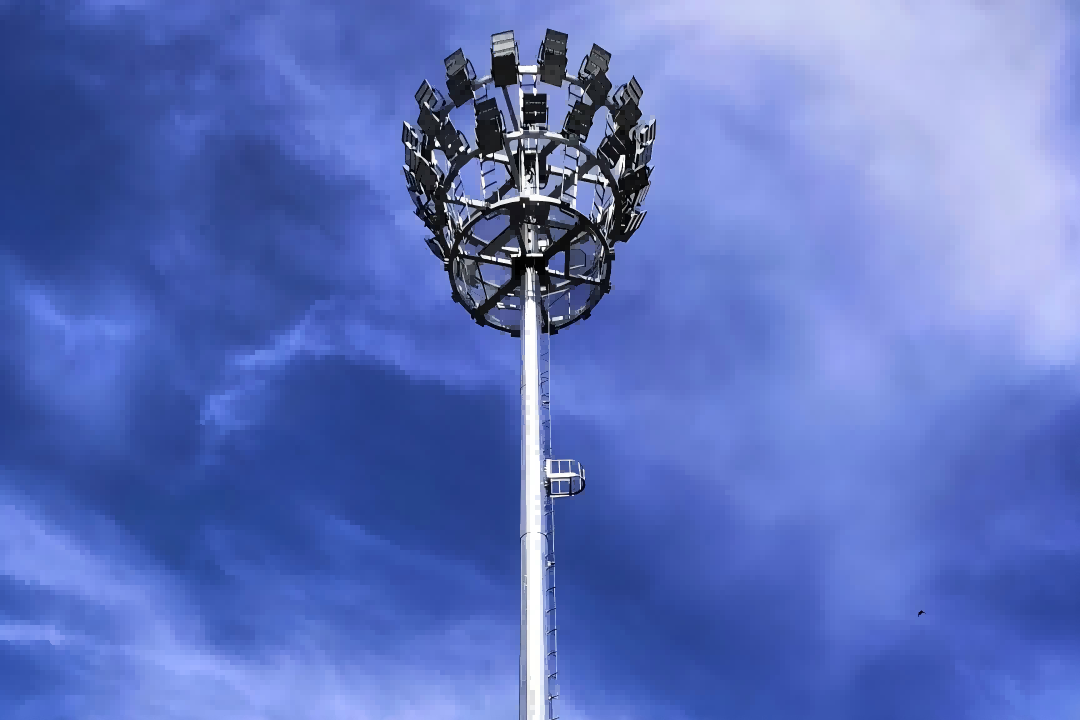
Desert highways need tall structures. High mast lighting poles for highways usually range from 60 to 150 feet. Street light poles often need to be 10 to 12 meters tall for high-speed highways. Standard pole spacing layouts include one-sided, opposite, staggered, and median lighting setups. Each layout changes how coatings are exposed. Poles in open median strips face sand from two directions. One-sided layouts leave one face more open to UV. These factors guide coating selection.
How Hot-Dip Galvanizing Protects Steel Poles From Corrosion
Hot-dip galvanizing dips steel in molten zinc. The zinc bonds with the steel surface and forms a metallurgical layer. This layer blocks moisture and oxygen from reaching the base metal. When the coating gets scratched, the nearby zinc corrodes first. This sacrificial action protects the steel underneath. In desert climates, galvanizing works well because it resists abrasion better than thin paint films. Sandstorms wear away organic coatings quickly. Zinc layers last longer under the same conditions. The coating thickness determines service life. Thicker zinc means longer protection. Project managers should specify coating weight based on expected sand exposure and desired maintenance intervals.
How Powder Coated Help Protect Exposed Pole Surfaces
Powder coating adds color and an extra barrier on top of galvanizing. The powder melts and fuses into a continuous film during curing. This film resists UV degradation when the formulation is correct. Not all polyester powders perform equally. Super-durable polyester coatings survive at least 2,000 hours of QUV accelerated weathering and keep at least 50% of their original gloss. Standard polyester lasts only 1,000 to 1,500 hours. Certain polyester-based coatings reach 2,200 to 2,500 hours of UV-A accelerated exposure before losing half their gloss.
Coating selection directly affects long-term appearance and maintenance costs in desert environments.
Morelux provides engineering support for these decisions. Their team supplies design drawings, structural calculations, and wind load analysis. Foundation design for shifting desert soils also falls within their scope. This support helps contractors match coating systems to site conditions. Proper specification prevents premature failure and extends the service life of every pole.
How to Design Lighting Poles for Desert Highway Wind Loads
Wind load design begins with how much of the pole the wind can hit. Taller poles catch more wind. Every fixture at the top adds drag, which makes the bending force at the base much bigger. A 12-meter street pole with two arms acts very differently from a 20-meter high mast holding a ring of floodlights. Engineers work out the bending force using wind speed, height, and the flat area of each fixture. Morelux provides wind load analysis for every project, following standards like BS EN, AASHTO, and AS/NZS.
How Pole Height and Fixture Loads Affect Structural Wind Resistance
Height boosts wind force in two ways. First, wind speed goes up as you get higher off the ground. Second, a longer pole makes a longer lever arm. A small fixture load at the top creates a large stress at the base. So designers match wall thickness and steel grade to the total load. Thicker walls handle bending better. Higher grades let you build taller poles with less steel. Solar panels and battery boxes add more area for wind to push, so solar lighting poles need careful review.
How Base Plates and Anchor Bolts Support Structural Stability
The foundation holds every force the pole collects. Sandy desert soils move, so the pole must go deeper into the ground than on stable soil. The table below shows common anchor needs for a 15–20 m high-mast pole.
| Parameter | Specification |
|---|---|
| Anchor bolt diameter | M27–M36 |
| Bolt sets | 8–12 sets |
| Minimum embedment depth | ≥ 12 × bolt diameter |
| Concrete grade | Minimum C25–C30 |
Handle poles with care in extreme heat. Metal gets a little soft and expands, so lifting points and slings must avoid sharp contact that causes warping. Store poles on supports, never on bare sand. For wiring, use heat-rated conduit and seal every entry point against sand getting in. Fine particles slip into small gaps and wear down insulation over time.
Our Steel Lighting Pole Solutions for Desert Highway Projects
Morelux is a maker of custom steel poles for desert highway work. The company builds every pole to match the project drawings. Buyers can ask for certain heights, arm setups, and base plate layouts. Morelux also sells wholesale to distributors who handle many highway contracts. Each order begins with a look at the site conditions. This step makes sure the final product fits the wind zone and soil type.
How MORELUX Supports Custom Steel Pole Dimensions and Configurations
Morelux sends structural calculations and loading charts with every custom order. Government transport departments often need these papers to approve a project. The calculations follow AASHTO wind velocity maps and the Effective Projected Area of each luminaire. This analysis sets the wall thickness and shaft diameter. Standard steel light poles handle wind gusts from 90 mph to 180 mph, depending on the region. Morelux also gives design drawings that show expansion details and anchor bolt placement.
How Engineering and Protective Finishes Support Project Requirements
Material specs matter for a long service life. Morelux builds poles to meet well-known standards.
| Property | Specification Requirement | Standard Reference |
|---|---|---|
| Yield Strength | Minimum 50,000 psi | ASTM A572 |
| Coating Thickness | Minimum 3.9 mils (86 µm) | ASTM A123 |
| Welding Quality | Full penetration or 60% min | AWS D1.1 |
A planned maintenance schedule keeps lighting poles safe. Crews should clean sand and dust off pole surfaces on a regular basis. Inspections should look for chalking, color shift, or exposed metal. Any coating damage needs quick repair. Electrical checks matter too. Technicians should check wiring insulation, seal conduit entries against sand, and test battery performance in solar units. These steps stop failures during peak summer heat.
Desert highway projects demand careful choices. Pick hot-dip galvanized steel or aluminum based on height and wind load. Apply coatings that resist UV and sand. Design for thermal expansion, since a 12-meter pole can grow about 7.2 mm across a 50°C swing. Plan foundations for shifting soils. Proper installation and a proactive maintenance schedule protect safety and control costs. Project managers should weigh total cost of ownership, not just purchase price. Partner with experienced manufacturers like Morelux for engineering support and durable Lighting poles.
Frequently Asked Questions About Lighting Poles for Desert Highways
Are Galvanized Steel Lighting Poles Suitable for Desert Climates?
Yes. Hot-dip galvanized steel lighting poles help resist corrosion caused by moisture and environmental exposure. For desert highways, buyers should also consider sand abrasion, temperature fluctuations, and the required coating protection.
How Does Extreme Heat Affect Steel Lighting Pole Performance?
Extreme heat can affect coating durability, material expansion, and connected electrical equipment. Proper steel specifications, suitable protective finishes, and structural calculations help maintain lighting pole performance under high-temperature conditions.
Which Coatings Help Protect Lighting Poles From UV Exposure?
UV-resistant powder coatings and polyurethane topcoats can help protect lighting poles from sunlight-related fading and coating degradation. A duplex system combining hot-dip galvanizing with suitable paint coatings can provide additional corrosion protection for demanding outdoor environments.
How Should Lighting Poles Be Designed for Desert Highway Wind Loads?
Desert highway lighting poles should be designed around local wind speeds, pole height, wall thickness, pole shape, and luminaire effective projected area (EPA). Structural calculations help determine suitable specifications, while foundation design should account for local soil conditions and wind forces.