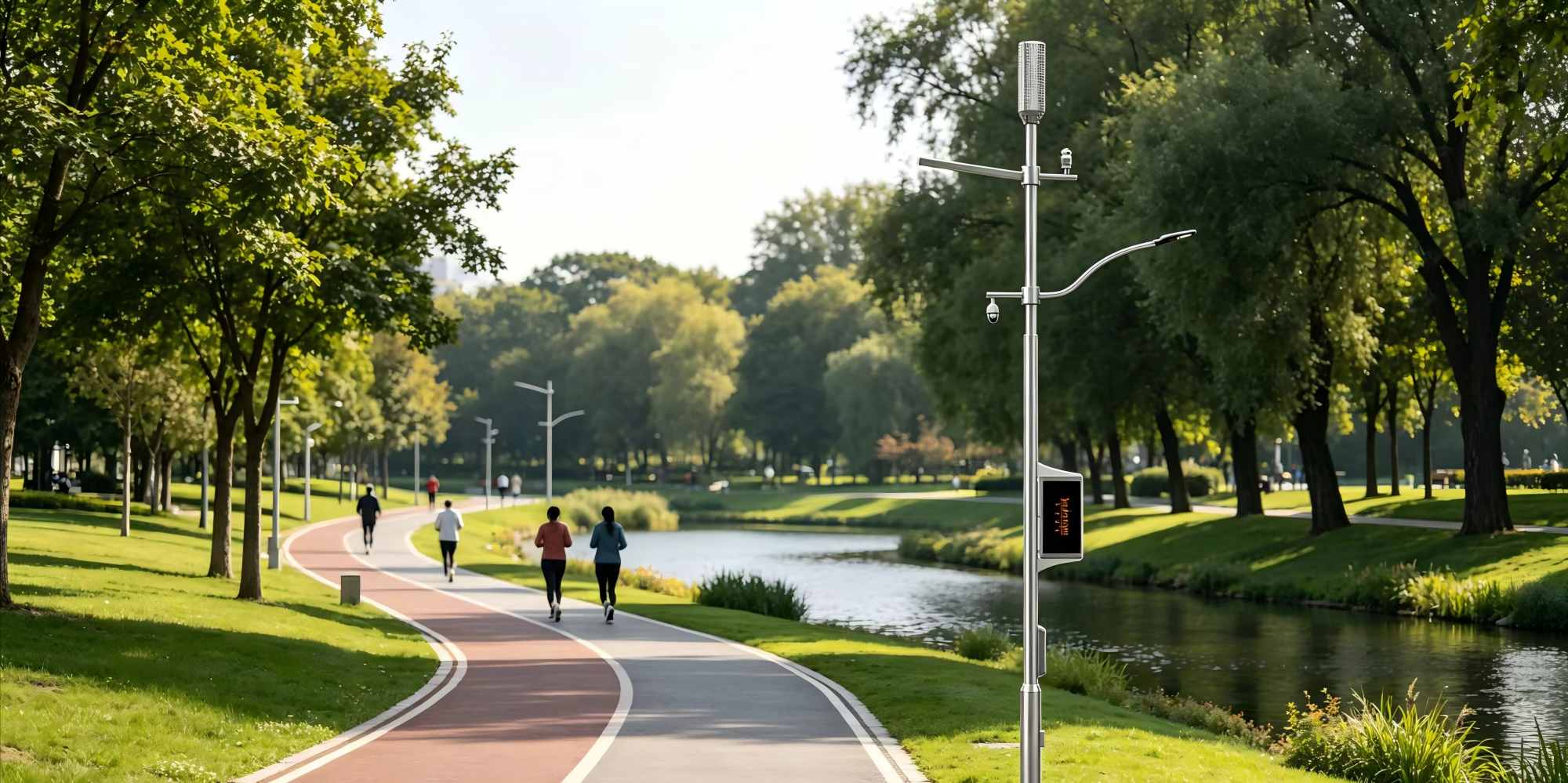
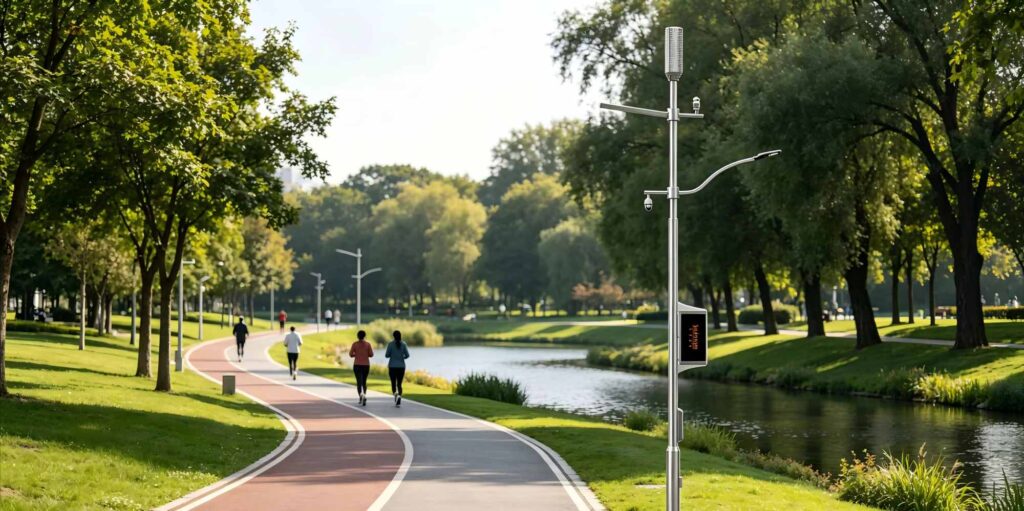
Smart poles give you the benefits of smart poles in one structure: energy efficiency, lower costs, and stronger connectivity. A smart pole is a steel pole that holds LED lighting, network equipment, and sensors together. This mix changes how a city pays for light, data, and safety.
The savings are real. Switching normal public lighting to LEDs cuts energy use by 50%. LEDs with automatic dimming and presence detection push energy savings up to 90%. Those numbers explain why cities study the benefits of smart poles before any upgrade. Economic, environmental, connectivity, and safety gains all come from this single design choice, and real projects already show the results.
Key Takeaways
- Smart poles can lower energy use by as much as 90% by using LED lights and smart dimming.
- A single smart pole combines lighting, cameras, and charging to lower costs and save space.
- Smart poles make safety better with cameras and emergency call boxes so help can come faster.
- Smart poles support 5G and IoT to gather live data that helps cities make better decisions.
- Strong steel poles last for many years and need less upkeep, which saves money over time.
What Are Smart Poles and How Do They Support Smart Cities?
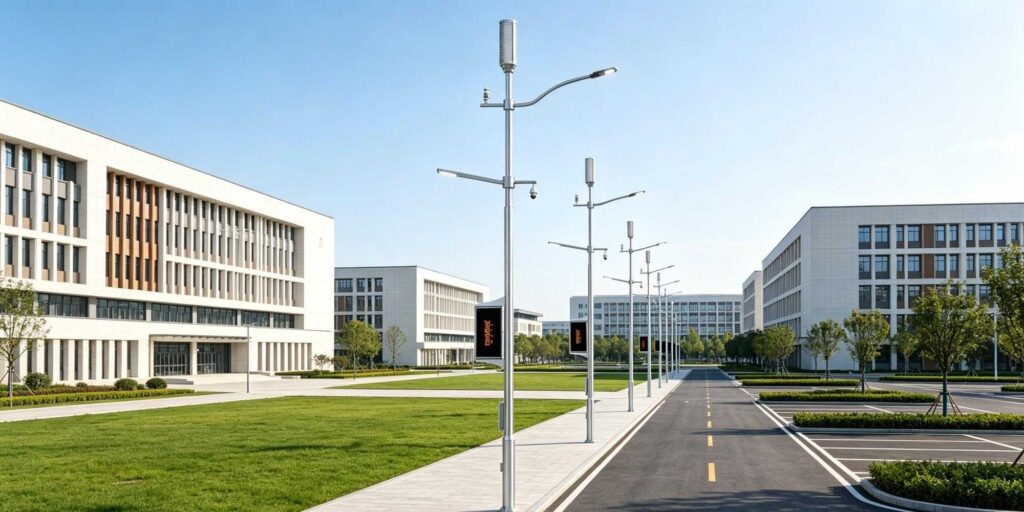
Smart poles help smart cities in three main ways: they save energy, lower operating costs, and put many services on one structure. Each gain comes from the same hardware platform.
How Smart Poles Combine LED Lighting and Smart Technologies
A smart pole is a modular platform. LED lights, cameras, sensors, and network gear all share one steel column and one power supply. Standard interfaces and parts you can swap out keep the platform useful for 15 to 20 years. Connectivity and compatibility matter more than the hardware you can see.
| Component | Primary Function |
|---|---|
| LED street lighting | Roadway illumination and energy savings |
| Traffic monitoring systems | Vehicle and pedestrian analysis |
| Environmental sensors | Air quality and weather monitoring |
| Public WiFi equipment | Internet connectivity |
| 5G small cells | Wireless communication support |
| EV charging stations | Electric vehicle charging |
| Emergency communication systems | Public safety assistance |
| Smart controllers | System management and automation |
Energy efficiency comes first. LED lights use much less power than older lamps. Sensors adjust brightness based on time of day, weather, and whether people or vehicles are present. This dimming cuts energy use even more and reduces light pollution in crowded areas. Solar power can add another layer of sustainability.
Cost savings come next. One pole carries lighting, connectivity, and charging, so a city doesn’t need separate setups for each service. Building and upkeep costs drop together. Connectivity and EV charging can also bring in money, which helps cover operating costs over the pole’s working life. These are the real benefits of smart poles that city planners look at first.
Why Steel Poles Are Suitable for Smart City Infrastructure
Steel carries the load. A smart pole holds cameras, antennas, and charging units up high, and steel has the strength-to-weight ratio these loads need. Galvanized finishes resist rust through decades of weather.
Steel also works well for modular design. Manufacturers can weld brackets, cut cable openings, and add mounting plates during production. A pole shows up ready for the equipment package a city asks for. That flexibility explains why steel is still the go-to material for smart city infrastructure.
The benefits of smart poles go beyond the pole itself. They change how a city buys, runs, and grows its street services.
How Do Smart Poles Enhance Public Safety and Urban Security?
Safety is one of the best reasons to use smart poles. A pole that can see, hear, and report gives a city tools a plain lamp post never had. The same dimming controls that save energy also keep light levels right for walkers and drivers. Air and weather sensors on the pole also help city planners make cleaner-city plans.
How Integrated CCTV Systems Improve Public Area Surveillance
Cameras placed high on a steel pole can see a wide area. When people can see the cameras, that alone helps stop crime. A 40-year review of CCTV found a 13% drop in crime overall. The best results came where cameras were visible and actively watched.
Lighting matters just as much. A 2016 New York City public housing study found a 36% drop in nighttime outdoor index crimes after brighter lights were installed. A February 2025 Philadelphia study of a citywide LED upgrade reported a 15% drop in outdoor nighttime street crime and a 21% drop in outdoor nighttime gun violence. Better street lighting has also been linked to up to 50% fewer deadly midblock vehicle crashes.

How Emergency Monitoring Supports Faster Incident Response
An emergency callbox on the pole puts help within reach on any street. IP-based intercoms run over the network and connect a caller to dispatch without extra wiring.
Sensors add speed. Cameras, air quality monitors, and incident detection units alert authorities the moment something looks wrong. Operators can brighten a crisis area right away, check the video, and share footage with responders before they arrive. Police, fire, and EMS reach the scene better informed, which helps them make faster and more accurate decisions.
How Do Smart Poles Support 5G and IoT Connectivity?
Cities need more antennas and more data points every year. Smart poles carry both. They act as a backbone for Wi-Fi hotspots and speed up 5G and IoT deployment across a district. The market reflects that demand.
How Smart Poles Provide Mounting Space for 5G Communication Equipment
A smart pole saves room for 5G small cells, Wi-Fi units, and other communication gear. The structure can grow and includes equipment ports, mounting spots, and wiring space. Crews can add future 5G units, sensors, or info screens as demand grows. You don’t need to replace the whole pole.
Integrated smart poles are usually 10–15 m tall. That height carries lighting, video, 5G, and IoT devices on one column. Exact specs depend on mounting height, equipment setup, wind load, and the operating environment. Buyers should check these details with the maker during design.
How IoT Connectivity Enables Real-Time Urban Data Collection
Each connected pole works as a data hub. Sensors send live information to city teams, and those teams act on it.
- Environmental sensors track air quality, noise, and temperature to support public health and urban planning.
- Traffic sensors measure vehicle flow, congestion, and speed to tune signal timing and cut emissions.
- Utility sensors watch water, gas, and electricity use to catch leaks and prevent outages.
- Surveillance sensors detect security threats and unauthorized activity.
- Infrastructure sensors check bridges, roads, and buildings for structural issues.
- Parking sensors find open spaces to reduce search time and idle emissions.
This data supports better decisions. Planners can target pollution, adjust traffic flows, and prepare for natural disasters. Automated reporting of lamp, sensor, and power faults also lowers maintenance costs and improves reliability.
How Do Smart Poles Reduce Maintenance and Operating Costs?
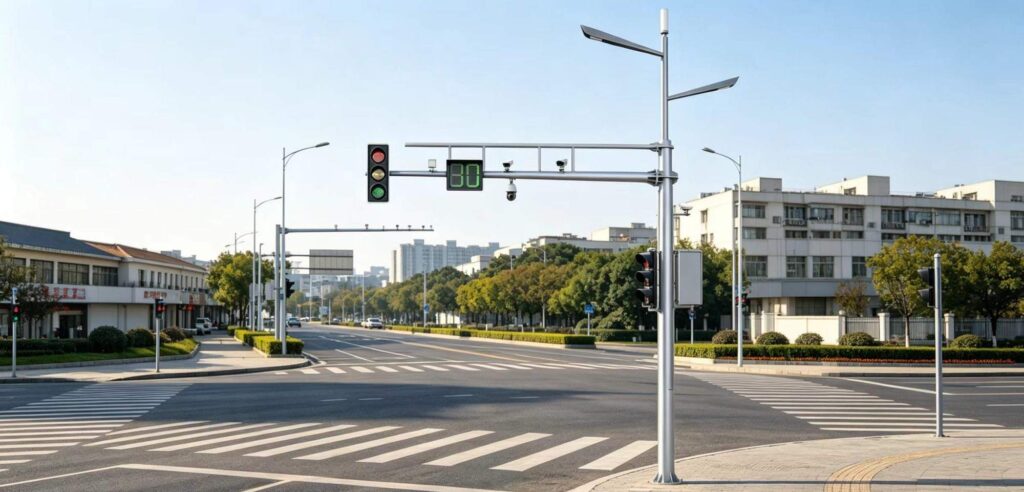
Lower running costs come from two things: fewer trips to the site and structures that last longer. The same setup also makes public safety better, because cameras and emergency call points share the pole with the lights. Everyday services gain too. EV charging, traffic signal integration, and connected public services all run from one column instead of separate assets.
How Remote Monitoring Helps Identify Equipment Faults Earlier
Old-school upkeep relies on nighttime patrols and complaints from citizens. A crew may wait days or weeks before anyone notices a dark pole. Connected fixtures report their own status all day and night.
| Detection Aspect | Traditional Maintenance | IoT Remote Monitoring |
|---|---|---|
| Discovery method | Nighttime patrols and complaints | Continuous self-reporting |
| Detection speed | Days to weeks | Alerts within minutes |
| Fault identification | No distinction between causes | Automatic classification |
| Crew dispatch | Emergency overtime truck rolls | GPS-tagged, severity-ranked jobs |
| Repair timing | Reactive | Planned during normal hours |
The payoff for operations is big. Remote monitoring can cut truck rolls by up to 80% and shrink response times from days to hours. Sensors also catch slow decline before a failure. A driver pulling 12% more current than baseline signals degradation. Machine learning models trained on thousands of failure events flag fixtures likely to fail within 30–90 days, so crews replace them on schedule.
How Durable Galvanized Steel Poles Reduce Structural Maintenance Needs
Hot-dip galvanized steel fights corrosion for decades. It corrodes at roughly 1/30th the rate of uncoated steel. A galvanized steel pole usually serves 20–50 years, depending on the environment. Marine sites can reach up to 50 years with a protective coating, while heavy industrial zones shorten service life to about 13 years.
Inspection keeps that lifespan on track. Coastal and humid areas warrant semi-annual checks, and premium protection systems are advised there. Early corrosion signs are easy to catch and treat. Structural repairs stay rare, so maintenance budgets go toward equipment rather than pole replacement.
What Should Buyers Consider When Choosing Steel Smart Poles?
Smart poles work best alongside traditional infrastructure, not in place of it. A city can upgrade one corridor at a time and keep standard poles where they already serve well. Early deployments show the pattern: lighting-heavy streets get smart lighting poles, security zones get CCTV poles, and coverage gaps get telecom monopoles. Each project starts with the same questions about height, thickness, and load.
How Pole Height, Wall Thickness, and Wind Loads Affect Design
Wind is often the factor that turns a standard pole into a custom one. Taller poles face higher bending moments, because wind pushes through a longer lever arm. A 12 m pole is not simply a taller 8 m pole. Coastal roads, open highways, and elevated sites carry far more exposure than sheltered streets.
Wind force = Velocity pressure × Gust or response factor × Force coefficient × Projected area
Wall thickness rises with height as a starting reference. A 5–7 m pole typically begins near 3.0 mm, an 8 m pole near 3.5 mm, and a 12 m pole near 4.5 mm. These are starting points only. Final dimensions depend on design wind speed, terrain, equipment load, and local code. Buyers should confirm the design basis, site conditions, and every mounted item before approving a drawing.
How Equipment Weight and Mounting Requirements Influence Specifications
Every device adds gravity load and projected area. A standard street light pole supports roughly 60 to 400 pounds. A 6-inch pole built for lighting, cameras, Wi-Fi, and IoT gear carries about 4 lbs/ft and a 9,000 ft-lb moment capacity. A 9.8-inch pole for 4G/5G small cells carries about 7 lbs/ft and 40,000 ft-lbs. Anchor patterns follow the load, with four-bolt or six-bolt arrangements and bolt diameters from 3/4 inch to 2 inches.
Buyers should request an elevation drawing, load schedule, foundation drawing, and finish specification. Documented testing against AASHTO, IES, and ANSI standards lets engineers verify performance and supports smoother approvals.
Our Custom Steel Smart Pole Manufacturing Solutions
How MORELUX Customizes Steel Poles for Smart City Projects
MORELUX manufactures custom steel poles for smart city projects, including smart lighting poles, CCTV poles, and telecom monopoles. Options include 6–12 m pole heights, 50–200 W LED lighting, cameras, and 7 kW, 11 kW, or 22 kW EV chargers. Buyers can also select RAL colors and smart control systems compatible with MQTT, HTTP API, or Modbus.
The process starts with your project requirements, such as site location, pole quantity, functions, and local standards. MORELUX provides 3D renderings, itemized quotations, and factory pre-assembly and testing. Production typically takes 30–60 days, depending on order size and complexity.
How Structural Engineering and Hot-Dip Galvanizing Support Durability
MORELUX uses structural steel grades such as S235, S275, and S355 to meet project-specific load requirements. Pole designs consider local wind conditions, accessory weight, cable routing, access door placement, and foundation details. Structural standards and calculations are selected according to project specifications.
Hot-dip galvanizing to ISO 1461 or ASTM A123 helps protect steel poles against corrosion. Optional powder coating creates a duplex protection system while providing the required finish and color. These treatments support long-term outdoor performance.
Smart poles bring multiple functions together in one steel structure. They can support energy-efficient lighting, 5G and IoT connectivity, traffic monitoring, CCTV, and EV charging. Cities can also upgrade infrastructure in phases, combining smart poles with existing conventional lighting systems where appropriate.
Frequently Asked Questions About Smart Pole Benefits
What Are the Main Benefits of Smart Poles for Modern Cities?
Smart poles combine street lighting with technologies such as CCTV, 5G communication, WiFi, and environmental sensors. They help cities improve public safety, expand connectivity, monitor urban conditions, and manage infrastructure more efficiently. Integrating multiple functions into one structure can also reduce the need for separate poles and equipment installations.
How Much Energy Can Smart Poles Save Compared With Street Lights?
Energy savings depend on the existing lighting system, LED efficiency, operating hours, and dimming settings. Replacing conventional lamps with LED lighting and using scheduled or sensor-based dimming can significantly reduce electricity consumption. Remote monitoring also helps identify faults and avoid unnecessary energy use.
Can Steel Smart Poles Support CCTV Cameras and 5G Equipment?
Yes. Steel smart poles can be engineered to support CCTV cameras, 5G antennas, WiFi modules, and other smart devices. MORELUX customizes pole dimensions, wall thickness, mounting brackets, and cable routing according to equipment weight, wind exposure, and project requirements.
How Does Hot-Dip Galvanizing Protect Smart Pole Structures?
Hot-dip galvanizing creates a bonded zinc coating that protects steel against moisture and corrosion. The zinc also provides sacrificial protection if the surface is scratched. MORELUX offers hot-dip galvanized steel poles compliant with ISO 1461, with optional powder coating for additional surface protection and color customization.