

High-yield structural steel Light Poles are the top choice for business and industrial sites. Steel provides great strength, stands up to strong winds, and saves money over time. Standard setups cost between $2,500 and $8,000 or more for each installed pole, based on foundation needs and Effective Projected Area (EPA) wind load ratings. Morelux brings over 15 years of factory experience and uses a 45,000-square-meter facility to build exact steel pole products. Our engineers design these poles to meet international building rules, including BS EN, AASHTO, and AS/NZS standards. Sites get maximum safety with custom mounting setups, great impact protection, and heavy-duty strength made for harsh outdoor weather.
Key Takeaways
- Steel light poles offer great strength and damage resistance for busy industrial sites.
- Hot-dip zinc coatings protect steel poles against bad weather and rust for many decades.
- Correct wind load calculations keep tall lighting poles safe during strong storms.
- Custom pole heights and arm shapes give the best light coverage while cutting power bills.
Commercial and Industrial Lighting Pole Solutions
Business and factory sites need strong outdoor light posts to keep areas safe and working well. Recent industry studies show that steel is still the most popular material, holding over 40% of the total market in 2024. These reports also highlight that industrial spaces use about 30% of all steel light poles sold worldwide. Factories, shipping hubs, and power plants create this huge demand across many different global locations. At the same time, commercial businesses make up nearly 25% of the overall market. Shopping centers, office buildings, and hotels often pick tough steel Light Poles to protect their big parking lots. Shipping yards and busy ports use tall poles to shine light over broad outdoor work spaces. Choosing the right material keeps these structures safe for many years in any type of local weather.
Picking the right building material affects long-term site safety and total repair costs over time. Building planners should compare structural steel with other common choices like aluminum, fiberglass, and concrete.
| Material | Yield Strength | Impact Resistance | Long-Term Load Capacity |
|---|---|---|---|
| Structural Steel | Exceptionally High | Superior Resistance | Maximum Heavy Equipment Capacity |
| Aluminum | Moderate | Moderate Resistance | Limited Top Load Capacity |
| Fiberglass | Moderate to Low | Brittle Under Extreme Impact | Low Heavy Luminaire Capacity |
| Concrete | High Compressive / Low Tensile | Cracks Under Severe Impact | High Weight / Moderate Flexibility |
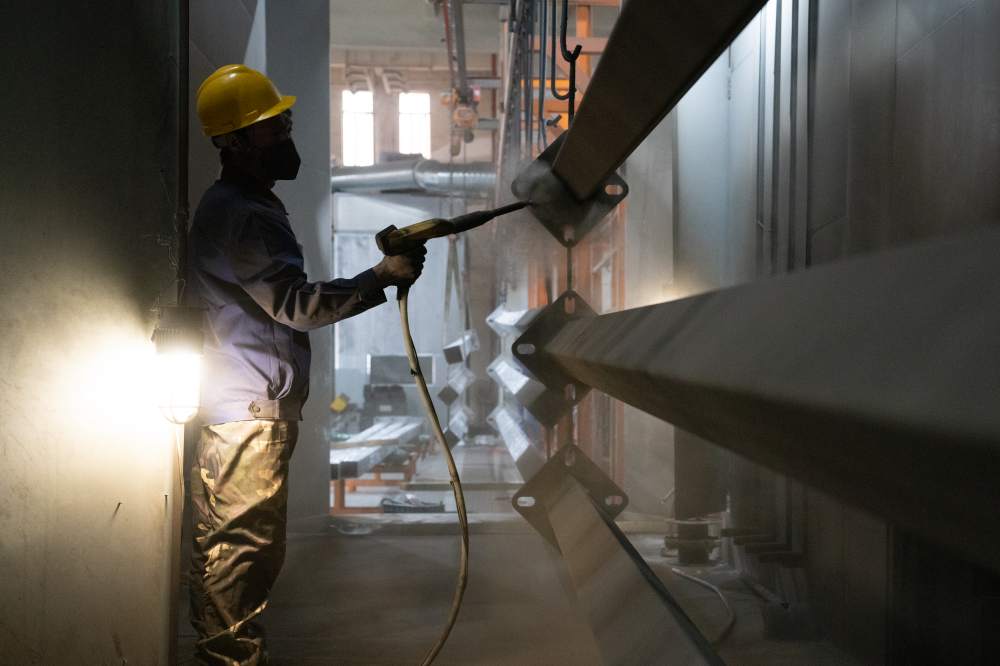
Morelux uses strict factory standards to make strong steel products for major facilities around the world. Factory workers use precise CNC cutting tools to get exact measurements for every metal part. Trained teams then use advanced automatic welding tools to create solid seams along the metal joints. These clean welds remove weak spots down the whole length of the metal pole. Quality inspectors check every weld carefully before sending the parts to get their final protective coating. Each finished pole meets tough global engineering rules, including BS EN, AASHTO, and AS/NZS build standards. These official ratings prove that the poles are safe, well-made, and built to withstand powerful outdoor winds. A special hot zinc bath covers the steel surface to stop rust damage caused by harsh weather conditions. These high manufacturing rules help engineers order custom pole heights and top arm layouts. Careful factory work shortens setup time on-site and lowers building costs for site owners. Property managers get reliable, long-lasting light poles that stay safe through many years of continuous use.
Lighting Pole Applications Across Commercial & Industrial Facilities
Lighting requirements vary considerably across commercial and industrial properties. Production facilities prioritize operational visibility, logistics centers need wide-area coverage, while business properties often consider both lighting performance and appearance. Morelux steel lighting poles can be applied to different outdoor areas based on the facility layout and lighting purpose.
Steel Lighting Poles for Manufacturing and Factory Sites
In manufacturing plants, outdoor lighting supports production areas that remain active after sunset. Poles are commonly installed around factory yards, loading zones, equipment areas, entrances, and employee access routes. The lighting layout can be planned around machinery, buildings, and work zones to provide visibility without obstructing plant operations.
Steel Lighting Poles for Warehouses and Distribution Centers
Logistics facilities typically have large open yards where trucks and goods move continuously between storage buildings and loading areas. High mast lighting poles can provide broad illumination across truck yards and distribution areas, reducing the need for numerous individual poles. Lower-height poles are also useful around loading docks, entrances, and pedestrian areas where more localized lighting is required.
Steel Lighting Poles for Business Areas
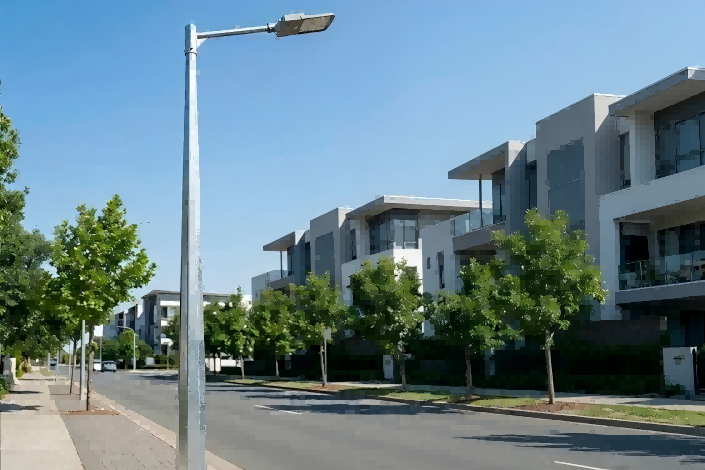
Lighting in office parks, commercial complexes, and retail developments serves a different purpose from industrial sites. In addition to illuminating entrances and walkways, the poles form part of the property’s outdoor environment. Pole proportions, arm styles, and finishes can therefore be selected to suit the surrounding buildings and landscape while maintaining practical nighttime visibility.
Steel Lighting Poles for Facility Roads and Parking Areas
Roads and parking areas require lighting that supports movement rather than fixed work activities. Poles can be positioned along internal roads, intersections, parking rows, entrances, and pedestrian crossings according to traffic patterns. A well-planned layout helps drivers identify routes, improves pedestrian visibility, and reduces poorly illuminated areas across the site.
Steel Lighting Poles for Oil, Gas, and Processing Plants
Oil, gas, chemical, and processing facilities often contain pipelines, storage tanks, processing units, service roads, and restricted-access areas. Lighting must cover these different zones while accounting for demanding site conditions. Steel lighting poles can be configured for specific plant areas, with suitable protective treatments selected according to the surrounding environment and project requirements.
Benefits of Steel Lighting Poles for Industrial Facilities
Structural Strength of Steel Lighting Poles for Large Facilities
Industrial sites need reliable infrastructure to hold heavy lights securely. High-strength steel Light Poles handle large physical weights and constant wind pressure easily. Steel columns maintain high rigidity under structural forces across big facilities. Engineers select specific design codes to ensure structural safety.
| Standard | Application |
|---|---|
| ASCE/SEI 72-21 | Primary governing standard for the specification, design, fabrication, installation, and maintenance of steel lighting system support pole structures. |
| AISC, AASHTO, TIA | Design strength of structural members, components, and connections other than tubular poles. |
| AISC 207-16 | Fabrication certification and record keeping for material traceability and quality checks. |
Compliance with these standard specifications guarantees high performance. Steel members absorb accidental low-speed vehicle bumps without sudden structural failure. Base plates, shaft walls, and top arms maintain total shape integrity under continuous strain. These verified manufacturing rules keep long overhead beams stable in demanding industrial locations.
Corrosion Resistance of Steel Poles in Harsh Environments
Harsh outdoor environments require strong surface protection against rust. Hot-dip galvanizing applies a dense zinc shield directly over exposed steel surfaces. In severe coastal settings, operators often use duplex coating systems. A tough topcoat over galvanizing extends physical service life significantly.
Facilities must follow clear maintenance practices to preserve steel columns over time:
- Perform an annual visual above-grade inspection to check for coating damage, rust staining, vehicle impact, or structural lean.
- Conduct an at-grade zone inspection every 5 years, or every 3 years in C4-C5 environments, using a thickness gauge.
- Schedule an ultrasonic thickness measurement every 5 to 10 years for steel poles older than 15 years.
- Perform an anchor bolt torque check every 3 to 5 years to verify nut tightness against wind vibration.
- Inspect concrete foundations every 10 years to check for cracking, settlement, or base spalling.
Timely spot repairs stop deep rust formation completely. Routine care protects physical integrity and prevents unexpected structural downtime across industrial property grounds.
Choosing the Right Steel Lighting Pole for Facilities
Choosing Steel Pole Heights for Commercial Facility Areas
Facility planners must match physical height to specific area layouts and required illumination levels. Small commercial parking lots usually use poles between 15 and 20 feet tall. Large commercial lots require taller poles ranging from 25 to 35 feet to project light across vast open pavement efficiently. Urban intersections generally install 20 to 30 foot structures, while highway locations use 30 to 50 foot columns.
Taller structures require higher wattage fixtures to maintain proper target brightness on the ground. Mounting height changes power requirements because light spreads over larger surface areas. A 10 to 13 foot pole uses a 100 to 150 watt fixture yielding 8,000 to 12,000 lumens. A 14 to 18 foot pole needs a 150 to 250 watt unit producing 12,000 to 18,000 lumens. Heights of 24 feet or more require 300 watt-class fixtures or higher. Design engineers calculate Effective Projected Area limits to ensure the assembly withstands standard 90 mph wind speeds per AASHTO specifications without structural failure.
Matching Steel Poles for Industrial Facility Lighting
Industrial sites use steel columns because structural steel offers the strength needed to support heavy lighting equipment. Heavy-duty light poles can support multiple floodlights, surveillance cameras, and other equipment at the same time. Steel also performs well in high-wind regions and areas exposed to physical impact. Base plate mounting allows precise leveling during installation and makes future pole replacement easier. Alternatively, direct burial installation can provide a clean appearance where soil and site conditions are suitable.
Engineers must check compatibility between mounting brackets, luminaire housings, and electrical components. Standard mounting brackets can follow ANSI C136 series requirements for tenon sizes, bolt patterns, and mounting angles. Fixtures installed in high-vibration industrial areas may also require structural testing based on applicable standards. High-mast fixtures installed at significant heights can incorporate surge protection to help protect against lightning-related electrical damage. For additional corrosion resistance, a galvanized steel pole with a hot-dip galvanized coating can provide long-term protection against moisture and outdoor exposure, making it suitable for demanding industrial environments.
Customized Steel Lighting Pole Solutions for Facilities
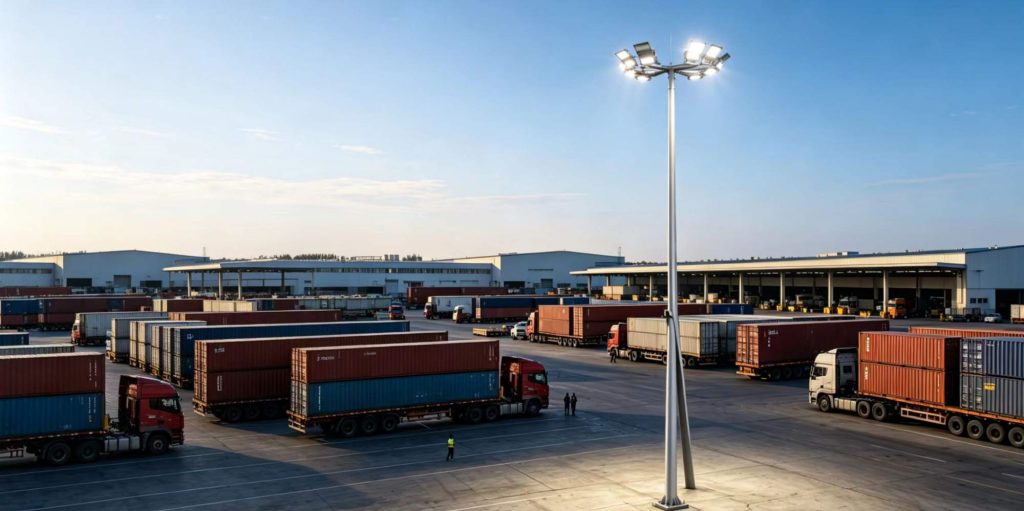
Different commercial and industrial facilities require lighting poles that match their site layout, lighting coverage, and environmental conditions. Morelux provides customized steel lighting pole solutions with adjustable heights, arm configurations, and surface treatments to meet different project requirements.
Custom Steel Pole Heights for Different Facility Requirements
Pole height directly affects lighting coverage and installation requirements. Lower steel lighting poles are suitable for parking areas, walkways, entrances, and smaller facility roads, while taller poles can cover larger factory yards, warehouse compounds, and open industrial areas.
Morelux can manufacture steel lighting poles to project-specific height requirements rather than relying on standard sizes. The final pole height can be selected according to fixture type, mounting position, required lighting coverage, and available installation space. For large sites, high mast lighting poles can provide wider coverage while reducing the number of poles required.
Custom Steel Lighting Pole Arms for Various Fixture Designs
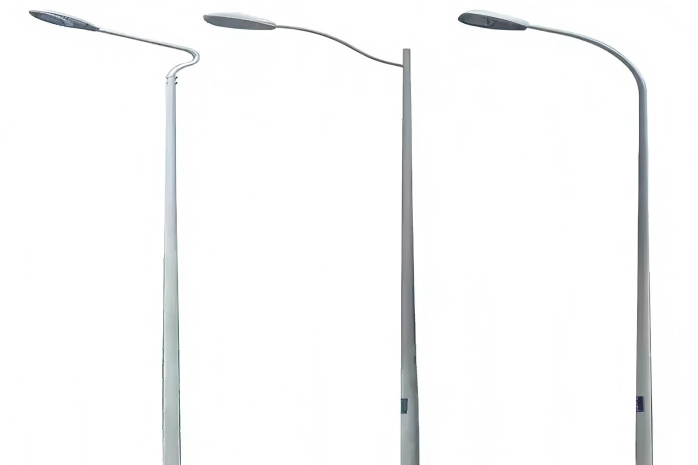
The pole arm determines how lighting fixtures are positioned and directed over the target area. Single-arm configurations are suitable for roads and facility perimeters, while double-arm designs can illuminate wider roads, parking areas, or open spaces from a single pole.
Morelux can provide different arm configurations and mounting arrangements to accommodate various lighting fixtures. Arm length, projection, angle, and mounting position can be adapted to the fixture design and required light distribution, helping keep fixtures properly positioned for the intended lighting area.
Surface Treatments for Long-Lasting Steel Lighting Poles
Steel lighting poles installed outdoors are exposed to rain, moisture, UV radiation, and other environmental factors. The appropriate surface treatment helps protect the steel substrate and extend service life, particularly in humid, coastal, or industrial locations.
Hot-dip galvanizing provides a durable zinc coating for outdoor steel poles and is widely used for general weather protection. Powder coating can be added when a specific color, appearance, or additional protective layer is required. For projects exposed to more aggressive conditions, Morelux can consider suitable coating combinations according to the site environment and project specifications.
Frequently Asked Questions About Steel Lighting Poles
What Steel Pole Height Is Best for Industrial Facility Lighting?
The right height depends on the site size, lighting coverage, fixture type, and required illumination level. Industrial facilities commonly use medium- to high-height poles for warehouses, factories, yards, and large outdoor areas.
How Does Wind Load Affect Steel Lighting Pole Selection?
Wind load determines the required pole strength, wall thickness, shape, and foundation design. MORELUX evaluates wind conditions together with fixture weight and projected area to ensure structural stability.
What Steel Pole Material Works Best for Outdoor Facilities?
Steel is widely used for outdoor lighting because of its strength and durability. For demanding environments, hot-dip galvanized steel provides strong corrosion protection, while a galvanized and powder-coated duplex system offers additional protection and a customizable finish.
Can Steel Lighting Poles Support Multiple LED Fixtures?
Yes. Steel lighting poles can be engineered for multiple LED fixtures by adjusting the pole structure, mounting configuration, and load capacity. MORELUX supplies double-arm, floodlighting, stadium, and high-mast solutions for applications requiring multiple luminaires.
How Can Steel Lighting Poles Be Protected From Corrosion?
Hot-dip galvanizing is a common solution for protecting steel poles against moisture and rust. For coastal or other harsh environments, a duplex system combining hot-dip galvanizing with powder coating can provide enhanced corrosion resistance and longer service life.