You choose a lighting pole for your project and expect easy installation. But on site, the base plates don’t match the anchor bolts. The poles arrive with dents and scratches from shipping. Delivery takes months longer than promised. Within a year, rust appears near the base. Electrical fixtures flicker or don’t light up. These problems frustrate contractors and delay schedules. But these issues are common and can be avoided. This post explains each problem and gives helpful tips to prevent them. Careful planning, good communication with suppliers, and thorough inspections help you avoid these problems. With the right approach, you can install reliable poles that work well for many years. A little work at the start saves time and money later.
Key Takeaways
- Check the bolt pattern closely so the base plate fits right.
- Check the poles for damage from shipping before you install them.
- Base must match pole height and wind load.
- Pick strong coatings to stop rust and corrosion.
- Plan regular check-ups to find problems early.
What Are the Most Common Problems Found With Pole Lights?
Base plates and bolt patterns that don’t match are the number one setup problem on pole light jobs. This often begins with wrong site measurements. Old drawings cause mix-ups. Poor communication between suppliers and contractors makes it worse. The problem happens most when no one knows the original maker, when the original pole is gone, or when a different pole company is used. Jobs that must keep old foundations in place are at the highest risk. Replacement pole specs that don’t match the first setup also cause trouble.
A few common mistakes lead to base plate and bolt pattern mismatches. Listing only pole height is a common error. Height does not set the base plate or anchor bolt layout. Leaving out fixture and wind data causes problems because the base interface depends on the whole pole setup. Reusing old foundations without measuring them is risky. Missing bolt grade info leaves anchor bolt strength unclear. No template plan for cast-in anchors can cause spacing and direction problems. Treating civil design as part of the pole quote adds confusion when no one clearly agrees on who handles foundation design.
The mismatch between base plates and anchor bolts happens on light pole jobs more often than the industry wants to admit, and it is usually caused by mixing up bolt circle with bolt square. A 10-inch bolt circle and a 10-inch bolt square differ by 3 inches, which can mean the difference between a quick setup and a costly change order with weeks of delay. Mixing up these two measurements is called the single most common cause of base plate mismatches.
Prevention starts before you order. Check anchor bolt dimensions first. Ask the supplier for detailed shop drawings. Confirm the bolt circle diameter and thread size. Do a pre-installation site check to catch problems early. Morelux provides engineering and structural calculation support, including design drawings and technical recommendations, to help prevent base mismatches on every lighting pole project.
Structural and Foundation Problems With Pole Lights
Leaning or Tilting Poles Caused by Foundation or Load Issues
A pole that leans often means the foundation has a problem. The concrete base may be too small for the pole’s height and wind load. Soil conditions matter too. Soft or shifting ground cannot hold a heavy pole in place. Over time, the pole tilts. This creates safety risks and looks unprofessional.
Poor installation makes the problem worse. If the anchor bolts are not set at the right depth or alignment, the pole will not stand straight. Heavy fixtures or extra equipment on the pole add more stress. The foundation must support the full load, not just the pole itself.
Shipping damage can also cause structural problems. A bent pole may look fine when it arrives. But hidden damage weakens the structure. Dents near the base plate are especially concerning. These issues may not show up until installation.
Prevention starts with proper foundation design. Morelux provides engineering support and structural calculations to match the foundation to the pole and site conditions. Quality control throughout production, from raw material inspection to final verification, reduces the risk of shipping damage.
Excessive Pole Vibration Caused by Wind, Traffic, or Loads
Vibration is a common complaint on lighting pole projects. Wind causes most of it. Tall poles in open areas sway more. Traffic creates constant movement for poles near roads. Heavy fixtures or cameras add load and change how the pole responds.
Excessive vibration leads to real problems. It loosens hardware over time. It stresses the pole material and welds. In severe cases, vibration causes fatigue cracks. These cracks may not be visible until they become dangerous.
Proper design reduces vibration. Pole diameter, wall thickness, and material grade all play a role. Morelux designs poles according to international standards including BS EN, AASHTO, AS/NZS, and MS specifications. This ensures the pole can handle expected wind and load conditions.
Regular inspections help catch vibration damage early. Check for loose bolts and unusual movement. Tighten hardware as needed. Address any signs of fatigue before they worsen.
Corrosion and Environmental Damage Affecting Light Pole Surfaces
Rust and Corrosion Around Pole Bases, Joints, and Damaged Areas
Rust hits a lighting pole first at its base, joints, and any place where the coating is broken. These spots hold moisture and salt. They also stay wet longer than open surfaces. A damaged finish lets air reach the steel, and corrosion starts.
Corrosion does not grow at the same speed everywhere. Sheltered spots, like areas under eaves or behind fittings, often corrode faster than exposed surfaces. Rain washes exposed metal and slows the reaction. The table below shows typical rates for common materials.
| Corrosion Hotspot | Typical Material | Rate of Development |
|---|---|---|
| Sheltered locations | Hot-dip galvanized steel | 5–8 µm/year in general marine air; 2.1–4.2 µm/year (C4) to 4.2–8.4 µm/year (C5) per ISO 9223 |
| Sheltered locations | Aluminum (anodized or powder coated) | 1.3–2.8 µm/year (C4), 2.8–5.6 µm/year (C5), 5.6–10 µm/year (CX) |
| Crevices with salt or moisture | Stainless steel (304/316) | No uniform rate; localized pitting and crevice corrosion are the main failure modes |
These rates are not steady. The first year is usually the fastest, and the rate levels off after about 20 years.
Coating Damage Caused by Weather, Moisture, Salt, and UV Exposure
Coatings fail for different reasons. Sunlight breaks down the binder in powder coatings. Moisture and salt creep under the film at scratches and edges. Pollution adds another layer of stress.
Coating lifespan varies by system. Galvanized steel typically lasts 20–50 years before re-application, depending on the environment. Powder-coated steel usually needs maintenance after 15–20 years. Powder coating finishes can reach 20 years, but preparation quality, powder type, and exposure all affect the result. Fluoropolymer and urethane coatings resist outdoor conditions better. A duplex system, which combines galvanizing with powder coating, outlasts either method alone. ISO 12944 guidelines for C5-M marine environments recommend a zinc-rich primer with an epoxy intermediate or polyurethane to ensure durability for at least 15 years.
Installation Problems That Can Affect Light Pole Performance

Incorrect Anchor Bolt Patterns and Base Plate Compatibility Issues
When anchor bolts and base plates don’t line up, it creates one of the biggest delays during pole light installation. Bolts may be spaced too wide or too narrow. The threads might not fit the nuts that come with the pole. These problems make contractors stop work and figure out fixes on site.
Making changes in the field is risky. Drilling new holes in the base plate makes it weaker. Welding pieces onto anchor bolts creates weak spots that can break later. The best plan is to prevent problems before they start. Measure the bolt pattern before the pole shows up. Use a template to check bolt positions. Double-check thread size and bolt circle diameter with the supplier. Morelux gives engineering drawings that show exact measurements. This lets installation crews match the foundation to the pole before concrete gets poured.
Poor Installation Alignment Affecting Pole Stability and Appearance
Alignment issues during installation hurt both how the pole looks and how it works. A pole that is slightly off vertical is easy to spot right away. The lean gets worse over time as wind and gravity push on it. Fixture alignment matters too. Lights pointed the wrong way cause uneven lighting and waste energy.
Electrical problems often begin during installation. Loose wiring connections make lights flicker. Temperature changes outside cause wires to expand and shrink. Connections that aren’t tight enough come apart over time. Moisture gets in through joints that aren’t sealed well. Corrosion builds up inside the pole and the fixtures. Water damage alone can cause dim lights or complete failure.
Overloaded circuits add another risk. Adding new lights to an existing circuit without checking the load can cause flickering and maybe damage the circuit. Using the right wire size and circuit protection stops these problems. A lighting pole installed with correct alignment and sealed electrical connections works reliably for years.
Prevention takes careful attention during installation. Tighten all electrical connections to the right setting. Seal every joint and entry point against moisture. Check circuit loads before hooking up new fixtures. Regular inspections after installation catch loose connections early. Morelux products are designed and tested to meet international standards including BS EN, AASHTO, AS/NZS, and MS specifications. This makes sure they perform reliably when installed the right way.
How Can Common Pole Light Problems Be Prevented Before Installation?
Many light pole problems can be avoided before the pole reaches the installation site. Checking project specifications, material requirements, structural loads, and product condition early helps reduce installation delays and costly corrections.
Checking Pole Specifications and Anchor Bolt Patterns Before Ordering
Before ordering a light pole, confirm the pole height, base plate dimensions, anchor bolt size, bolt circle, bolt length, and projection against the approved drawings. Do not assume a replacement pole will match an existing foundation.
For custom steel light poles, also confirm the pole shape, arm configuration, flange details, and mounting requirements with the manufacturer. A complete specification check helps prevent mismatches between the pole, foundation, and installation hardware.
Selecting Suitable Pole Materials and Protective Coating Systems
Choose the steel material and surface treatment according to the outdoor environment and project requirements. MORELUX provides hot-dip galvanized steel poles, powder coated steel poles, painted finishes, and duplex coating systems.
Hot-dip galvanizing provides corrosion protection, while powder coating adds a protective and decorative finish. Duplex coating combines both systems for projects requiring additional corrosion protection.
Confirming Structural Loads, Fixture Weight, and Wind Requirements
Before production, confirm the weight and Effective Projected Area (EPA) of the lighting fixtures and other equipment mounted on the pole. Pole height, shape, wall thickness, and mounting configuration should also be included in the structural assessment.
MORELUX uses professional engineering software for wind and fixture load calculations and designs poles according to standards such as AASHTO, AS/NZS, BS EN, and MS.
Inspecting Light Poles Before Delivery and Installation on Site
Before delivery, check the finished light poles against the approved specifications and drawings. Confirm dimensions, flange and mounting details, surface treatment, and visible workmanship.
After delivery, inspect the poles again for transport damage, coating damage, missing hardware, or deformation before installation. For galvanized or powder coated steel poles, early inspection helps identify any damage that should be addressed before the pole is erected.
Our Steel Light Pole Solutions for Different Project Requirements
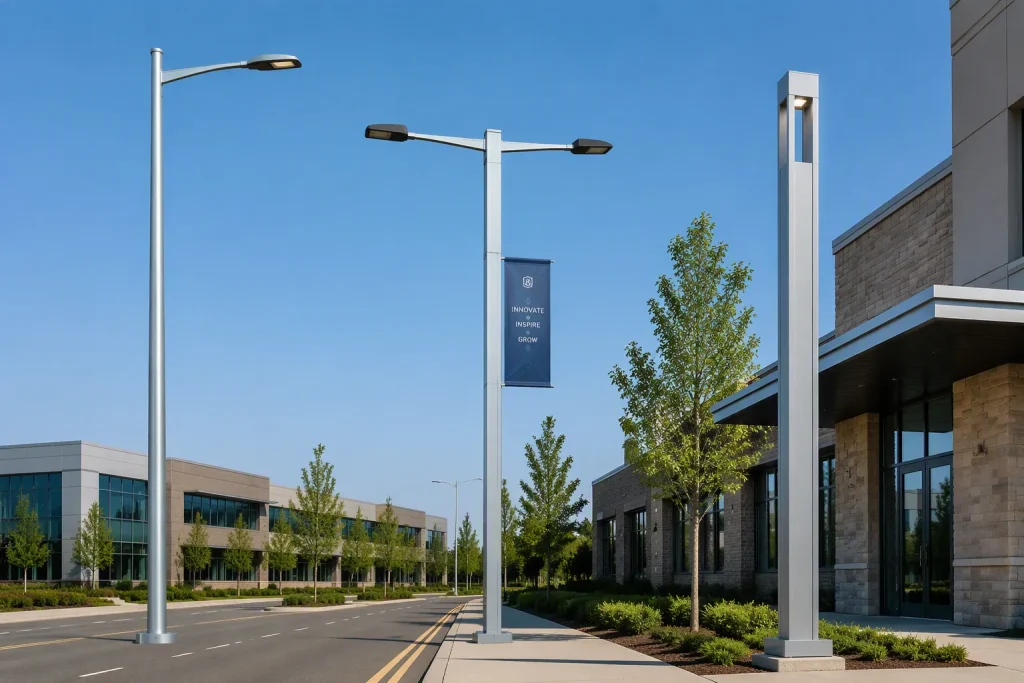
MORELUX provides custom steel light pole solutions for lighting and infrastructure projects. Pole design can be adapted to project requirements such as height, shape, wall thickness, mounting configuration, and surface finish.
Steel Pole Designs for Different Lighting and Structural Applications
Different pole shapes offer different structural and visual characteristics. MORELUX manufactures round, tapered, octagonal, hexagonal, square, and tubular steel poles for applications such as street lighting, highways, commercial areas, parks, and public infrastructure.
Tapered and octagonal poles are commonly used for road and highway lighting, while square and hexagonal designs can suit commercial, architectural, and decorative applications. The appropriate profile depends on the project’s loading, installation, and design requirements.
Project-Specific Pole Configurations for Different Installation Needs
MORELUX supports customized configurations for different installation conditions. Options include single-arm, double-arm, curved, decorative, and custom outreach designs, along with customized pole height, wall thickness, base plate, and mounting details.
The engineering team can also develop OEM and ODM steel pole solutions according to project specifications. This allows the pole structure to match the required fixture arrangement, equipment loads, wind conditions, and installation requirements.
Protective Finishes Designed for Long-Term Outdoor Pole Performance
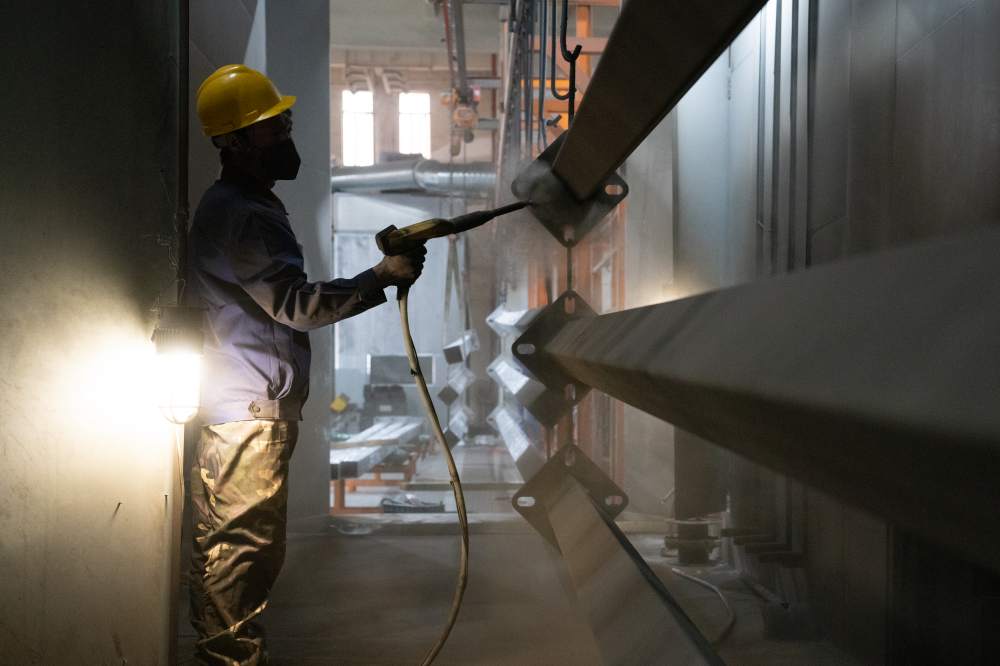
MORELUX offers hot-dip galvanizing, powder coating, and duplex coating systems for steel light poles. Hot-dip galvanizing provides corrosion protection, while powder coating can add further protection and a selected finish.
For coastal, industrial, or other demanding outdoor environments, a duplex system combines galvanizing with powder coating for additional protection. The coating system can be selected according to environmental conditions, durability requirements, and project appearance.
FAQs About Common Pole Light Problems and Solutions
What Is the Most Common Problem With Outdoor Light Poles?
Common outdoor light pole problems include corrosion, loose anchor hardware, foundation issues, electrical faults, and structural damage. For steel lighting poles, corrosion and damage around the base, joints, and welds can gradually affect structural performance. Regular inspection helps identify these issues before they become more serious.
What Causes Light Poles to Lean or Tilt Over Time?
A light pole may lean because of foundation settlement, loose anchor bolts, or problems with the base connection. Wind-induced vibration and structural movement can also affect connections over time. MORELUX uses structural calculations and customized anchor systems to match pole loads and foundation requirements.
Why Do Light Poles Develop Rust and Corrosion?
Moisture, coastal salt, industrial pollutants, and damage to the protective coating can cause steel light poles to corrode. Corrosion often requires particular attention around the pole base, joints, and other areas exposed to water or contaminants. MORELUX uses hot-dip galvanizing to ISO 1461, with powder coating and duplex systems available for additional protection.
When Should a Damaged Light Pole Be Repaired or Replaced?
Minor coating damage or localized corrosion can generally be addressed through timely repair. Replacement should be considered when deterioration, structural damage, or deformation affects the pole’s safe performance. Inspection should cover the shaft, base, anchor bolts, foundation, and mounted components before deciding whether repair is sufficient.