No single global code rules steel tubular poles. The right standard depends on where you are and how the pole is used. In India, IS 2713 is the main standard for tubular steel poles on overhead power lines. Other places have their own rules: California Title 8 §2942 for pole-top access, ASTM standards for galvanizing, and ASCE/ANSI design guides for structural loads.
These documents control much more than a label. They set steel grade, wall thickness, coating, load testing, and installation practice. A pole that meets the wrong code may still fail inspection or work poorly in service.
This post explains how each requirement works. Readers will learn to check material, design, testing, and installation against the right standard. Then they can confirm compliance with confidence.
Key Takeaways
- There is no single worldwide code for steel tubular poles. The correct standard depends on where the pole is used and what job it does.
- First, always confirm where the pole will be used and what it is for. These two answers show which code applies.
- Make sure the steel grade, dimensions, coating, and testing all match the chosen standard. Ask for certificates and test reports.
- For lighting poles, follow local building codes and design the whole assembly—pole, fixture, and foundation—together.
- Keep customs codes apart from design codes. A customs code does not show that a structure meets the rules.
Which International Standards Apply to Steel Tubular Poles?

No single worldwide code controls steel tubular poles. The standard that applies depends on two things: the place where the pole will stand and the job it does. A power pole in India, a light column in California, and a single-pole tower in Mexico may each follow a different document. Buyers who think one code works everywhere risk failed inspections and rejected shipments.
How IS Standards Specify Tubular Steel Poles for Power Lines
India’s main reference is IS 2713:2000. This standard covers stepped and swaged tubular steel poles for overhead power lines. It deals with the pole’s shape, its steel quality, and the tests used to confirm performance. Stepped poles change diameter along the shaft. Swaged poles join sections by making one tube’s end smaller so it fits inside the next. IS 2713 treats both as power-line structures, so it carries requirements specific to that job rather than general structural steel rules.
How ASTM, EN, and Other Standards Differ for Steel Pole Design
American and European practice splits the work across several documents instead of one pole code. ASTM standards govern galvanizing and material testing. ASCE/ANSI design guides cover structural loads. EN standards serve European markets in a similar split. California adds a safety rule of its own: Title 8, Section 2942 requires access to the top of tubular steel pole structures, so climbing or working provisions become part of the design plan.
Some places take a different route. Mexico relies on local performance requirements rather than a dedicated pole standard. The buyer states the loads and the service conditions, and the manufacturer shows the pole meets them. This approach puts more weight on test reports and structural calculations than on a single cited code number.
Customs classification is a separate matter from design compliance. HS code 73089070 covers tubular steel poles for electric transmission and distribution lines under Chapter 73. That code decides how the goods clear customs. It says nothing about whether the pole is structurally compliant.
| Jurisdiction | Primary reference | Scope |
|---|---|---|
| India | IS 2713:2000 | Stepped and swaged poles for overhead power lines |
| California | Title 8 §2942 | Access to the top of pole structures |
| United States (design) | ASCE/ANSI guides, ASTM standards | Structural loads, galvanizing, testing |
| Europe | EN standards | Material and design requirements |
| Mexico | Local performance requirements | Load and service performance |
The practical lesson is simple. Confirm the destination market first. Then confirm the application. Those two answers point to the governing document, and every later decision about material, coating, and testing follows from it.
Key Steel Tubular Pole Codes for Material and Structural Design
How Steel Grades and Material Requirements Are Defined in Standards
The code in charge sets the steel grade before any building starts. IS 2713:2000 sets the steel quality for power-line poles in India. ASTM and EN standards set equal grades for other markets. Each grade has a chemical makeup range and limits on its mechanical properties. The buyer can then check mill certificates against the code.
Quality tests come after the grade. Mechanical checks confirm yield strength and tensile strength. Dimensional checks confirm the shaft profile. Inspection records go with the order. A certificate that names the standard and the grade gives the buyer a clear audit trail.
How Pole Dimensions, Wall Thickness, and Tolerances Are Specified
Tolerances decide whether a pole fits its base plate, its arm brackets, and its anchor bolts. Pipe standards show how tight these limits can be. API 5L allows an outside diameter tolerance of plus or minus 0.75 mm for NPS 20 and smaller, and plus or minus 1.0 mm for NPS 22 and larger. ASTM A53 sets outside diameter tolerances from plus or minus 0.40 mm up to 1% of specified OD, depending on size.
Structural tubing follows a similar pattern. Under ASTM A500, the minimum wall at any measurement point must be at least 90% of the specified nominal wall. The maximum wall, excluding weld seams, must stay at or below 110% of nominal. Outside dimension tolerances scale with the flat dimension, from 0.020 in (0.51 mm) on small sections up to 0.01 times the large flat dimension on sections over 5½ in. These limits matter for steel tubular poles, because a thin wall or an oval shaft weakens the structure.
Surface treatment is the last material requirement. Hot-dip galvanizing protects the steel from corrosion. Powder coating adds a color finish. Duplex coating systems combine both layers for harsh environments. The code or project specification should name the coating system and the inspection method.
Steel Tubular Pole Standards for Electrical Transmission and Distribution
How Design Loads and Deflection Requirements Affect Pole Selection
Transmission specs list loads as exact numbers, not vague words. A common spec calls for a 3,000 lb horizontal load and a 5,000 lb vertical load at the same time, applied at the attachment bolt. The bolt is 5/8 inch and uses 3-inch curved washers for support. After the test, the pole must show no damage and no lasting deformation of the bolt hole.
| Requirement | Value |
|---|---|
| Simultaneous horizontal load | 3,000 lb |
| Simultaneous vertical load | 5,000 lb |
| Nominal installation torque | 50 ft-lb |
| Withstand torque | 100 ft-lb |
| Foundation rotation allowance | 1 degree |
| Deflection, strain and dead end | 5% of pole height |
| Deflection, tangent | 8% of pole height |
| Deflection, broken conductor | 10% of pole height |
Deflection limits set the shaft size. A tangent pole can lean up to 8% of its height. A strain or dead end structure is held to 5%. The broken conductor case allows 10%, and that case must be listed in the loading schedule. None of these limits may break electrical clearances.
How Testing Standards Verify Strength and Structural Performance
Good specs also control how the pole is built. They require a minimum number of joints, so the shaft stays stiff and simple. They do not allow field welding in the design of a new pole. Every connection is made in the shop, where quality control can check it. Permanent steps must hold a steady 750 lb vertical load applied 6 inches from the pole surface.
USDA Rural Development Bulletin 1724E-204 makes the same point from the buyer’s side. A clear bid spec is essential for steel pole procurement. Vague documents invite disputes later. Exact load cases, deflection limits, and test methods give every bidder the same target. Buyers who write these details into the spec get steel tubular poles that pass inspection and perform in service.
Which Codes Apply to Steel Tubular Poles for Lighting Applications?
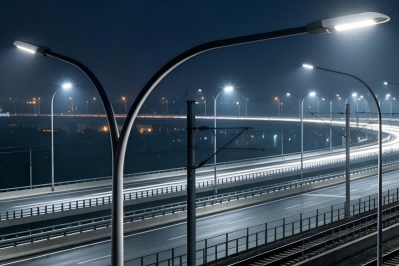
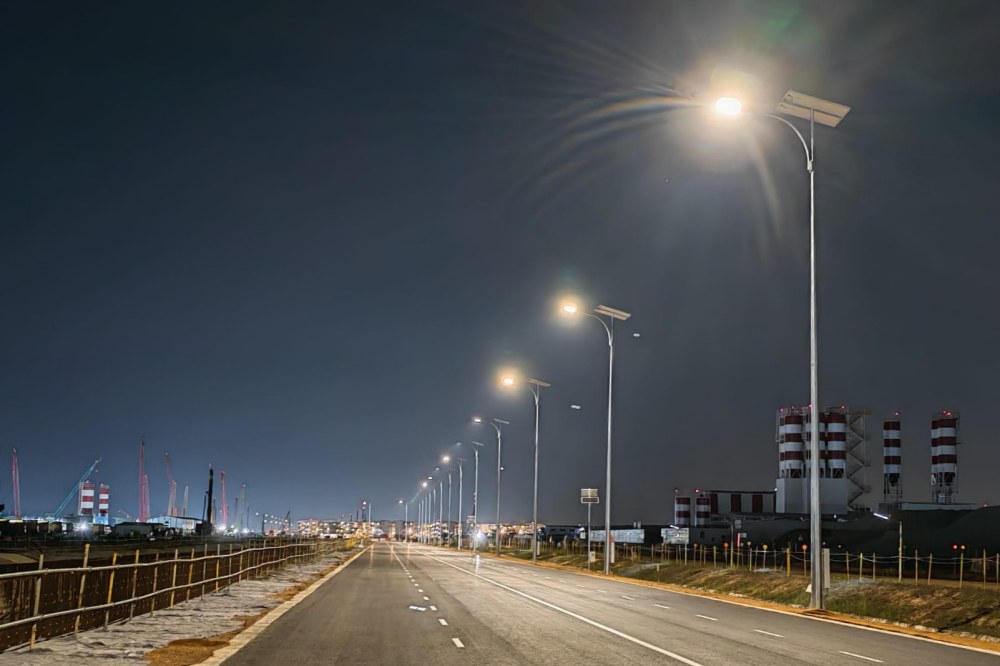
Lighting poles must follow the building code used in that area and the structural standards it points to, often a version of ASCE 7. That code sets the design wind speed for the site. The pole, light fixture, mounting arm, anchor bolts, and foundation must all be engineered together as one unit. A pole rated by itself proves nothing.
How Standards Address Wind Loads, Fixtures, and Pole Stability
Wind rating depends on the whole assembly. The effective projected area (EPA) of every attached item — fixture housing, heat sink, visor, brackets, banners, cameras — must stay within the manufacturer’s published capacity. Taller poles face stronger wind forces and bending moments, so the same fixture on a taller shaft needs a stronger pole.
- Wind load can be calculated as 0.613 times frontal projected area times drag coefficient times wind speed squared, giving newtons.
- Drag coefficients change by shape: 1.20 for flat plates, 1.00 for angled bodies, 0.85 for spheres.
- Wind speed ratings begin at 90 mph and go up with local design wind speed and fixture EPA.
Performance testing supports these numbers. Poles must pass ASTM B117 salt spray testing to resist corrosion. They must also meet ANSI vibration standards and carry structural certification. AASHTO ratings and ASTM material requirements apply where the project asks for them.
How Foundation Design and Anchor Bolts Affect Pole Compliance
The foundation carries the overturning moment that wind creates. Anchor bolts, embedment depth, and base plate design must resist that moment with a proper safety factor against overturning, too much deflection, and fatigue. Installation and maintenance complete the picture. Correct bolt torque, plumb alignment, and regular coating inspection keep the system safe for decades.
A compliant manufacturer makes this easier to check. Morelux, a Malaysian steel pole manufacturer with over 15 years of experience, designs and tests to BS EN, AASHTO, AS/NZS, and MS standards. The company offers hot-dip galvanizing and duplex coating, runs a 45,000 m² production area, and exports to over 30 countries. Buyers sourcing custom or wholesale steel tubular poles can request design drawings, wind load analysis, and structural calculations before ordering.
How to Identify the Correct Code for a Steel Tubular Pole Project
How to Match Pole Standards to Application and Project Location
Begin with the market where the pole will be used. A pole headed to India follows IS 2713:2000 for overhead power lines. A pole set up in California has to meet Title 8, Section 2942 for top access. A Mexican project might not have any dedicated pole code at all. The buyer lists the loads, and the maker shows the pole can handle them.
Next, match the standard to the job. A transmission pole, a street light column, and a telecom monopole each carry different loads and different failure risks. Lighting poles follow the local building code and the structural references it points to. Power poles follow utility specs and the deflection limits those specs set.
Keep customs codes apart from design codes. HS code 73089070 sorts tubular steel poles for transmission and distribution lines under Chapter 73. That number gets the shipment through customs. It tells you nothing about structural compliance, so never take it as proof of design approval.
How Drawings, Technical Specifications, and Certificates Verify Compliance
Ask for the full document package before you approve a supplier. Sealed design drawings should show the shaft profile, wall thickness, base plate, and anchor bolt layout. Structural calculations should trace each load case back to the named standard. USDA Rural Development Bulletin 1724E-204 says this outright: a clear bid specification protects the buyer during procurement.
Then check the paper trail against the actual pole. Mill certificates confirm the steel grade. Galvanizing reports confirm coating thickness. Test reports confirm the pole met its rated loads without damage. A supplier who designs to BS EN, AASHTO, AS/NZS, or MS standards can provide these documents as a normal part of the order.
Finally, compare every document to the same standard. A drawing that cites one code and a test report that cites another points to a gap. References that stay consistent across drawings, calculations, and certificates give the buyer real confidence.
The right code for steel tubular poles depends on the market and the job. IS 2713:2000 governs power-line poles in India. California Title 8, Section 2942 governs top access. Some markets rely on local performance requirements instead. Each path protects safety, durability, and reliability in its own way.
Check compliance before you pick a manufacturer. Ask for test certificates, structural calculations, and compliance documents. Make sure every document cites the same standard. The code question has a clear answer for every project. Compliance is not a choice. It is the starting point for quality results.
Frequently Asked Questions About Steel Tubular Pole Codes
What Is the Standard Code for Tubular Steel Power Poles?
The applicable standard for tubular steel power poles depends on the pole design, intended use, and installation location. Buyers should check the project specifications and local electrical utility requirements to identify the correct structural, material, fabrication, and testing standards before ordering.
Is IS 2713 Applicable to Every Type of Steel Tubular Pole?
No. IS 2713 is associated with steel tubular poles used in overhead power-line applications in India. It should not automatically be applied to lighting poles, telecom poles, or other steel tubular structures. Confirm the intended application and applicable local standards before specifying a pole.
Which Standards Apply to Steel Tubular Lighting Poles?
Steel tubular lighting pole standards vary by market and application. EN 40 is relevant to lighting columns in applicable European projects, while AASHTO standards are commonly referenced for roadway lighting structures in North America. Other projects may require AS/NZS, Malaysian Standards (MS), or additional local specifications. MORELUX supports steel pole projects designed around applicable standards and project requirements.
How Can Buyers Confirm a Steel Pole Meets Project Requirements?
Buyers should review the project specifications, material grades, structural calculations, dimensions, welding requirements, corrosion protection, and inspection documentation. Confirm that the supplier can provide relevant drawings, test records, and compliance documents for the required standard. MORELUX offers engineering support, including wind-load analysis and design drawings, to help align steel pole designs with project requirements.