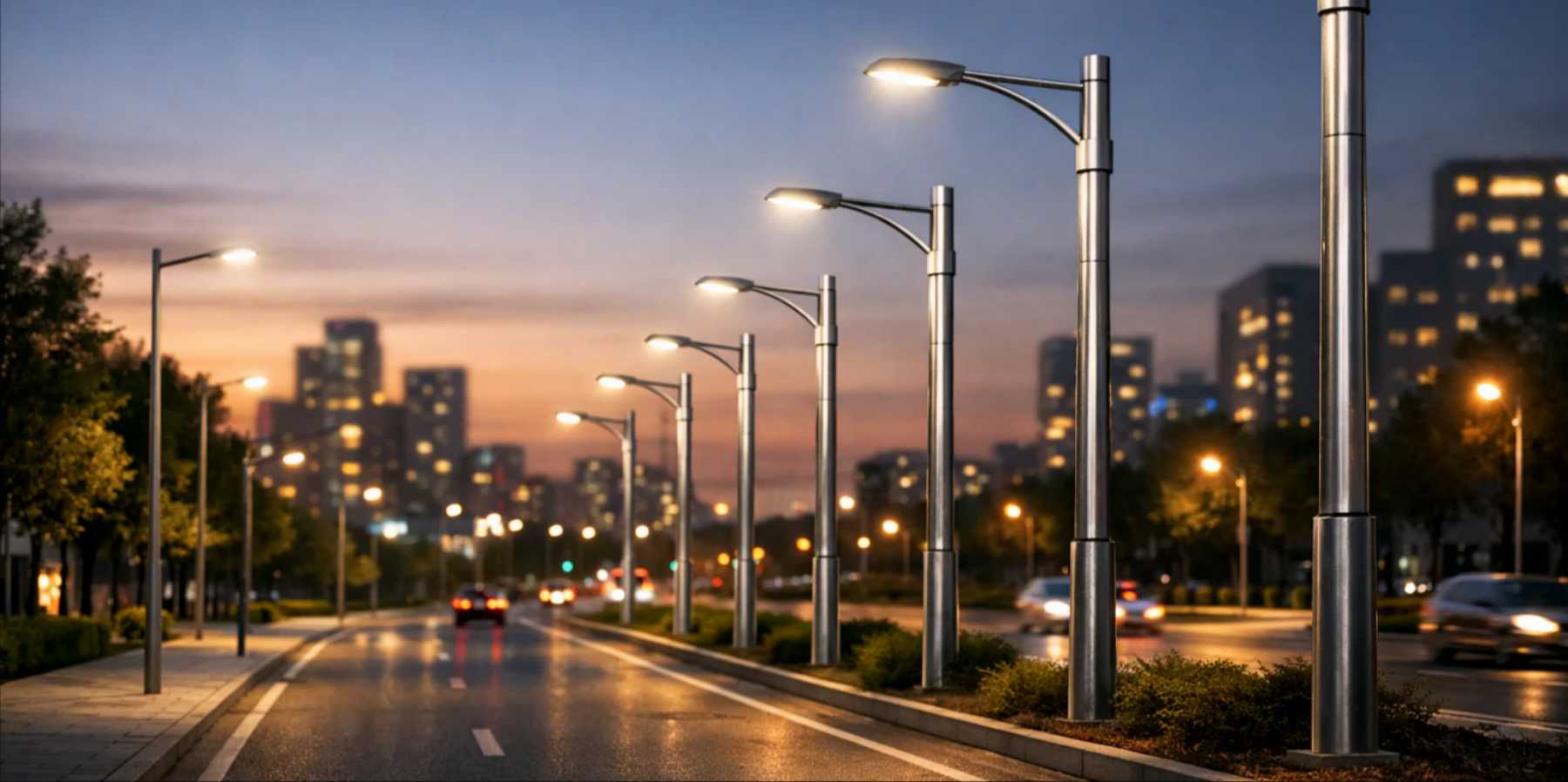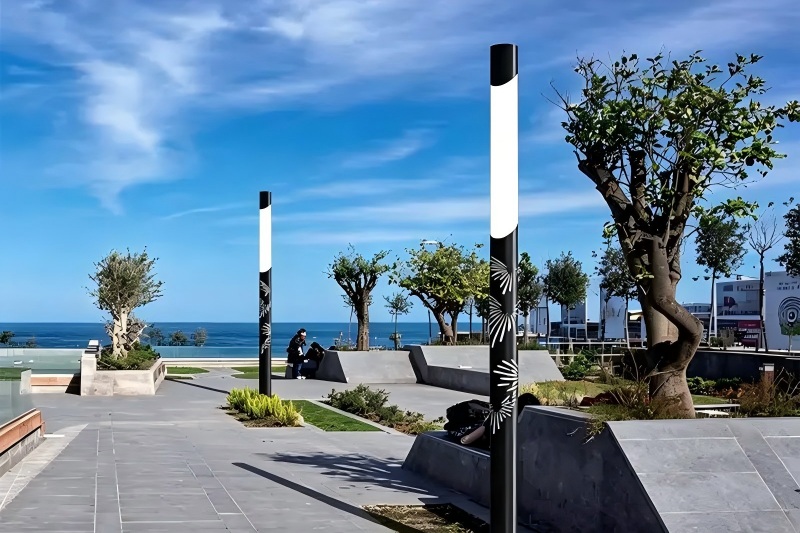

A galvanized steel pole is a steel pole covered with zinc to stop rust and corrosion. This coating protects against moisture and outdoor elements, even on sharp corners. Morelux, a Malaysia-based manufacturer, makes custom galvanized steel poles for projects worldwide. The hot-dip galvanizing process creates a strong barrier that stands up to harsh outdoor conditions. Buyers like these poles because they last a long time and need very little upkeep. Morelux provides design drawings and structural calculations to meet each project’s needs, ensuring dependable strength and resistance to corrosion.
Key Takeaways
- A layer of zinc sticks to the steel and stops rust for many years.
- The hot-dip galvanizing process protects surfaces even when they get scratched.
- Galvanized steel poles hold up heavy loads and need very little upkeep.
- Pick thicker zinc coatings for coastal or industrial areas.
- Morelux makes custom poles that include strength calculations and quality checks.
What Is a Galvanized Steel Pole and How Does It Work?
A galvanized steel pole is a steel pole covered with zinc to stop rust and corrosion. The zinc layer works like a shield. It keeps moisture, chemicals, and other things in the environment from touching the steel below. This shield covers the whole surface, even sharp corners and tight spots. Other coatings often miss these hard-to-reach places. The zinc coating also gives sacrificial protection. If the coating gets scratched, the zinc breaks down first and shields the bare steel.
How thick the zinc coating is affects how long it lasts. For coastal areas, hot-dip galvanizing per ISO 1461 is the basic requirement. A minimum zinc coating thickness of ≥85 µm is set for coastal C3–C4 environments. For coastal air zones within 500 m of the shore, a thickness of 100–120 µm is suggested. C3 environments need 85–100 µm, while C4 environments require 120–150 µm. In very high corrosivity marine zones, the suggested thickness goes up to 175–250 µm. Field studies show that raising coating thickness from 85 µm to 110 µm can add 40–60% to service life in typical coastal air conditions.
Morelux, a Malaysia-based manufacturer, makes galvanized steel poles for global projects. The company acts as a custom supplier and wholesale partner for contractors and distributors. Morelux does in-house galvanizing and powder coating. Quality checks include galvanizing tests and final product verification. This method makes sure each pole meets project needs for strength and durability.
What Are the Main Benefits of Galvanized Steel Poles?
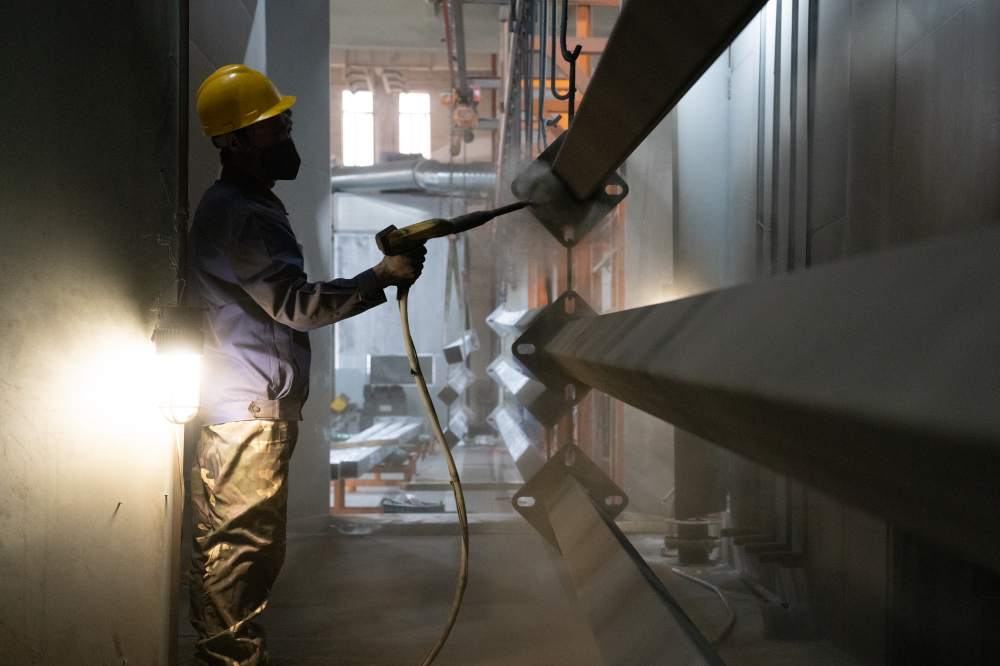
Corrosion Resistance Protects Steel Poles in Outdoor Environments
The hot-dip galvanizing process starts with getting the surface ready. Workers clean the steel to take off oil, rust, and other dirt. Then the pole goes into a bath of melted zinc. A strong bond forms between the zinc and the steel. When the melted zinc hardens, it gives a tough layer that blocks rust. This bonded coating will not chip or peel like paint.
Corrosion resistance is the main benefit for outdoor and utility use. A galvanized steel pole stops rust for many years with very little upkeep. The zinc coating wears down first to save the steel below. This keeps working even if the surface gets scratched.
The corrosion rate depends on the environment. ISO 9223 puts corrosion into groups. Industrial areas are C4, a high-corrosion environment.
| ISO 9223 Category | Environment Description | Corrosivity | Corrosion Rate (µm/year) |
|---|---|---|---|
| C4 | Industrial | High | 2.1 – 4.2 |
Even in this harsh place, the zinc coating wears down slowly. That slow wear means the pole lasts a long time.
The money benefit is strong. Galvanized posts don’t need repainting, sealing, or bug treatment. These posts fight rust from soil and water, so fewer fixes are needed. They last up to three times longer than untreated or painted steel. Fewer replacements happen in a 10–20 year period. Hot-dip galvanized steel poles save 10–20% over their lifetime compared to wood poles. This saving comes from less upkeep and replacements. Galvanized steel poles need no upkeep for 75 years or more, while wood poles last about 30 years.
Morelux does galvanizing and powder coating in their own factory. Quality checks include galvanizing tests and final product checking. This process makes sure each pole meets project needs.
High Strength Supports Lighting and Infrastructure Applications
Galvanized steel poles keep steady strength levels. They handle strong winds, heavy add-ons, and accidental hits. This strength comes from the steel and the galvanizing process. The coating does not make the steel below weaker.
Yield strength is a key measure. For highway lighting, AASHTO standards set clear requirements.
| Material | Yield Strength (psi) | Relevant Standard |
|---|---|---|
| Galvanized Steel | 50,000–65,000 | AASHTO LTS-6 |
In North America, poles must follow the American Association of State Highway and Transportation Officials (AASHTO) LTS-6 specifications exactly. These rules control structural supports for highway signs, lights, and traffic signals.
Morelux follows international standards like BS EN, AASHTO, AS/NZS, and MS specifications. As a custom maker and wholesale supplier, Morelux gives design plans and strength math. This help lets buyers meet local rules and project needs.
Long Service Life Reduces Replacement and Maintenance Needs
A durable zinc coating helps slow corrosion and extend the working life of steel poles in outdoor applications. This can reduce the frequency of repainting, repairs, and pole replacement compared with steel products that have inadequate corrosion protection.
Service life still depends on factors such as coating thickness, environmental exposure, surface condition, and installation quality. Selecting the appropriate galvanizing specification is therefore important for long-term performance.
Low Maintenance Requirements Support Long-Term Pole Performance
Galvanized steel poles generally require less routine surface maintenance because the zinc coating provides continuous corrosion protection. Regular inspections can focus on checking the coating condition, base area, fasteners, welds, and other structural components.
For demanding environments, additional protection such as a duplex system combining hot-dip galvanizing with paint or powder coating can provide another layer of corrosion protection. This approach can help maintain the appearance and performance of steel poles over extended outdoor use.
How Is a Steel Pole Galvanized for Corrosion Protection?
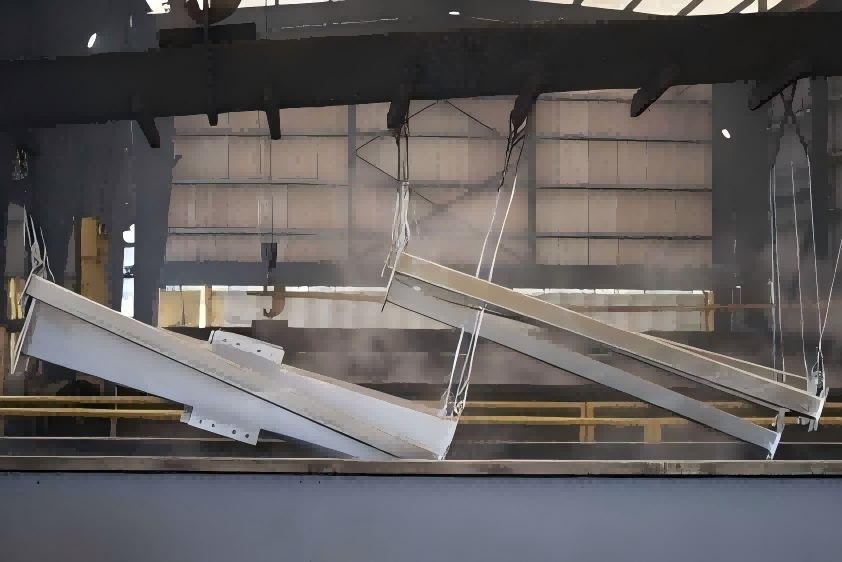
Galvanizing protects a steel pole by applying a zinc coating that separates the steel from moisture and corrosive elements. A properly controlled hot-dip galvanizing process includes surface preparation, zinc immersion, cooling, and final inspection.
Surface Preparation Removes Oil, Rust and Other Contaminants
Before galvanizing, the steel pole must be thoroughly cleaned so the zinc can react evenly with the steel surface. Degreasing removes oil and grease, while pickling removes rust and mill scale.
Fluxing is then used to prevent oxidation before the pole enters the zinc bath. Proper surface preparation helps prevent bare spots, uneven coating, and adhesion problems during galvanizing.
Hot-Dip Galvanizing Coats the Steel With Molten Zinc
The prepared steel pole is immersed in a bath of molten zinc at a controlled temperature. Zinc flows over the entire accessible surface, including edges and other areas that can be difficult to protect with conventional paint.
After withdrawal from the bath, excess zinc drains away and the coating cools and solidifies. The resulting galvanized surface provides continuous protection for outdoor steel pole applications.
Metallurgical Bonding Creates Durable Zinc-Steel Protection
During immersion, zinc reacts with the steel to form a series of zinc-iron alloy layers between the outer zinc layer and the base steel. This metallurgical bond gives hot-dip galvanized coatings strong adhesion.
The coating also provides sacrificial protection. If a small area is damaged, the surrounding zinc can help protect the exposed steel from corrosion, extending the effectiveness of the galvanized steel pole.
Inspection Checks Zinc Coating Quality and Surface Condition
After galvanizing, each steel pole should be inspected for coating coverage, surface condition, visible defects, and required coating thickness. Measuring equipment can be used to verify that the zinc coating meets the applicable project specification.
Quality control may also include visual inspection and dimensional checks after galvanizing. At Morelux, galvanizing and powder coating are supported by in-house production and quality inspection at its Malaysia facility, helping ensure galvanized steel poles meet the specified requirements.
Where Are Galvanized Steel Poles Commonly Used?
Lighting Poles for Roads, Streets, Parking Areas and Walkways
Galvanized steel lighting poles are widely used for roads, streets, parking areas, pedestrian paths, and other outdoor spaces. The zinc coating provides corrosion protection while the steel structure supports different fixture types and mounting arrangements.
For larger sites, galvanized steel high mast poles can support multiple luminaires over wide areas such as ports, airports, interchanges, and industrial yards. Pole height, fixture loads, wind conditions, and lighting requirements should be considered when selecting the appropriate structure.
Telecom Poles for Antennas, Cables and Communication Equipment
Galvanized steel telecom poles provide structural support for antennas, communication cables, CCTV equipment, and other network devices. Their height and load capacity can be designed around the equipment mounted on the pole.
For communication projects, the pole configuration may also need to accommodate cable routing, equipment brackets, access requirements, and local wind conditions. Galvanizing helps protect these structures during long-term outdoor exposure.
Transportation Poles for Highways, Railways and Infrastructure
Galvanized steel poles are used throughout transportation infrastructure to support traffic signals, road signs, cameras, lighting equipment, and other roadside systems. Their structural design can be adapted to different equipment loads and installation conditions.
Highway and railway projects may require specific standards for structural strength, wind loading, corrosion protection, and mounting arrangements. Proper engineering helps ensure the galvanized steel pole performs reliably within the transportation environment.
Utility and Agricultural Poles for Outdoor Support Applications
Galvanized steel poles can also support utility equipment, site lighting, cables, signs, and other outdoor infrastructure in agricultural and industrial areas. Their corrosion-resistant surface makes them suitable for applications exposed to changing weather conditions.
Pole selection should consider the equipment load, required height, soil conditions, wind exposure, and installation method. For customized projects, these factors can be incorporated into the pole design and manufacturing specifications.
How to Choose the Right Galvanized Steel Pole for Projects?
Match Pole Design With Application and Required Equipment Loads
Start by identifying what the galvanized steel pole needs to support and where it will be installed. Street lighting, telecom equipment, CCTV cameras, traffic signs, and high mast luminaires have different mounting and loading requirements.
The pole configuration should match the equipment arrangement, including height, arm type, fixture quantity, mounting brackets, and base connection. Selecting these details together helps avoid compatibility problems during installation.
Select Steel Grade and Dimensions for Structural Requirements
Steel grade, shaft diameter or width, wall thickness, and pole height should be selected according to the required structural capacity. Heavier equipment or taller poles may require greater section strength to resist bending and deflection.
The final dimensions should be based on structural calculations rather than height alone. This approach helps balance strength, material use, transportation requirements, and project specifications.
Consider Wind Loads and Environmental Conditions at the Site
Wind exposure is a key factor when selecting a galvanized steel pole. The design should account for local wind speed, pole height, equipment area, and the additional wind load created by fixtures, antennas, signs, or other attachments.
Environmental conditions also affect corrosion protection. Coastal, industrial, humid, or high-salt locations may require a suitable galvanizing specification or an additional protective coating system.
Confirm Galvanizing Standards and Quality Inspection Requirements
Before ordering, confirm the required galvanizing standard, coating thickness, inspection method, and applicable project specifications. These requirements help ensure consistent corrosion protection across the finished galvanized steel pole.
Quality inspection can include visual checks, coating thickness measurements, dimensional verification, and structural inspection. Morelux supports galvanized steel pole production with engineering, manufacturing, galvanizing, and quality control capabilities for customized project requirements.
Our Galvanized Steel Pole Solutions for Outdoor Projects
Custom Steel Pole Designs for Different Heights and Applications
Morelux develops galvanized steel pole solutions for lighting, telecom, transportation, and other outdoor infrastructure applications. Designs can be adapted to project height, equipment loads, mounting arrangements, and site conditions.
The engineering process can cover pole dimensions, base connections, fixture mounting, and structural requirements. This allows contractors and distributors to receive poles configured for their specific installation rather than relying on a standard design.
Hot-Dip Galvanized Steel Poles for Long-Term Outdoor Use
Morelux provides hot-dip galvanized steel poles for outdoor projects requiring corrosion protection. The zinc coating helps protect the steel substrate from moisture and atmospheric exposure, while coating requirements can be specified according to the project environment and applicable standards.
Production quality control includes checks on steel materials, fabrication, dimensions, galvanizing, and finished poles. For demanding environments, additional powder coating can also be considered as part of a duplex protection system.
Engineering Support for Pole Loads, Structures and Project Needs
Morelux provides engineering support for pole selection and structural design. Project information such as pole height, fixture or equipment loads, wind conditions, and mounting configuration can be reviewed to develop suitable pole specifications.
The team can also support design drawings and structural calculations for customized galvanized steel poles. This technical coordination helps contractors and infrastructure partners align the pole design with foundation, installation, and project requirements.
FAQs About Galvanized Steel Poles, Benefits and Applications
What Is the Difference Between Galvanized and Untreated Steel Poles?
A galvanized steel pole has a protective zinc coating applied to the steel surface, while untreated steel has no comparable zinc protection. The galvanized layer helps reduce direct exposure to moisture and corrosive elements, making it more suitable for many outdoor applications.
How Long Can a Galvanized Steel Pole Typically Last Outdoors?
The service life depends on coating thickness, environmental exposure, steel condition, and maintenance. A properly galvanized steel pole can provide long-term outdoor service, but the expected life should be assessed according to the site’s specific corrosivity and project requirements.
Does Hot-Dip Galvanizing Prevent Steel Poles From Rusting?
Hot-dip galvanizing provides strong corrosion protection but does not make steel permanently immune to corrosion. The zinc coating acts as a barrier and also provides sacrificial protection, helping protect the underlying steel as the coating gradually wears.
Can Galvanized Steel Poles Be Used in Coastal Environments?
Yes. Galvanized steel poles can be used in coastal environments when the galvanizing system is selected for the site’s corrosive conditions. Areas with high salt exposure may also benefit from additional protection, such as a duplex system combining hot-dip galvanizing with powder coating.
How Thick Is the Zinc Coating on a Galvanized Steel Pole?
Zinc coating thickness depends on the applicable galvanizing standard, steel thickness, and project requirements. Instead of using one value for every application, buyers should confirm the required coating thickness and inspection criteria before production.
Can Galvanized Steel Poles Be Painted or Powder Coated?
Yes. A galvanized steel pole can receive an additional paint or powder coating system when the surface is properly prepared and the coating system is compatible with galvanized steel. Combining galvanizing with an additional coating is commonly known as a duplex system and can provide additional corrosion protection and color options.