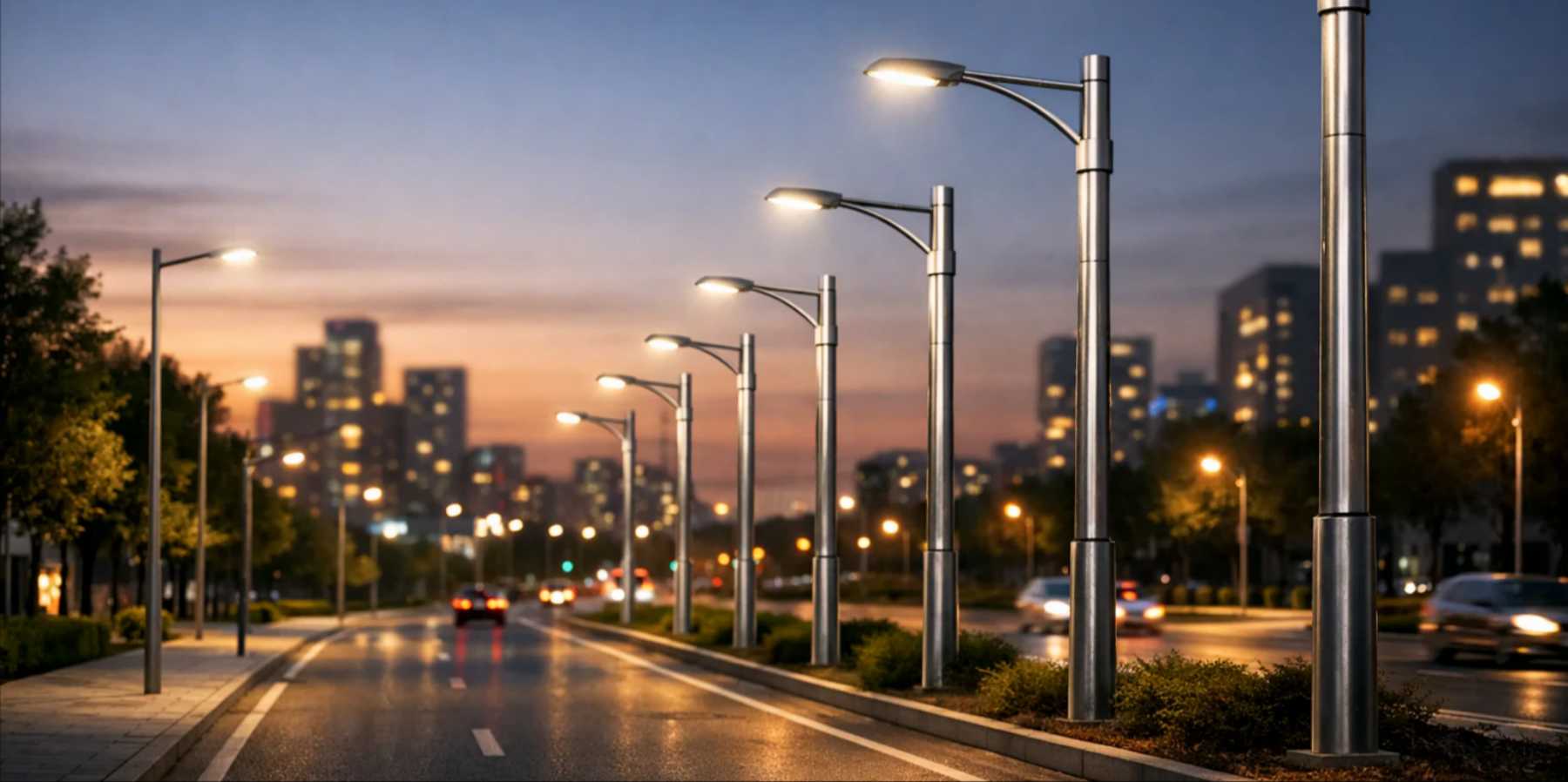

Maintenance of street lighting poles is a planned program. It mixes regular inspections, cleaning, structural repairs, electrical checks, lighting care, and preventive steps. These tasks keep every pole safe, reliable, and efficient.
The main goals are clear. First, maintenance protects public safety. Second, it makes each pole last longer. Third, it keeps nighttime light at a good level. Fourth, it helps owners avoid costly emergency repairs.
A proactive program costs less over time. It also cuts down sudden failures and outages. This article explains each type of task in a logical order.
Key Takeaways
- Regular checkups find small issues early and stop expensive emergency fixes.
- Clean poles and lights often to remove dirt, salt, and other things that block light and cause rust.
- Look at the foundations and anchor bolts for damage to keep poles steady and safe.
- Fix damaged coatings fast to stop rust and make poles last longer.
- Keep a care plan that fits your area’s weather and how old the poles are to save money over time.
What Does Street Lighting Pole Maintenance Include in Practice?
Maintenance of street lighting poles is a full program. It keeps people safe, makes sure night lights work well, and helps each pole last longer. A regular routine stops small problems from turning into big, costly failures. It also lowers the chance of sudden power outs and emergency fixes.
Routine Inspection of Street Lighting Poles and Components
You should inspect poles at least two times each year. For the best reliability, do two to four inspections every year. Inspect more often in coastal areas, industrial zones, or places with heavy snow or salt. During each check, look at the pole shaft for rust, dents, or surface damage. Examine brackets, arms, and welds for metal wear. Make sure handhole covers, base covers, and pole top caps are secure and sealed. Clean lamp fixtures and lenses to remove dust, debris, and salt buildup.
Check anchor bolts and nuts to confirm they are tight. Look at the concrete foundation for cracks, chips, or leaning. Verify that no one has added unauthorized items like banners, signs, or cameras. These can make the pole handle more wind than it was designed for. These routine checks find small problems early. Proactive maintenance can lower emergency repair costs by 30 to 40 percent, according to reports. Replacing parts like drivers, surge protectors, and wiring on a schedule prevents sudden failures and expensive service calls.
Checking Pole Corrosion, Coatings, and Surface Damage
Corrosion is a big threat to steel poles. Protective hot-dip galvanized coatings must meet minimum thickness standards. International standards ISO 1461 and ASTM A123 require thicknesses from 45 to 100 micrometers, based on steel section thickness. For example, steel sections between 3 and 6 mm need a minimum average coating thickness of 70 microns per ISO 1461. In coastal or marine areas, coatings should be at least 85 microns.
During maintenance, inspect the whole pole surface for scratches, chips, or peeling paint that let steel touch moisture. Fix any damage right away by cleaning, sanding, and applying primer and top coat. In urban or industrial settings, remove dirt and chemical residues that make corrosion happen faster. A proactive coating inspection plan stops the structure from getting weak. Poorly planned maintenance leads to rust, pitting, and eventually pole failure.
Combining routine structural inspections with thorough coating checks keeps street lighting poles safe and reliable for years.
Inspecting Pole Doors, Bolts, Brackets, and Access Hardware
Inspect pole doors and access covers to make sure they close securely and remain properly sealed. Check hinges, locks, fasteners, and seals for damage, looseness, or missing parts. Replace worn hardware when necessary to prevent water and debris from entering the pole.
For steel lighting poles, also check bolts and brackets at the base plate, lighting arm, and equipment mounting points. Look for loose connections, deformation, or unusual movement. Properly maintained hardware keeps fixtures stable and makes routine electrical access safer.
How to Check Street Lighting Pole Foundations and Stability?
Structural integrity is key for a pole to last long and stay safe. A weak foundation or a rusty pole can fall without any warning. Regular checks catch problems before they turn dangerous.
Inspecting Foundations, Anchor Bolts, and Pole Base Conditions
The foundation holds up the whole weight of street lighting poles. Inspectors should watch for these warning signs on every visit:
- Trapped moisture and chemical buildup at the base that makes rust happen faster
- Poor drainage or missing weep holes that keep water sitting against anchor bolts
- Not enough grout under the base plate that traps moisture and causes uneven support
- Debris inside the base cover that blocks airflow
- Rust and corrosion that weakens the foundation over time
- Anchor bolt damage from being too tight, too loose, or from pitting
- Wall thickness loss of more than 10 percent, which industry standards say means you must replace it
Just looking is not enough to find hidden problems. Advanced methods like ultrasonic testing and magnetic particle inspection can find internal thinning and cracks that eyes cannot see.
Concrete cracking has several common causes. Missing grout or hollow spots beneath the base plate lead to cracking and decline over time. Empty spaces under the base plate trap water, which causes corrosion and loosening. Loose anchor bolt nuts let the pole rock in windy conditions, which can crack the concrete. These loose nuts also let dust and moisture gather under the base plate. Conduit entries should be planned ahead and sealed to reduce water getting in. Foundations must resist overturning, sliding, soil bearing pressure, and long-term movement from settling and repeated wind cycles.
Checking Pole Alignment, Deformation, and Structural Condition
Rust and corrosion treatment starts with surface prep. Workers sand the affected area, apply primer, and repaint or apply protective coatings. Hot-dip galvanization gives factory-applied protection that lasts for decades. This zinc coating sacrifices itself to protect the steel beneath.
Hardware and crack repair covers several tasks. Tightening bolts brings back stability. Replacing damaged brackets stops arm failure. Repairing cracks in welds or base plates stops small defects from growing. Checking the foundation for cracks or shifting catches movement before it causes collapse.
Typical concrete foundation problems include cracks, spalls, and leaning. If the pole base has been grouted, a weep hole is needed so water can drain. Without it, water buildup causes rust and adds to cracking.
Regular structural checks prevent catastrophic failures. A pole that leans or shakes needs immediate attention. Small repairs today avoid major replacements tomorrow.
How to Maintain Steel Street Lighting Poles in Outdoor Areas?

Electrical parts need regular checks to stop dangers and power cuts. One bad wire can shut off power to a whole block. It can also give a shock to anyone who touches the pole.
Repairing Damaged Coatings and Preventing Pole Corrosion
Check wires for wear, exposure, or short circuits during each maintenance visit. Replace damaged fuses, connectors, or control gear promptly. Make sure earthing connections are tight and free of rust, and check access-panel seals to keep out water and pests.
Replace burned-out lamps and clean lenses regularly to maintain lighting performance. LED upgrades can reduce energy use and extend service life. For solar lighting poles, also clean solar panels, check batteries, and inspect electrical connections for corrosion or damage.
Coating damage can expose steel to moisture and accelerate corrosion. Repair localized damage as follows:
- Clean the area with a stiff brush or rough pad.
- Lightly sand with fine sandpaper or a Scotch pad.
- Make sure the surface is smooth and clean.
- Avoid over-sanding to protect the zinc layer.
- Apply an approved zinc-rich repair material.
The protective coating system also affects long-term performance, especially in coastal environments.
| Aspect | Hot-Dip Galvanized Steel Poles | Painted Steel Poles |
|---|---|---|
| Average lifespan | 75–100 years | 20–30 years |
| Maintenance cycle | Practically none | Repaint every few years |
| 30-year total cost | Lowest | 2–3× higher |
| Coastal field observation | After 7 years, only dusty | After 7 years, orange halfway up the shaft |
Galvanized steel exposed to salty air can eventually develop surface rust, while sheltered areas may remain protected much longer. A duplex system combining galvanizing with paint or powder coating provides additional corrosion protection for harsh marine environments.
Cleaning Pole Surfaces and Removing Dirt, Salt, and Contaminants
Dust and dirt on lamps and lenses can reduce light output. Regular cleaning helps maintain proper illumination and keeps fixtures performing as designed.
In coastal areas, wash pole surfaces with fresh water to remove salt deposits. Industrial sites may require suitable cleaning agents for chemical residues, while urban poles commonly collect dust, pollution, and bird droppings.
A regular cleaning schedule helps protect the coating, maintain appearance, and extend the service life of street lighting poles.
How Often Should Street Lighting Poles Be Checked and Fixed?
Taking care of poles ahead of time helps cut costs over many years and makes them last longer. A regular schedule finds small problems before they turn into costly breakdowns. How often you need to check depends on the area, how old the pole is, and any past damage.
What to Check During Regular Street Lighting Pole Maintenance
Workers should look at these important parts every time they check. These are:
- The pole body and its surface — look for rust, damaged coating, dents, cracks, or a tilt you can see.
- The base plate, anchor bolts, and grout — check for loose bolts, rust on nuts, empty spaces under the plate, and water sitting there.
- Area around the foundation — look for cracks in concrete, sinking ground, washing away, or water that stays.
- The arm, bracket, and where the light attaches — check for loose parts, bent shape, or screws that are worn out.
- Electrical door and safety — look for broken seals on cables, wires that are bare, or panels that are not tight.
The bottom part is usually the most important spot to take care of on steel light poles. Rust often begins at the base. Loose anchor bolts or small movements of the base that you cannot see can make the pole fall suddenly.
When to Do Maintenance Based on Area, Damage, and Pole Age
How often you inspect changes with the area. Places with lots of rust need more checks than dry places away from the coast.
| What to Check | High Rust Areas (C4-C5) | Dry Inland Areas |
|---|---|---|
| Ground-level check | Every 3 years | Every 5 years |
| Regular checkup | Every 5 years | Every 5-10 years |
| First check after install | Within first 1-2 years | Within first 1-2 years |
A first check within 1-2 years after putting up the pole sets a starting point. You need extra checks if the coating gets worse, rust stains show up, or you see any problems with the structure.
Painting poles every so often stops rust. Oiling moving parts helps them work right. Checking bases for cracks, washing away, or sinking finds troubles early.
Switching to LED lights uses less power and means you need to fix things less often. Smart controls let you watch and find problems from far away.
Working with a good supplier such as Morelux can give you custom solutions and expert help. Morelux makes steel poles in Malaysia and has more than 15 years of experience. They sell in bulk and make custom street lighting poles.
Our Street Lighting Pole Solutions for Long-Term Outdoor Use
Morelux provides custom steel pole solutions for outdoor lighting and infrastructure projects. With 15+ years of steel pole experience, the company supports projects from engineering and manufacturing to surface treatment and quality control. Its Malaysia facility covers 45,000 m² and is supported by more than 200 professional engineers. Morelux has exported to more than 30 countries and supports 150+ pole projects annually.
Custom Steel Pole Designs for Different Project Requirements
Every project has different requirements for pole height, shape, mounting, loading, and appearance. Morelux provides square, tapered, round, tubular, octagonal, and hexagonal steel poles, along with straight and curved designs and single- or double-arm configurations.
For street lighting pole projects, customization can include height, wall thickness, arm configuration, flange design, surface treatment, and wind-load specifications. MORELUX also provides OEM and project-based custom steel pole production to match specific application requirements.
Engineering and Manufacturing Support for Street Lighting Poles
MORELUX provides engineering support including design drawings, structural calculations, wind load analysis, and technical recommendations. Pole designs are verified using professional engineering software before production, with standards including AASHTO, BS EN, AS/NZS, and MS specifications.
Manufacturing covers CNC cutting, bending, welding, polishing, powder coating, and other fabrication processes. Quality control includes raw material inspection, welding inspection, dimensional checks, galvanizing tests, and final product verification.
Galvanized and Powder Coated Steel Poles for Corrosion Protection
MORELUX offers hot-dip galvanized steel poles, powder coated steel poles, and duplex coating systems for different outdoor environments. Hot-dip galvanizing to ISO 1461 provides corrosion protection, while powder coating adds a durable finish and color options.
For demanding environments, the duplex system combines hot-dip galvanizing with powder coating for additional corrosion protection and longer-term outdoor performance. Powder coating is available in RAL colors, making it suitable when both protection and appearance are important.
FAQs About Street Lighting Pole Maintenance and Inspection
How Often Should Street Lighting Poles Be Inspected and Maintained?
Regular inspection schedules depend on the installation environment and project requirements. A practical inspection should cover the pole structure, anchor bolts, access doors, surface condition, and mounted equipment. MORELUX recommends routine checks as part of ongoing maintenance to identify issues before they affect pole performance.
What Are the Main Causes of Corrosion on Street Lighting Poles?
Moisture, salt, pollution, and damage to the protective surface can accelerate corrosion on steel street lighting poles. Coastal and high-humidity locations require particular attention. Hot-dip galvanizing provides a zinc protective layer, while powder coating or a duplex system can provide additional protection for demanding outdoor environments.
When Should a Street Lighting Pole Be Repaired or Replaced?
Repair is generally considered when damage is localized and the pole remains structurally suitable for continued use. Replacement may be necessary when structural damage or deterioration affects safe performance. Inspection should cover the pole shaft, base connection, access doors, brackets, and other key components before making the decision. MORELUX also provides customized solutions for different project requirements.
Can Street Lighting Poles Be Customized for Specific Projects?
Yes. MORELUX supports OEM and ODM street lighting pole customization. Options include pole height, shape, wall thickness, steel material, arm configuration, flange design, surface treatment, mounting details, and wind-load specifications. This allows the steel lighting pole to be matched to the project’s structural, environmental, and installation requirements.