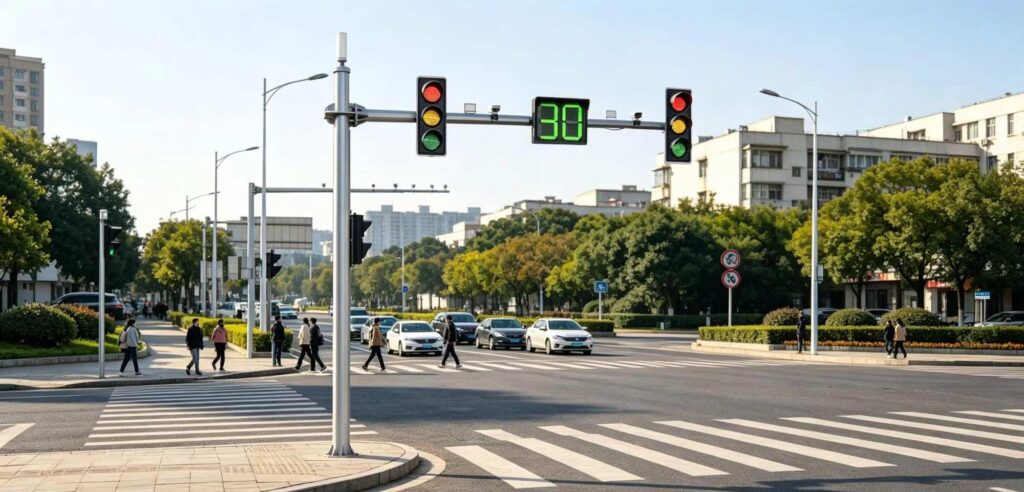
Modern Intelligent Transportation Systems rely on strong structures to keep city streets safe. Advanced smart sensor integration, heavy weight capacity, and custom steel engineering help traffic move smoothly through busy city intersections. Local governments need tough hardware that can hold active monitoring equipment and stand up to bad weather. Engineered Traffic Signal Pole solutions made by Morelux provide the perfect strong base for modern connected transit networks. These special steel poles hold heavy signal heads, control systems, and monitoring devices safely in place. High quality custom steel structures offer great long term strength, which ensures safe, reliable, and steady daily performance for modern intelligent transportation infrastructure projects around the world.
Key Takeaways
- Tough steel traffic poles safely support heavy lights and smart sensors over busy city streets.
- Smart technology inside modern traffic poles changes light timing on its own to keep cars flowing easily.
- Special two-coat paint layers shield metal posts from rust damage for as long as 60 years.
- Custom steel pole designs stop dangerous wind vibration and safeguard sensitive digital cameras mounted on top.
Steel Traffic Pole Solutions for Modern Traffic Signal Management Systems
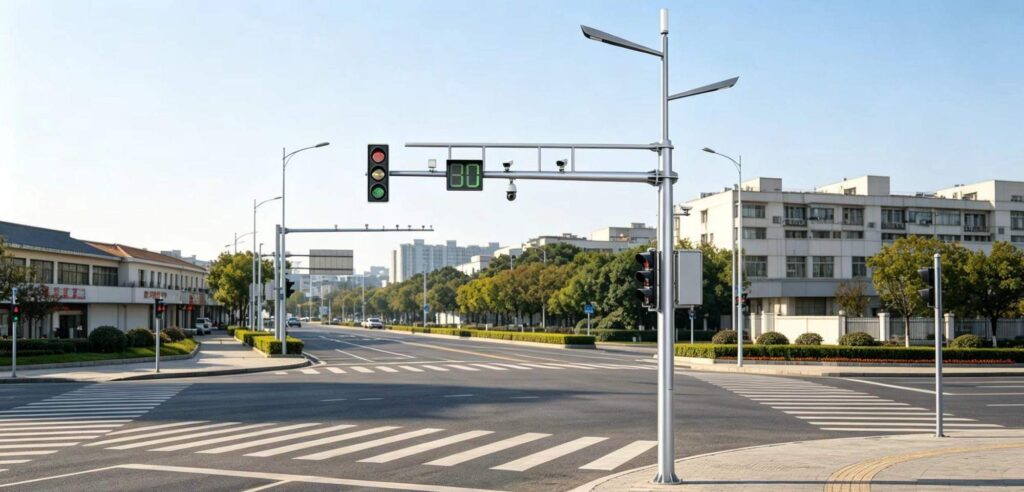
City transit networks need strong steel poles to direct busy intersection traffic safely. Traffic engineers pick specific pole types based on street layouts, lane widths, light weights, and local weather conditions. Custom steel designs help public works teams mount heavy signals and smart sensors securely above busy driving lanes.
| Pole Configuration | Structural Design Features | Primary Application in Intersection Management |
|---|---|---|
| Cantilever Pole | Uses a long horizontal arm attached to a strong vertical steel shaft. | Holds lights and lane signs high above wide, multi-lane city streets. |
| Mast Arm Pole | Connects a tough horizontal arm directly to a strong upright steel column. | Places traffic lights and sensors right over specific driving lanes. |
| Octagonal Pole | Uses an eight-sided shape to strengthen the pole against heavy bending forces. | Delivers extra stability along windy roads and severe weather areas. |
| Tapered Pole | Features a outer diameter that gradually narrows from the base toward the top. | Saves material while easily handling steady wind pressure against the pole. |
These strong pole designs offer reliable physical support across complex city street environments. High structural strength keeps traffic signals aligned properly during strong storms and high winds.
Using smart technology on a single Traffic Signal Pole gives city transit networks essential features.
- Adaptive signal control changes green light times automatically based on real-time traffic volume.
- Emergency vehicle preemption changes light timing quickly to clear open lanes for police and ambulances.
- Real-time traffic management helps operators spot and clear up bad road slowdowns quickly.
Structural builder Morelux makes custom steel poles for modern smart transit systems. The manufacturer operates an advanced plant that can cut, bend, spin, and weld strong steel shapes. City builders and highway contractors pick special steel poles to hold heavy multi-sensor setups. Quality steel construction guarantees long-lasting strength for city smart transit systems over time. Custom base plates and arm designs match exact project plans and site needs. Careful engineering stops strong pole shaking, which protects delicate digital sensors mounted on top. As a trusted global provider, Morelux supplies top-quality Traffic Signal Pole systems that improve smart cities worldwide.
Traffic Signal Pole Applications Across Traffic Management Systems
Traffic signal poles support different types of equipment across modern road networks, from traffic lights and pedestrian signals to cameras and roadway information systems. The required configuration depends on the road layout, equipment requirements, visibility, and available installation space.
Steel Pole Solutions for Traffic Signals at Road Intersections
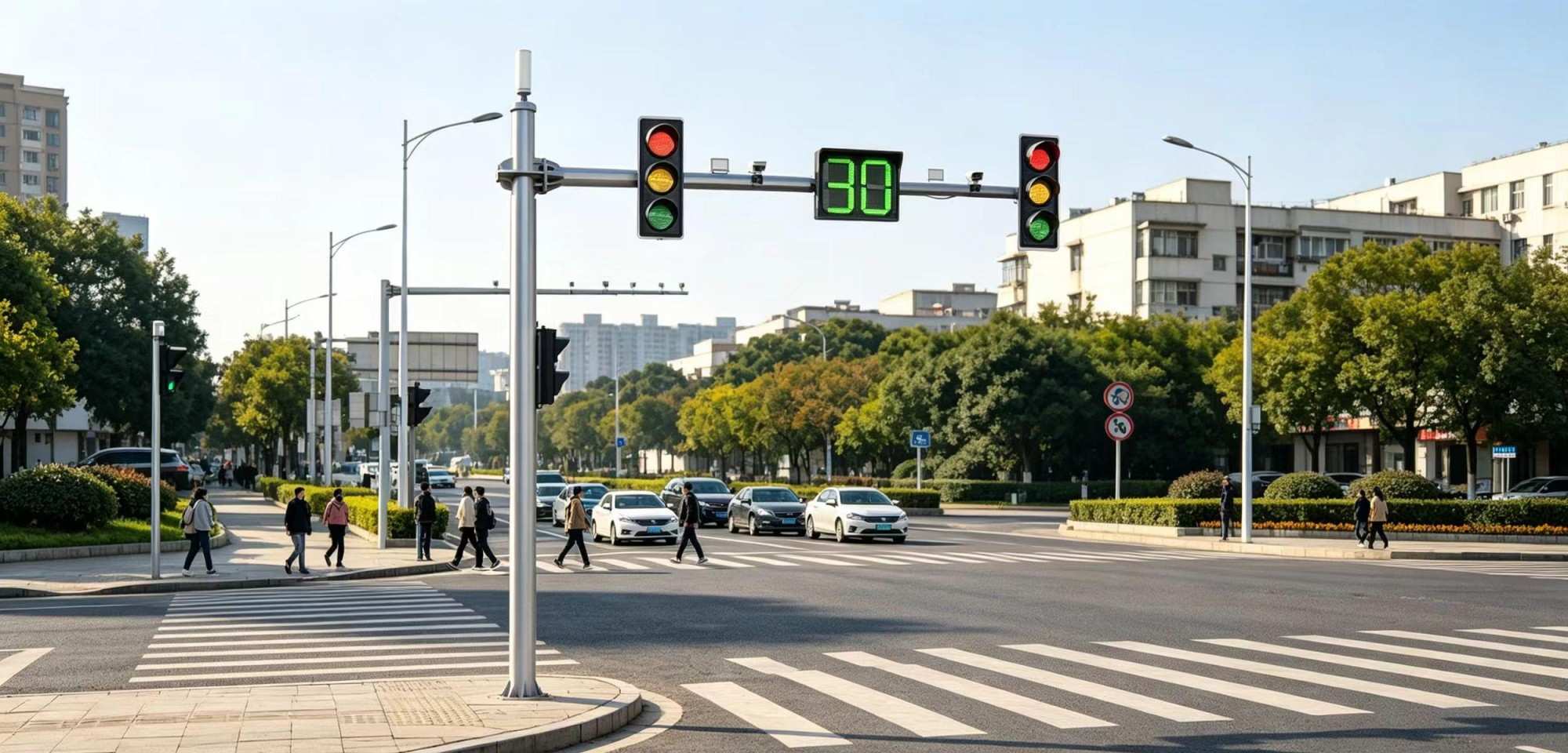
At road intersections, a traffic signal pole provides a stable structure for positioning signal heads where approaching drivers can clearly see them. Extended arms can place signals above multiple traffic lanes without requiring additional supports in the center of the roadway.
Different junction layouts may require different pole heights, arm lengths, and mounting arrangements. Large or complex intersections can use customized steel poles to accommodate multiple signal heads, turning lanes, traffic islands, and other existing road infrastructure.
Steel Pole Solutions for Pedestrian Crossings and Safety Signals
Pedestrian crossings require signals and safety equipment to remain visible to both pedestrians and approaching vehicles. Steel poles can support pedestrian signal heads, crossing indicators, and other warning devices beside sidewalks and designated crossing areas.
Pole placement should also consider pedestrian movement and accessibility. Positioning the structure outside the main walking route helps maintain clear passage while keeping safety signals close to the crossing point.
Steel Pole Solutions for Traffic Cameras and Vehicle Detection
Traffic cameras and vehicle detection systems provide transportation teams with information about road activity. A CCTV pole can provide an elevated mounting position for surveillance cameras, while traffic signal poles can also be designed to support monitoring equipment at intersections.
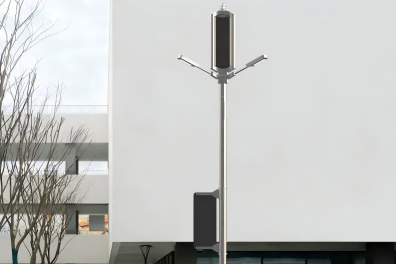
Cameras can monitor vehicle movement, traffic queues, turning activity, and pedestrian flow. For smart traffic infrastructure, a smart lighting pole can also combine lighting with cameras, sensors, and communication equipment, allowing multiple urban functions to share one support structure.
Steel Pole Solutions for Traffic Signs and Roadway Information
Traffic signal poles can support roadway signs and information equipment near intersections, controlled crossings, and other traffic management points. These may include directional signs, lane guidance, pedestrian information, and other messages for road users.
The sign size, mounting height, and position should be coordinated with nearby traffic signals and surrounding infrastructure. For larger signs or multiple mounted components, the steel pole and arm can be customized to provide suitable support while maintaining clear visibility for drivers and pedestrians.
Steel Pole Integration with Smart Traffic Management Systems
Steel Pole Support for Connected Traffic Signal Control Systems
Connected transit systems require physical poles that protect internal electrical networks. Modern signal poles house ground rods and copper wire connections inside safe access points. Power protection units inside the pole base stop unexpected voltage spikes.
- Lightning arrestors withstand electric surges up to 30,000 amperes.
- Grounding wires link rigid steel conduits inside handholes to solid ground rods.
- Uninterruptible battery backup systems provide a minimum of 4 hours of continuous power.
Engineers design intelligent signal poles to meet regional structural rules while supporting extra device loads. International safety standards require accurate accounting for camera weights and wind resistance. Morelux engineers model structural loads before manufacturing steel components.
| Regional Standard | Geographic Application | Key Structural Focus |
|---|---|---|
| AASHTO LTS-6 | North America | High-mast and signal fatigue calculations |
| BS EN 40 | Europe | Smart device wind load integration |
| AS/NZS 1158.6 | Australia / New Zealand | Lighting and signal support performance |
Steel Pole Support for Real-Time Traffic Monitoring Systems
Heavy monitoring hardware creates extra stress on metal support structures. Strong winds moving at steady speeds of 20 to 40 mph cause vortex shedding lock-in on round shafts. Standard steel poles measuring 25 to 40 feet tall have a natural frequency of 1 to 3 Hz. A critical damping ratio of 0.3 to 0.7 percent allows wind forces to create large responses.
Unchecked pole movements damage delicate radar sensors and high-resolution video devices. Structural engineers specify specialized dampening tools to prevent fatigue failure. Tuned mass dampers and Stockbridge dampers reduce steady-state vibration amplitudes by 60 to 80 percent. Tapered octagonal shafts interrupt airflow to prevent dangerous resonance.
Morelux manufactures traffic signal poles using ASTM A595 Grade A steel with 7-gauge wall thickness. Plant workers apply hot-dip galvanizing per ASTM A123 to prevent corrosion fatigue. These engineering choices provide long-term stability for municipal traffic networks.
Steel Pole Durability and Structural Performance for Traffic Systems
Galvanized Steel Pole Protection for Long-Term Traffic Infrastructure
City traffic gear constantly faces harsh outdoor weather conditions. High humidity, temperature shifts, and steady wind weaken metal posts over time. Coastal salt water causes bare metal surfaces to rust much faster. Plain steel loses 200 to 700 µm of thickness each year near ocean areas. Street poles near road salt lose 30% to 50% of their base metal within 15 to 20 years.
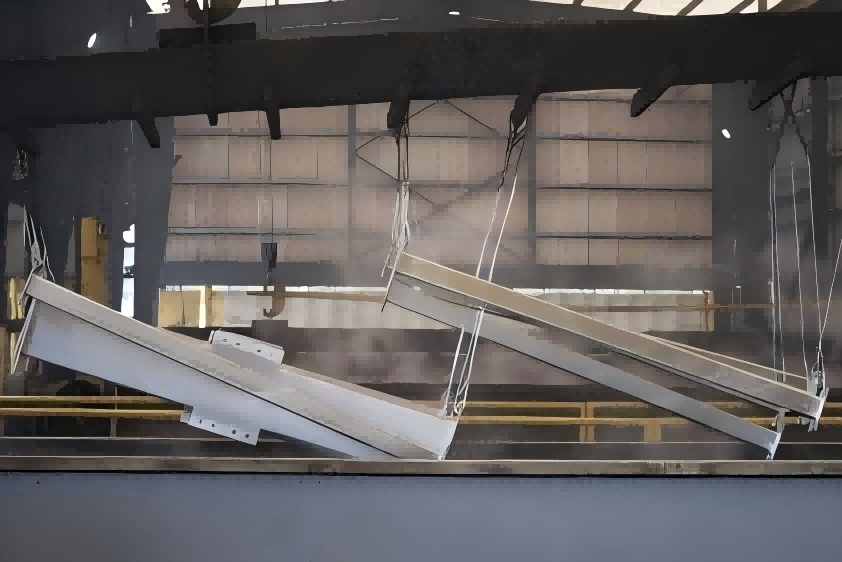
Hot-dip galvanizing gives key rust protection for public traffic structures. The zinc coating acts as a real shield while providing active metal defense.
Hot-dip galvanized steel poles last 25 to 50 years, giving decades of easy protection in salty coastal areas.
Using extra paint layers helps steel posts last even longer outdoors. A single zinc layer might wear out in 3 to 5 years near harsh seas. Road projects apply duplex systems, mixing hot zinc with top paints to boost lifetime.
- Double-layer systems last 30 to 40 years in normal city environments.
- Double-layer systems give 15 to 25 years of strong defense in harsh coastal areas.
- Special sun-proof top paint stretches coating life from 8–12 years to 20–25 years.
- Base coats like coal tar epoxy add 10 to 15 extra years of life near icy, salted roads.
Builder Morelux makes custom galvanized steel traffic poles that survive tough local weather. These smart designs meet strict global standards to delay repainting or fixing across worldwide transit roads.
Steel Pole Wall Thickness for Traffic Signal Structural Stability
Picking the right wall thickness keeps traffic signal poles strong for many years. Thicker steel walls boost total weight capacity, wind resistance, shake control, and rust defense. Heavy overhead lights and long horizontal arms need thick steel walls to stay safe and upright.
Building rules set clear wall thickness needs based on pole height and local weather stress.
| Pole Height | Standard Steel Gauge | Typical Wall Thickness | Primary Structural Application |
|---|---|---|---|
| 5 m to 6 m (8 ft to 40 ft) | 11 Gauge | 2.5 mm to 3.0 mm (0.120 in) | Standard urban intersections and mid-block crossings |
| 7 m to 9 m (20 ft to 70 ft) | 7 Gauge | 3.0 mm to 3.5 mm (0.188 in) | Multi-lane intersections and medium mast arms |
| 10 m and above (70 ft+) | 5 Gauge | 4.0 mm to 5.0 mm (0.219 in) | Tall heavy-duty structures and high-wind zones |
Custom builders pick thicker metal walls for stormy ocean coasts or windy open mountain areas. Regular pole designs follow clear safety rules like AASHTO, ASTM, and ASCE 7. These guidelines make sure light supports handle endless wind pushes over a 25 to 50-year lifespan. Morelux builds exact steel wall choices into every bulk order, shielding city money from sudden pole damage.
Steel Pole Wind Load Performance for Traffic Signal Applications
Wind load is particularly important for traffic signal poles with long mast arms or large signal assemblies. Wind acts not only on the pole shaft but also on signal heads, cameras, signs, brackets, and other equipment mounted above the roadway.
Engineers typically consider local design wind speed, terrain exposure, pole height, fixture dimensions, arm configuration, and EPA when evaluating the required structural capacity. The resulting loads affect the pole shaft, connections, base plate, anchor bolts, and foundation.
Open intersections, coastal roads, elevated locations, and other exposed areas may require additional structural consideration because of their greater wind exposure. Designing the complete pole system for the site’s expected wind conditions helps maintain signal positioning and structural stability during severe weather.
Custom Traffic Signal Pole Solutions for Traffic Management Projects
Custom Steel Traffic Pole Heights and Arm Designs for Traffic Signals
Long horizontal arms hold traffic lights high over busy lanes. This clear placement helps drivers see signals without any blocks, which prevents confusion on the road. Mounting lights up high lets cities put extra cameras and gear on one strong post. Plus, tall metal poles at fast intersections help drivers spot red lights earlier to stop safely.
City planners pick pole sizes based on speed limits and street layouts.
| Application | Standard Height | Notes |
|---|---|---|
| Secondary roads | 2500mm (approx. 8.2 ft) | Smaller base 1200mm×360mm |
| Main roads | 3000mm (approx. 10 ft) | Dimensions 1500mm×450mm base |
| Urban intersections | 20–30 ft (6–9 m) | General range for busy areas |
| Highway installations | 30–50 ft (9–15 m) | Ensures visibility from distance |
| Custom designs | Variable | Available based on project needs |
Custom Steel Traffic Pole Finishes for Traffic Infrastructure Requirements
Special paint layers shield city property from weather damage while helping drivers spot posts clearly. Road teams pick exact outer coatings based on wet weather patterns and local design rules. Leading builder Morelux paints sturdy metal poles using advanced tools to protect public gear. Adding tough surface covers helps every installed Traffic Signal Pole last for decades across city roads.
Builders pick from several top coating methods to match local rules and city styles.
- Double-layer methods mix hot zinc dipping with top paints to block tough rust.
- Other paired options join hot zinc with special dips, zinc heat-treats with paint, or zinc plates with powder.
- Surface style choices cover shiny gloss, medium shine, flat matte, wrinkled, rough texture, metal, and hammered looks.
- Smart powder coats block spray paint, stop germs, resist sunlight, handle high heat, and shut out electric currents.
- Custom color tools use standard paint guides like Pantone or RAL to match local city colors.
- Bright color codes mark safe walking paths, dangerous spots, and high-voltage gear to keep people safe everyday.
FAQs About Steel Traffic Signal Pole Solutions
What Are Steel Traffic Signal Poles Commonly Used For?
Steel traffic signal poles are used to support traffic lights and related equipment at intersections, pedestrian crossings, road entrances, and other controlled traffic points. They provide a stable mounting structure while keeping signal heads visible to approaching drivers and pedestrians. Depending on the road layout, poles can be installed at the roadside, on traffic islands, or in other designated locations.
How Are Steel Poles Used in Modern Traffic Management Systems?
Modern traffic management systems increasingly combine signal infrastructure with connected monitoring and control equipment. Steel traffic signal poles can provide mounting locations for traffic signals, cameras, sensors, and communication devices, allowing different components to operate around the same intersection.
This shared infrastructure can support functions such as vehicle monitoring, pedestrian detection, traffic flow management, and remote signal communication without requiring a separate structure for every device.
What Traffic Equipment Can Be Mounted on Steel Poles?
Depending on the pole design and project requirements, traffic signal poles can support signal heads, pedestrian signals, traffic cameras, detection sensors, signage, communication equipment, and other roadside devices. The mounting arrangement should account for the size, weight, position, and operating requirements of each component.
For intersections with multiple devices, the pole and arm configuration can be designed to keep equipment properly positioned while maintaining clear visibility for road users.
Can Steel Traffic Signal Poles Be Customized for Projects?
Yes. Steel traffic signal poles can be customized according to intersection geometry, signal placement, road width, equipment requirements, and local design standards. Custom options may include pole height, shaft dimensions, arm length, mounting configuration, base plate, and surface treatment.
For complex intersections, the complete pole structure can be designed around the required signal locations and equipment loads rather than relying on a standard configuration. This helps ensure that the finished traffic signal pole fits the specific road layout and project requirements.