Winter storms put every part of a road network to the test. Drivers need steady light when snow builds up and temperatures fall. How do you keep lighting poles and their systems working when ice, wind, and cold threaten to shut them down? A successful cold-climate project needs a full plan. Assessment, specification, power planning, engineering, and maintenance all have a part. The goal is not just light. It is strong, low-maintenance performance that protects people and cuts down on operational problems. Every choice must support that result. Snow removal crews, freezing rain, and weeks of subzero weather can harm weak parts. Strong materials and smart design choices make the difference.
Key Takeaways
- Pick low-temperature steel that has a hot-dip galvanized coating. This mix stops brittle breaks. It also blocks salt rust.
- Set poles farther back from the curb. This distance helps prevent damage from snowplows. Check for damage after each storm.
- Put foundations below the frost line. Use gravel backfill to improve drainage. This plan stops frost heave from shifting poles.
- Create a winter energy budget for solar systems. Use snow-shedding panels. Use cold-rated batteries. This keeps lights on.
- Use engineering math for each pole. The right size can handle wind loads. It can also handle ice loads. Strong bases keep poles standing.
What Challenges Do Lighting Poles Face in Cold-Climate Infrastructure?
How Freezing Temperatures and Ice Affect Steel Lighting Poles
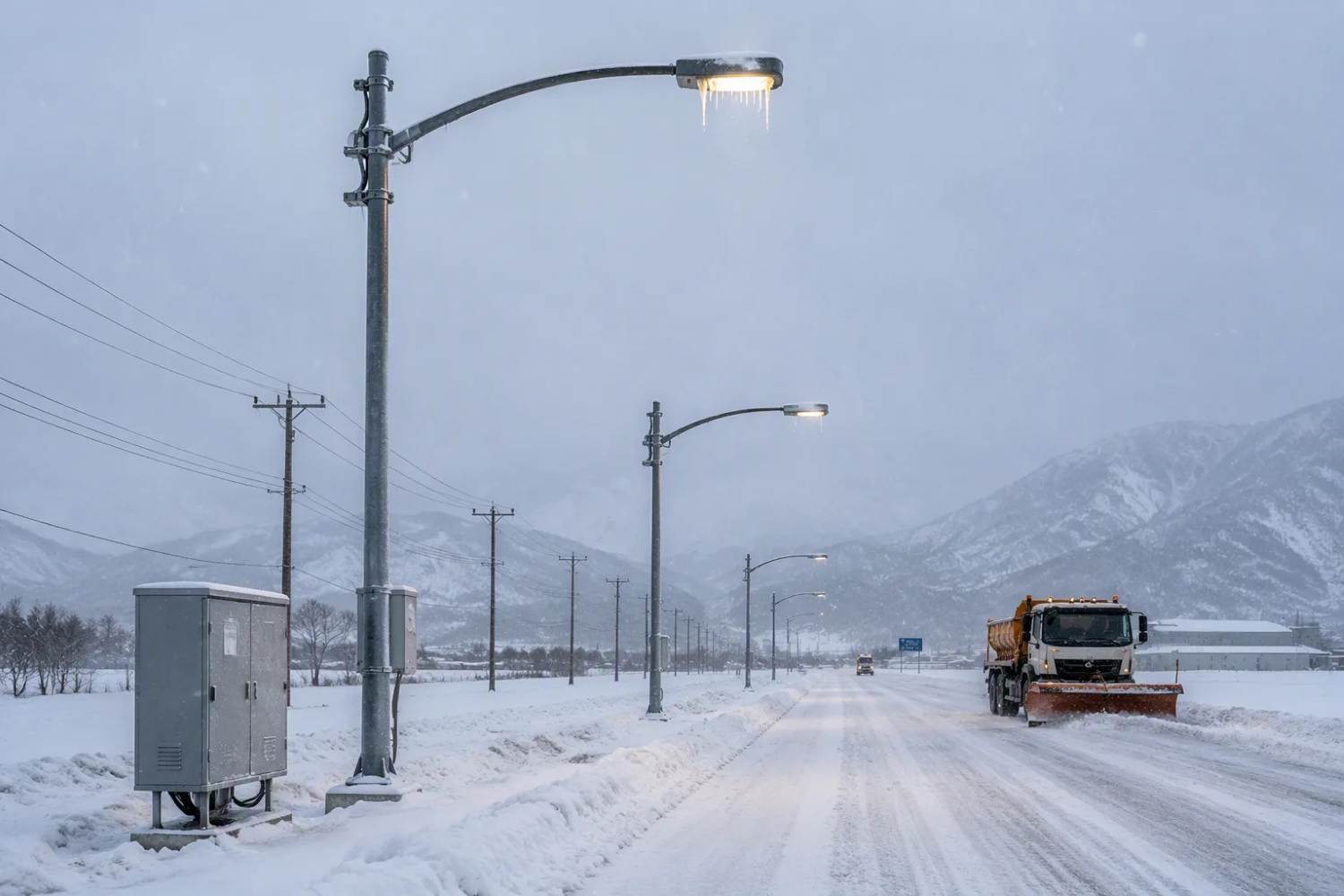
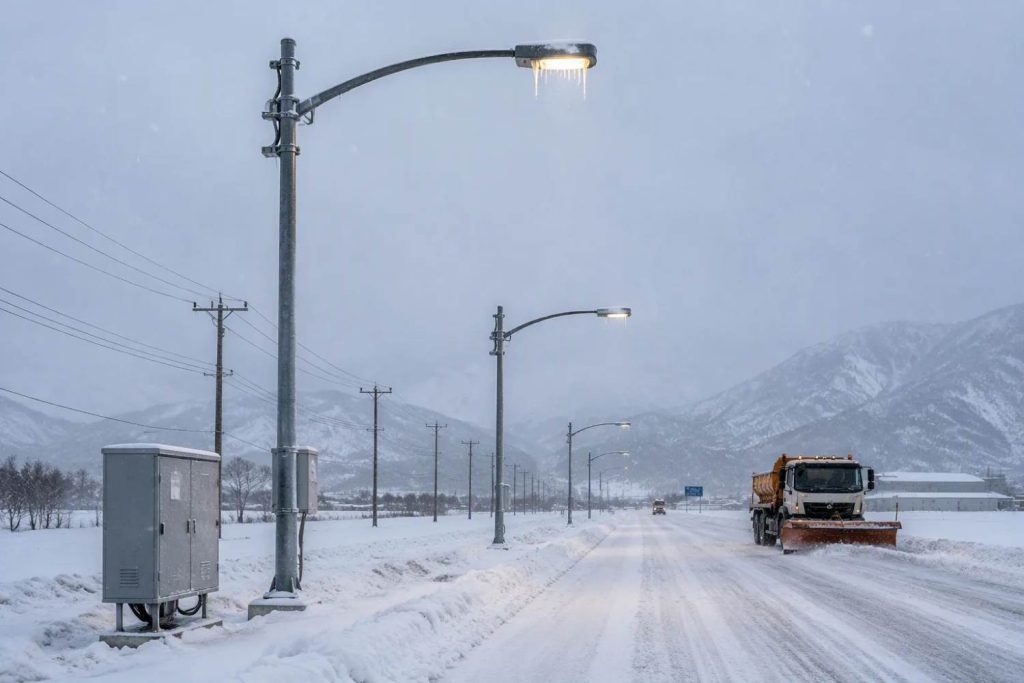
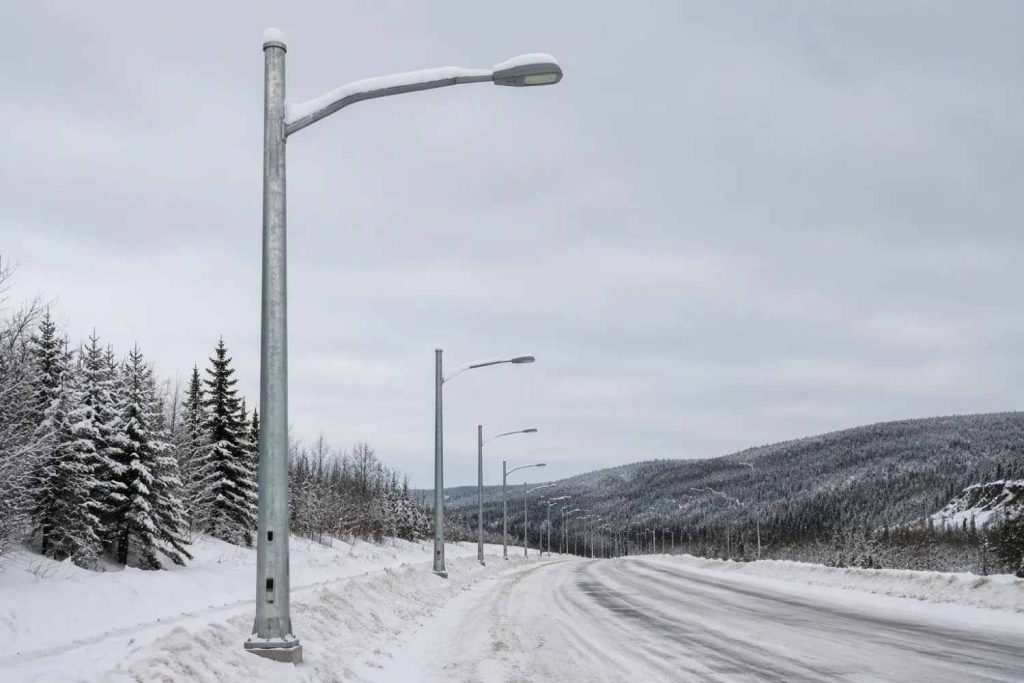
Snow and ice do more than block light. A layer of ice on a luminaire can sharply cut light output. Snow-covered roads turn a dark surface into a bright reflector, so glare becomes a real hazard. Winter also brings fewer daylight hours. Streetlights switch on earlier and stay on longer. Drivers notice any drop in performance right away. Wind-driven ice also builds up on the pole shaft, adding weight that the foundation must carry.
Freezing temperatures also change the steel itself. When temperature falls, yield strength rises. The pole then resists permanent bending more strongly. Fracture toughness acts differently. Crack-growth stress changes much less. Below the ductile–brittle transition, impact toughness collapses. For 0.2% carbon structural steel, that transition sits near -4°F. At -22°F, the steel falls below its recommended toughness window. It can fail by sudden brittle fracture rather than by yielding. Designers should pick a steel grade with a lower transition temperature. Robust tubular steel poles, like those used in Canadian winters, often depend on such low-temperature-toughness grades.
How Snow Removal Equipment Creates Risks for Roadside Poles
Snow removal equipment is another big threat to roadside poles. Plows push heavy, packed snow against pole bases. A single blade strike can dent or loosen a foundation. Salt and de-icing chemicals splashed onto bases attack galvanized coatings and exposed steel. Vibration from plows and heavy traffic keeps stressing welds, anchor bolts, and luminaire attachments. Over time, that fatigue shortens the pole’s useful life.
Project planners should design around these risks. Placing poles farther from the curb reduces blade strikes. Setting illuminance and uniformity goals that account for snow-covered ground reflectance and possible luminaire obstruction tells the designer what margin to build in. After winter events, a quick check for ice damage, loose bolts, and corrosion stops small problems from becoming replacements. Design teams should also confirm that the luminaire can run through repeated freeze–thaw cycles.
How to Choose Steel Lighting Poles for Snowy Road Conditions
Morelux is a Malaysian maker with years of experience in custom steel pole solutions. The company serves clients in many countries and completes numerous pole projects each year. A team of professional engineers works across its production area. Lighting poles from Morelux fit cold-climate road projects because the company builds each unit to order.
The product range covers street lighting poles, solar lighting poles, high mast lighting poles, flood lighting poles, stadium lighting poles, and more. Buyers can ask for square, tapered, round, tubular, octagonal, or hexagonal shapes. Straight or curved designs are available. Single or double arms match different road layouts. Finishes include hot-dip galvanized or powder coated surfaces. Morelux products meet international standards such as ISO 1461 and ASTM A123. A wholesale buyer or contractor can order through Morelux as a supplier for large infrastructure tenders.
How Steel Grade and Wall Thickness Affect Pole Strength in Winter
Steel grade and wall thickness together decide how a pole handles winter loads. A grade with a low ductile-to-brittle transition temperature resists sudden fracture when the mercury drops. The earlier section noted that 0.2% carbon structural steel transitions near -4°F. At -22°F, that steel falls outside its recommended toughness window. Specifiers should choose a grade rated for the project’s lowest expected temperature.
Wall thickness controls bending resistance. A thicker wall raises the section modulus. The pole then carries more ice weight and wind load without permanent deformation. Morelux provides engineering and structural calculation support. The team runs wind load analysis and recommends wall thickness for each project. This service helps a buyer avoid both under-designed poles and costly over-design.
How Pole Height and Luminaire Loads Affect Structural Performance
Pole height and luminaire weight create a moment at the base. A taller pole multiplies the effect of every pound mounted at the top. Ice adds more weight to both the luminaire and the pole shaft. The foundation and anchor bolts must resist that combined load.
LED luminaires rated for extreme cold and vibration are the right match for snowy roads. These fixtures start reliably at low temperatures and tolerate the shaking from plows and heavy traffic. The pole material must also resist ice and corrosion. Galvanized or powder coated steel handles salt spray and freeze-thaw cycles well.
Pole placement changes lighting performance without raising height. In industrial parks, staggered poles on opposite sides of a narrow road give better light distribution than tall poles on one side. For wide roads, opposite poles facing each other maintain uniformity across the full width. Morelux can supply custom pole designs for either layout. A project engineer should confirm illuminance and uniformity goals before finalizing spacing.
How Corrosion Protection Helps Steel Lighting Poles Last Longer
Road salt and liquid brine start attacking steel as soon as they touch it. Moisture by itself causes rust. Deicing chemicals make the electrolytic reaction happen faster. Tiny salt crystals in the air land on structural steel near highways and cause real damage. Corrosion often begins where paint cracks or chips. Brine gets to the bare metal underneath. Crevices that hold water and salt are the weakest spots.
Why Hot-Dip Galvanizing Matters in Snowy and Salty Road Environments
Hot-dip galvanizing puts a zinc coating on steel that blocks salt and moisture. The zinc works as a sacrificial layer. It corrodes first, so the steel below stays whole. This protection is important for lighting poles hit by plow spray and chemical runoff every winter.
Several standards set rules for galvanizing quality and corrosion testing. ASTM A123 covers zinc coating thickness and bonding quality. ISO 1461 lists surface requirements, inspection, and repair of galvanized coatings. For corrosion testing, ASTM B117 runs salt spray fog tests. ISO 9227 performs neutral salt spray tests. ASTM D2247 checks humidity resistance at 100% relative humidity. ASTM G85 provides accelerated corrosion cycle testing. Buyers should ask for test reports that cite these standards.
How Powder Coated Steel Poles in Harsh Winter Conditions
Powder coating adds a second layer of defense over galvanized steel. The coating resists chipping from plow strikes and road debris. It also stops brine from reaching the zinc layer. A powder coated pole lasts longer when freeze-thaw cycles stress the surface.
Winter power planning also affects pole reliability. Grid power stays steady, but solar hybrid systems face low sunlight and snow-covered panels. Winter-ready battery chemistry helps, and snow-shedding panel designs cut down buildup. Iceland uses smart street poles that pull low-grade heat from volcanic and geothermal zones. A winter energy budget should allow for less solar input and higher battery drain.
How to Design Pole Foundations for Cold and Frost-Prone Sites
The most important thing for highway light poles is structural strength. These poles face wind, ice, and shaking from traffic and plows. A weak foundation can turn a small extra load into a fallen pole. Every foundation must resist the loads that the pole passes to the ground.
Wind load analysis and structural calculations are the base of good design. Morelux gives engineering support that includes these services as well. The team finds the moment at the pole base from wind pressure, ice buildup, and luminaire weight. These numbers then set the foundation size and anchor bolt specs. A buyer who skips this step risks a foundation that fails in a winter storm.
How Soil Conditions and Frost Depth Influence Foundation Design
Soil type and frost depth set how deep and wide the foundation must be. Sandy soil drains well and stores less water. Clay soil keeps moisture and expands when it freezes. That expansion pushes the foundation up. This is called frost heave. It can crack concrete, bend anchor bolts, and tilt the pole.
Frost depth changes by region. Designers must get the local frost depth from building codes or geotechnical reports. The foundation base must sit below that line. This stops the soil from lifting the structure. In permafrost zones, the ground stays frozen all year. Heat from the foundation can thaw the soil and cause settling. Insulation or thermosyphons around the concrete can keep the ground stable.
Seasonally frozen ground needs a different plan. Using gravel or crushed stone as backfill around the foundation improves drainage. Water that drains off cannot freeze and expand against the concrete. A wider base also spreads the load across more soil. This lowers the pressure on any single point.
How Anchor Bolts and Base Plates Support Pole Stability in Winter
Anchor bolts tie the pole base plate to concrete. These bolts take the full bending moment from wind and ice. In winter, freeze-thaw cycles can make the bolts loose. The base plate may shift, and the pole goes out of alignment. Torque checks after winter events catch this problem early.
Base plates spread the load from the pole shaft to the anchor bolts. A thicker plate handles bending under high moment loads. The plate must lie flat on the concrete to avoid stress spots. Grout under the plate fills gaps and spreads the load evenly. Without proper grout, the plate can rock and fatigue bolts.
Anchor bolts should go deep enough into the concrete to develop full tensile strength. The embedment depth depends on the bolt diameter and concrete strength. A bolt that pulls out under load offers no support. Designers should also specify bolts with corrosion protection. Galvanized or stainless steel bolts resist salt spray and chemical runoff.
Morelux gives engineering and structural calculation support for every project. This support covers foundation design recommendations and anchor bolt specs. Project engineers should check the geotechnical report before finalizing any foundation plan. The right foundation keeps light poles standing through the worst winter weather.
Our Steel Lighting Pole Solutions for Cold-Climate Infrastructure
How MORELUX Supports Custom Steel Pole Designs for Road Projects
MORELUX provides customized steel lighting poles with structural calculations and wind load analysis. Pole height, luminaire weight, potential ice loads, and project conditions help determine suitable pole specifications. Buyers should also confirm applicable standards, test reports, and warranty terms before ordering.
How Engineering and Protective Coatings Support Project Requirements
Hot-dip galvanizing provides corrosion protection for steel lighting poles and helps withstand moisture from snow and ice. MORELUX offers galvanizing to ISO 1461 and ASTM A123 requirements, with additional coatings available according to project needs.
For cold-climate projects, buyers should also consider foundation stability against frost heave, anchor bolt requirements, and winter maintenance access. Regular inspections after severe storms help identify coating damage, ice-related issues, and lighting performance problems.
Frequently Asked Questions About Lighting Poles for Snowy Roads
Are Galvanized Steel Lighting Poles Suitable for Snowy Roads?
Yes. Hot-dip galvanized steel lighting poles resist moisture and rust, making them suitable for snowy roads. For long-term durability, specify galvanizing that meets ISO 1461 or the relevant project standard.
How Does Road Salt Affect Steel Lighting Pole Corrosion?
Road salt accelerates corrosion when it accumulates on steel surfaces, especially around pole bases and anchor bolts. Hot-dip galvanizing and additional protective coatings help improve corrosion resistance in winter road environments.
How Should Lighting Pole Foundations Be Designed for Frost-Prone Sites?
Foundations should account for frost depth, soil conditions, drainage, and frost heave. Site-specific engineering helps determine the appropriate foundation depth, dimensions, and anchor-bolt arrangement.
What Should Buyers Specify for Lighting Poles in Cold Climates?
Specify pole height, steel grade, wall thickness, wind loads, corrosion protection, and applicable standards. Also provide site and foundation conditions so manufacturers can recommend suitable steel lighting poles for cold-weather projects.