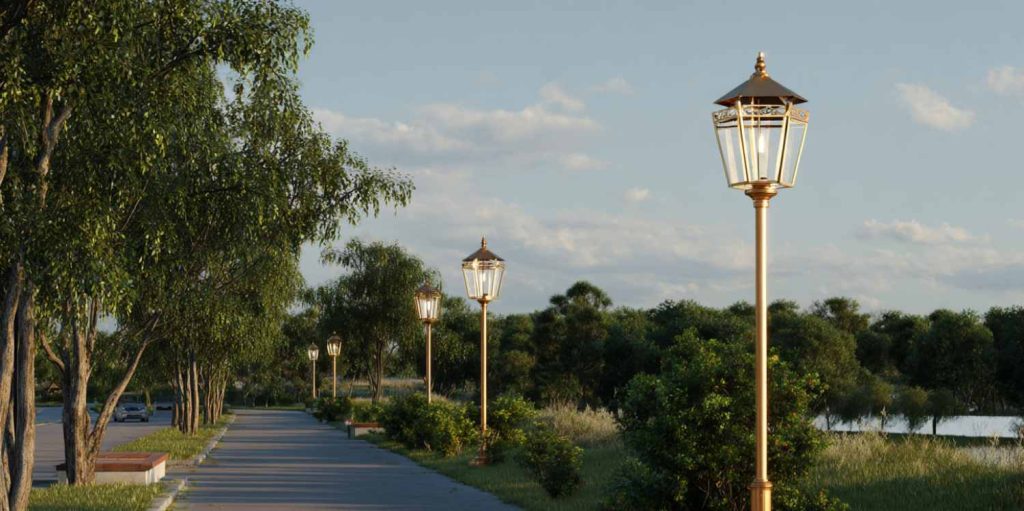
Higher energy bills and reliance on the power grid make old street lights hard to keep up. Cities face growing electricity costs and old equipment. How can towns get steady, affordable lighting without staying tied to the grid?
Solar street light poles solve this problem head-on. These systems cut energy costs by as much as 70%, fit easily onto existing structures, and keep lights on when the power goes out. Smart controls add even more efficiency and control.
A solar lighting pole means zero energy bills, easy setup, and reliable off-grid power. Leaders get a lasting solution that cuts daily costs while helping the environment.
Key Takeaways
- Solar street light poles reduce energy bills to zero and avoid expensive trenching.
- They cut CO2 emissions by 90% compared to regular grid lights.
- Choosing the right battery size keeps lights working all year, even in places with lots of clouds.
- Steel poles that go through hot-dip galvanizing can last many years with very little upkeep.
What Is a Solar Street Light Pole?
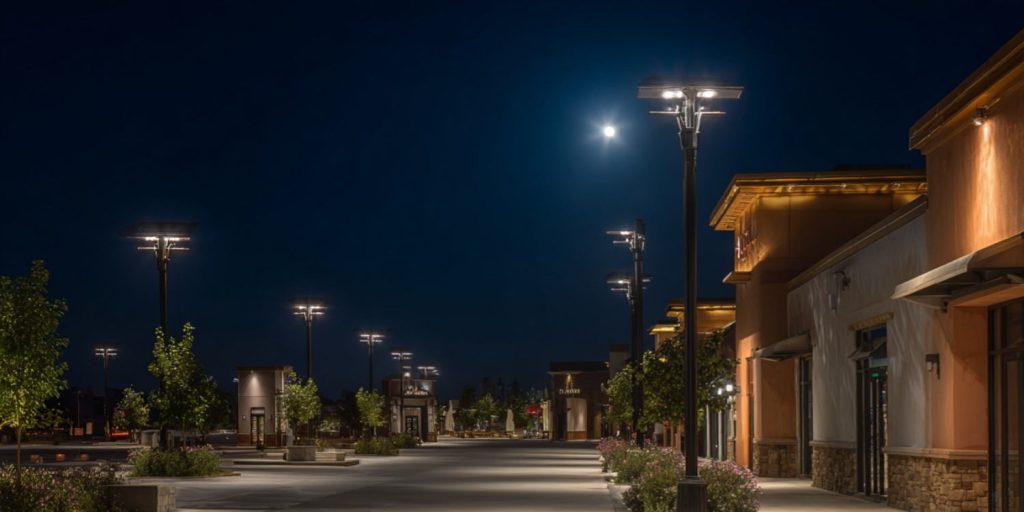
A solar street light pole is a self-contained lighting system that combines a steel pole, solar panel, battery, LED fixture, and controller. The panel collects sunlight during the day, while the battery stores energy for nighttime lighting.
Unlike grid-connected street lights, a solar lighting pole operates without underground power cables or grid connections. This can simplify installation, especially in remote areas or locations where trenching is difficult.
A typical system works as follows:
| Component | Main Function |
|---|---|
| Solar panel | Converts sunlight into electricity |
| Battery | Stores energy for nighttime use |
| LED fixture | Provides outdoor lighting |
| Controller | Manages charging and power output |
| Steel pole | Supports the complete system |
The pole and mounting structure must be designed to support the combined weight and wind load of the solar panel and lighting equipment. Galvanized steel can provide corrosion protection for long-term outdoor use.
Solar street light poles are commonly used for roads, parking areas, walkways, remote sites, and other locations where independent lighting is required.
How Solar Street Light Poles Support Sustainable Outdoor Lighting
Renewable Solar Energy Reduces Dependence on Grid Electricity
Solar street light poles generate electricity from sunlight instead of relying on continuous grid power. This reduces dependence on utility infrastructure and can lower operating energy use over the system’s service life.
Solar energy also supports lighting projects where extending electrical infrastructure would be difficult or costly. Proper panel and battery sizing is important to maintain reliable operation during periods of limited sunlight.
LED Fixtures Improve Energy Efficiency for Outdoor Lighting
LED fixtures provide efficient illumination while using relatively low power, making them well suited to solar lighting systems. Their lower energy demand allows more of the stored battery capacity to be used for nighttime lighting.
LEDs also offer directional light output and flexible control options, helping solar street light poles provide effective illumination while limiting unnecessary energy use.
Off-Grid Operation Simplifies Lighting in Remote Outdoor Areas
An off-grid solar lighting system can operate without underground power cables, utility connections, or extensive electrical infrastructure. This makes solar street light poles suitable for remote roads, pathways, parking areas, parks, and other locations without convenient grid access.
Because installation can avoid major trenching work, projects may also reduce disruption to existing pavement, landscaping, and surrounding infrastructure.
Durable Pole Structures Support Long-Term Solar Lighting Systems
The steel pole must support the combined weight and wind load of the solar panel, battery, LED fixture, and mounting components. Proper structural design helps maintain stability throughout the system’s outdoor service life.
Galvanized steel poles provide corrosion protection for outdoor exposure, while suitable finishes can provide additional protection in demanding environments. Morelux supplies custom steel poles designed around solar lighting equipment and project requirements.
Where Are Solar Street Light Poles Commonly Used Outdoors?
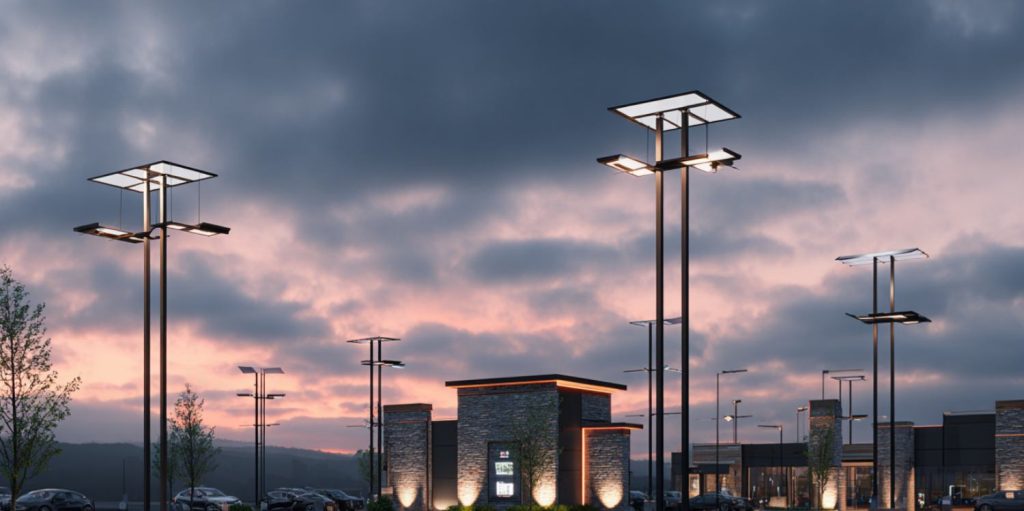
Solar street light poles can be adapted to different outdoor environments based on lighting needs, available sunlight, pole height, and site layout. Each application requires appropriate fixture placement and solar system sizing.
Solar Street Light Poles for Roads, Streets and Residential Areas
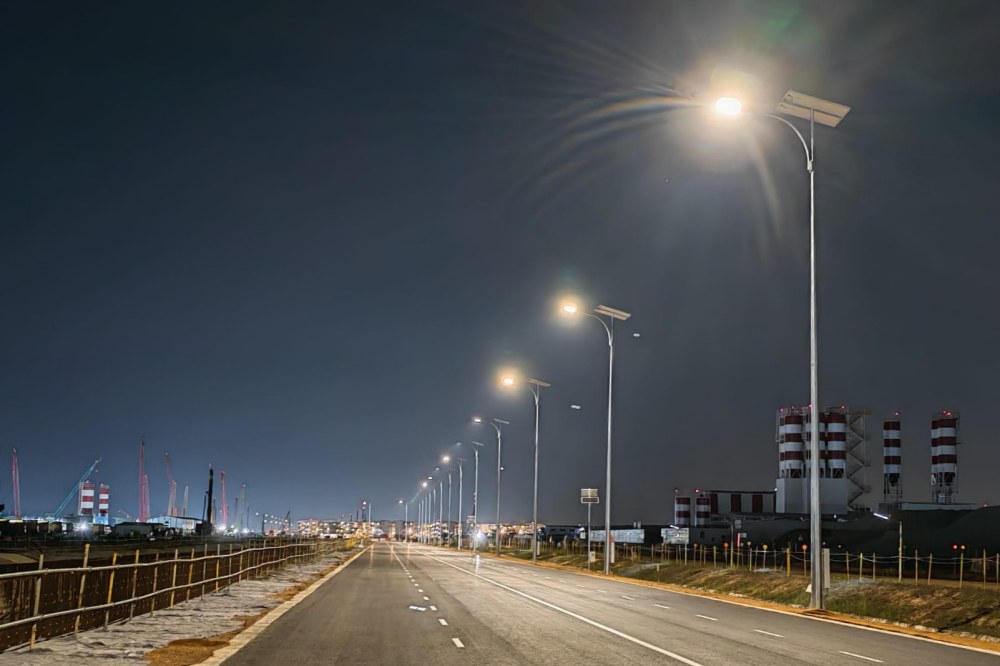
Solar street light poles are suitable for public roads, residential streets, access roads, and neighborhood areas where consistent nighttime visibility is required. Pole height, spacing, LED output, and beam distribution should be selected according to road width and traffic conditions.
For residential areas, compact solar lighting poles can provide localized illumination while avoiding unnecessary light spill. Structural design should also account for local wind conditions and the combined load of the solar panel and lighting equipment.
Solar Lighting Poles for Parking Lots and Pedestrian Walkways
Solar lighting poles provide independent illumination for parking lots, sidewalks, pathways, and pedestrian areas. Their placement should provide sufficient coverage around vehicle spaces, entrances, crossings, and walking routes.
Shorter poles with suitable LED optics can work well for pedestrian areas, while larger parking lots may require higher poles or wider fixture distribution. Proper spacing helps reduce dark areas and excessive overlap between light beams.
Solar Street Poles for Parks, Campuses and Public Spaces
Parks, campuses, recreational areas, and public spaces can use solar street poles where lighting is needed without extensive electrical infrastructure. These systems can illuminate internal roads, paths, entrances, gathering areas, and open spaces.
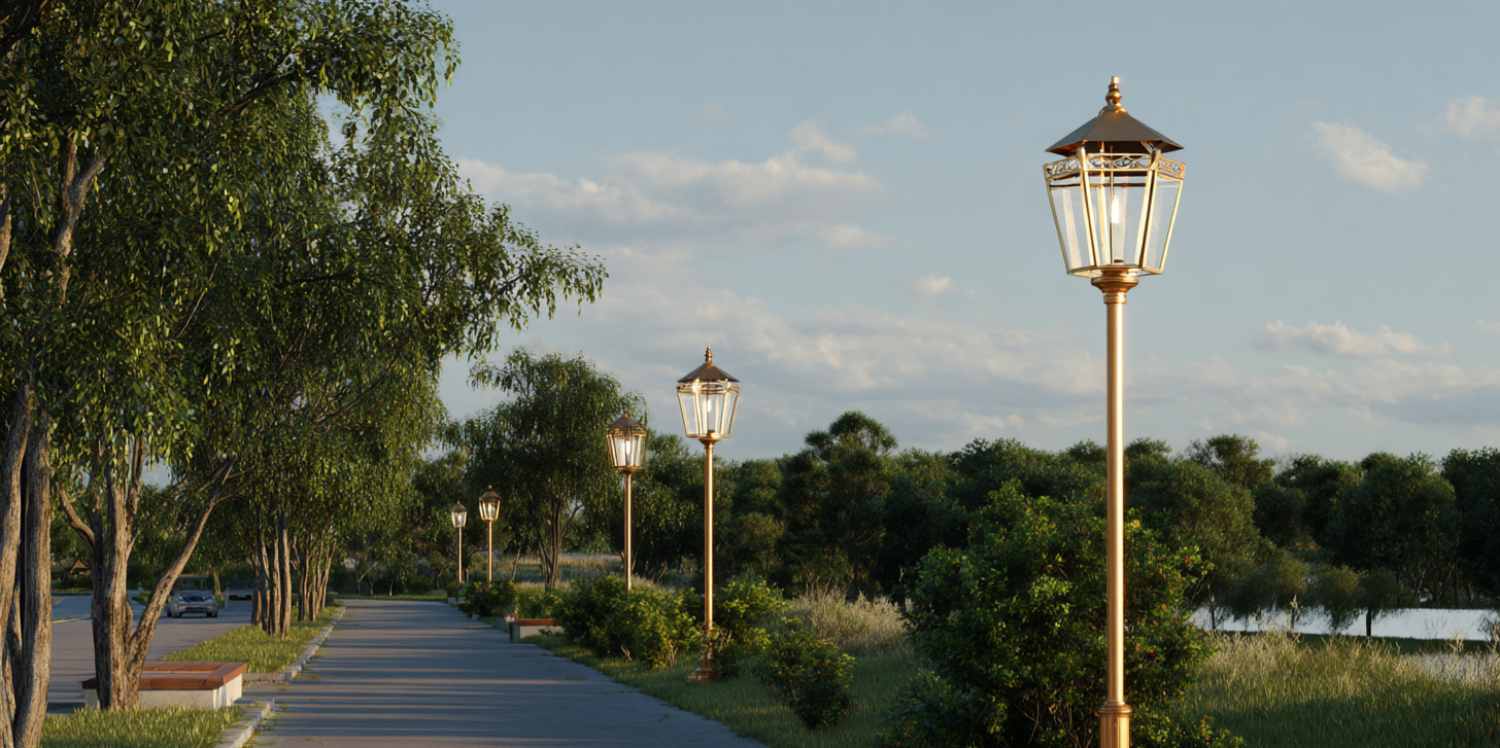
The pole design can be selected to suit the surrounding landscape and existing site infrastructure. Decorative finishes, different mounting arrangements, and suitable LED fixtures can help integrate solar lighting into public environments.
Solar Poles for Remote Roads and Areas Without Grid Access
Solar poles are particularly useful for remote roads, rural areas, construction sites, and other locations where grid electricity is unavailable or difficult to extend. The self-contained system can operate without underground power connections.
For these projects, solar panel capacity, battery storage, lighting demand, and available sunlight should be evaluated together. A properly sized system can provide reliable outdoor lighting while reducing the need for electrical trenching and grid infrastructure.
How to Choose a Solar Street Light Pole for Your Project?
Select Pole Height Based on Road Width and Lighting Coverage
Choose solar street light pole height according to the road or area width, required lighting level, fixture beam angle, and pole spacing. Taller poles can provide wider coverage, while shorter poles may be more suitable for residential streets, pathways, and smaller outdoor areas.
The final layout should balance coverage and uniformity rather than relying on pole height alone. Photometric calculations can help determine suitable height, spacing, and fixture output before installation.
Match Pole Structure With Solar Panel and Fixture Loads
A solar lighting pole must support the combined weight and wind load of the solar panel, LED fixture, battery, brackets, and other equipment. Pole diameter, wall thickness, material grade, and base connection should therefore be selected according to the calculated loads.
The mounting arrangement also affects structural performance. Panel brackets and fixture arms should be securely connected to the pole and positioned according to the approved design to maintain stability during operation.
Consider Wind Conditions and Solar Panel Mounting Requirements
Solar panels increase the exposed surface area of a lighting pole, making local wind conditions an important design factor. Wind speed, panel size, tilt angle, mounting height, and site exposure should be included in structural calculations.
The panel mounting system should also provide secure attachment while allowing the required solar orientation. Properly designed brackets help reduce movement and protect both the panel and pole structure during strong winds.
Choose Steel Protection for Different Outdoor Site Conditions
The steel protection system should match the project’s climate and corrosion exposure. Hot-dip galvanizing provides a protective zinc coating for general outdoor use, while additional powder coating or duplex protection can be considered for more demanding environments.
When selecting a solar street light pole, buyers should also check coating specifications, surface preparation, inspection requirements, and applicable standards. Morelux provides customized steel pole designs with surface treatment options for different outdoor applications.
Our Steel Solar Street Light Pole Solutions for Projects
Custom Steel Poles Designed for Solar Lighting Equipment Loads
Morelux provides custom steel solar street light poles designed around the combined loads of solar panels, LED fixtures, batteries, brackets, and optional equipment. Pole height, shaft dimensions, wall thickness, base plates, and mounting points can be adapted to project requirements.
For projects using cameras, sensors, or communication equipment, the additional equipment load and projected area can be included in the pole design. This helps ensure the solar lighting pole provides stable support without relying on a standard configuration for every application.
Galvanized Steel Poles for Durable Outdoor Solar Lighting Systems
Hot-dip galvanized steel provides a practical corrosion protection system for solar street light poles used outdoors. The zinc coating helps protect exposed steel from moisture and environmental conditions, making it suitable for roads, parking areas, parks, and other outdoor lighting projects.
For sites with higher corrosion exposure, additional surface protection can be considered based on the environment and project requirements. Morelux can provide galvanized, powder-coated, or duplex protection options to support different solar lighting applications.
Engineering Support for Pole Height, Wind Loads and Mounting Needs
Solar street light pole design requires coordination between lighting performance and structural requirements. Morelux supports project planning for pole height, solar panel mounting, LED fixture loads, wind conditions, base connections, and equipment arrangement.
Engineering calculations can help determine suitable pole dimensions and mounting configurations before manufacturing. This approach allows the steel pole to be coordinated with the solar lighting system, foundation, and installation requirements for more reliable project execution.
FAQs About Solar Street Light Poles and Outdoor Lighting
What Is a Solar Street Light Pole Used for in Outdoor Projects?
A solar street light pole supports solar panels, LED fixtures, batteries, and related equipment for outdoor lighting. It is commonly used for roads, parking areas, walkways, parks, residential streets, and remote locations where independent lighting is required.
How Tall Should a Solar Street Light Pole Be for Road Lighting?
The suitable solar street light pole height depends on road width, lighting coverage, fixture output, beam angle, and pole spacing. Taller poles can cover wider areas, while shorter poles may suit residential roads and pedestrian spaces. Photometric calculations can help confirm the appropriate height and layout.
What Type of Steel Is Suitable for Solar Street Light Poles?
Structural steel suitable for outdoor pole fabrication should provide adequate strength for the pole height, equipment loads, and local wind conditions. Steel grade, wall thickness, shaft dimensions, and base design should be selected through structural calculations rather than by material grade alone.
Can Solar Street Light Poles Work Without Grid Electricity?
Yes. A standalone solar street light pole can operate without grid electricity by using solar panels to generate power during the day and batteries to store energy for nighttime lighting. This makes solar lighting suitable for remote roads, parks, pathways, and other locations where grid connections are limited or unavailable.
How Does Wind Load Affect Solar Street Light Pole Design?
Wind load affects the required strength and dimensions of a solar street light pole because the solar panel and LED fixture increase the exposed surface area. Local wind speed, panel size and tilt, mounting height, equipment weight, and site exposure should be considered when calculating the pole structure and foundation requirements.
How Long Can Solar Street Light Poles Last Outdoors?
The outdoor service life of a solar street light pole depends on steel quality, structural design, corrosion protection, installation conditions, and maintenance. Hot-dip galvanizing helps protect the steel from corrosion, while powder coating or duplex systems can provide additional protection for demanding environments.