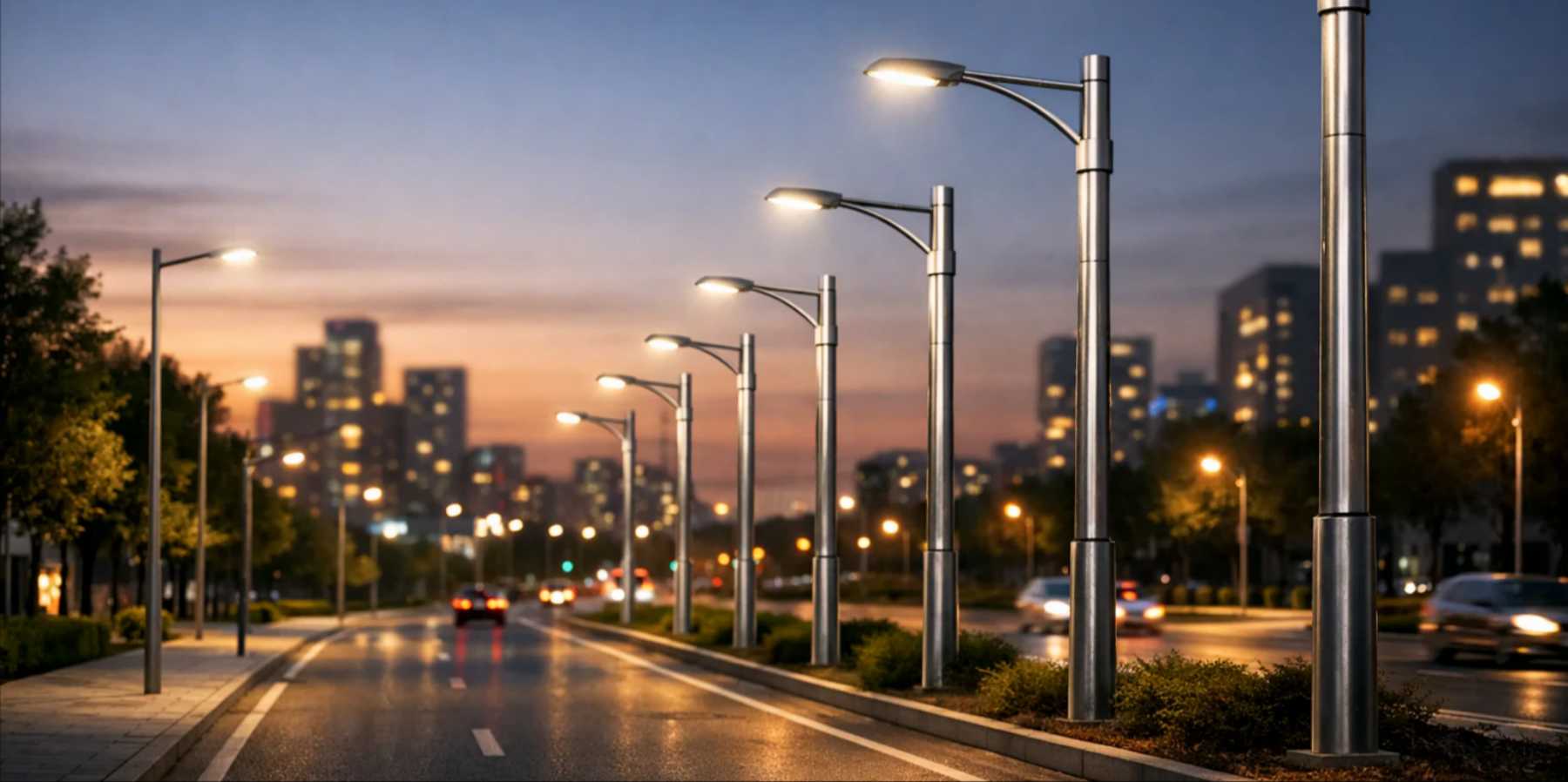
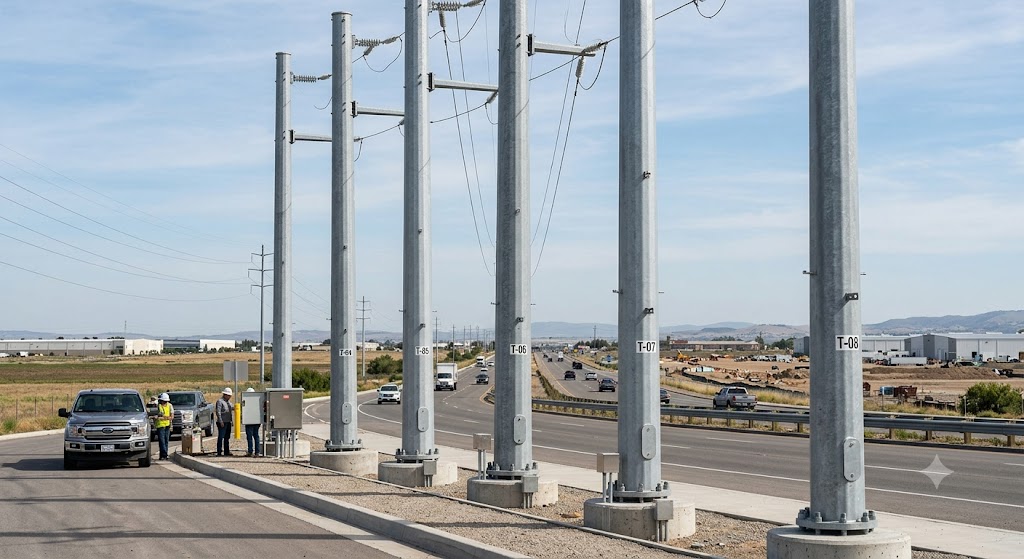
A steel tubular pole is a hollow, round steel structure. It is used to hold up lights, signs, and utility equipment. Unlike solid wood or concrete poles, this tubular steel pole is light but strong. Steel tubular poles give you steady quality and a long service life.
Wood poles can rot and crack over time. Concrete poles are heavy and hard to move. Steel tubular poles fix these problems. This article explains what steel tubular poles are made of and how they are made. It also covers their common types, where they are used, and why they are a smart choice for modern infrastructure.
Key Takeaways
- Steel tubular poles are strong, light, and last a long time.
- They stop rust with special coverings, such as galvanizing and powder coating.
- You can pick from many shapes and sizes for different uses.
- They are used for street lights, traffic signals, and utility lines.
- Steel poles cut costs for shipping, setup, and upkeep.
Key Features That Define Modern Steel Tubular Poles
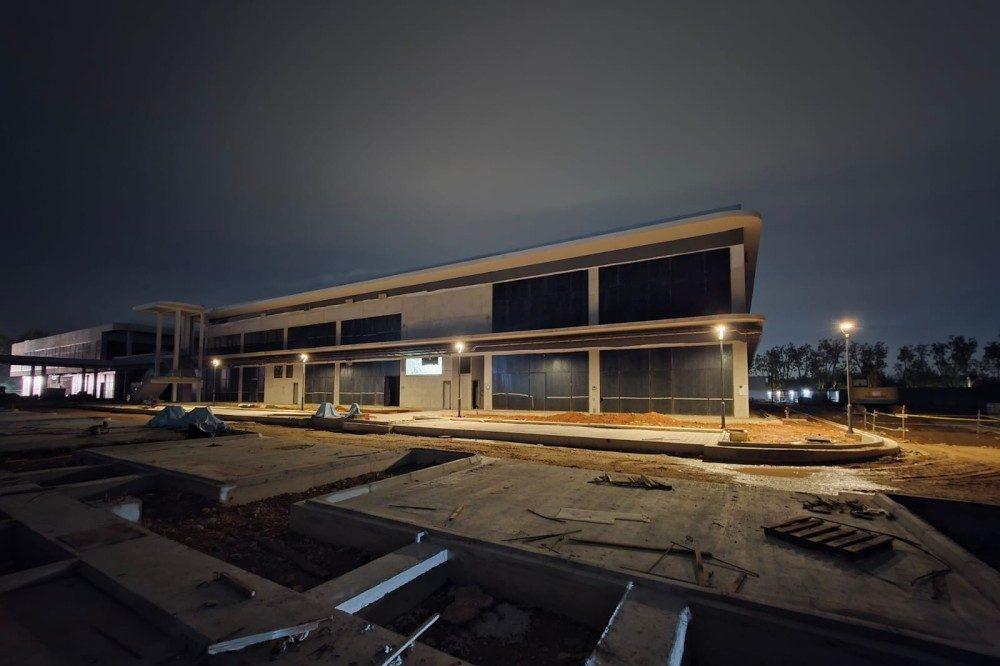
A steel tubular pole is a hollow, cylindrical steel column made to carry loads above ground. Its shape and material give it features that wooden, concrete, and solid steel poles cannot match together.
Wooden poles rot, crack, and attract insects over time. Concrete poles resist rot but weigh so much that transport and installation become costly. Solid steel poles are strong but heavy and expensive. A tubular steel pole solves these problems. It is lightweight, strong, long-lasting, and permits longer spans between supports. These traits make it a common substitute for wooden poles in modern infrastructure.
Steel Strength and Structural Stability for Outdoor Pole Systems
Structural stability depends on the pole as a complete system, not only on the steel grade. Engineers consider pole height, equipment weight, wind exposure, mounting position, and foundation connection together to control deflection and maintain stability.
The tubular structure also allows wall thickness and section dimensions to be adjusted according to the expected loads. Base plates, anchor bolts, welded joints, and mounting brackets are designed to transfer these loads safely into the foundation. This makes a steel tubular pole suitable for lighting, cameras, signs, and other elevated equipment.
Corrosion Protection Extends Steel Tubular Pole Service Life
Corrosion protection should match the installation environment. Coastal areas, industrial zones, humid locations, and roads exposed to salt can require different protection systems.
Surface preparation is important before coating because proper cleaning and abrasive treatment improve coating adhesion. A galvanized steel pole provides zinc-based protection, while a powder coated steel pole can add another barrier and provide the required surface color. For demanding environments, a duplex coating system can combine both approaches.
Regular inspection of the base, welded areas, mounting points, and damaged coating also helps maintain long-term protection.
Standard and Custom Dimensions Meet Different Project Needs
Steel tubular poles can be produced in different heights, diameters, wall thicknesses, and base dimensions to suit individual projects. These dimensions are selected according to structural loads, installation conditions, and the equipment being supported.
Height affects coverage and equipment position, while diameter and wall thickness influence stiffness and structural performance. The lower and upper sections can also use different dimensions when required by the design.
For non-standard projects, steel tubular pole dimensions can be developed from engineering drawings, load information, equipment specifications, and site conditions.
Common Steel Tubular Pole Types and Structural Configurations
Steel tubular poles come in different shapes, sizes, and configurations for different infrastructure needs. Their dimensions are selected according to factors such as pole height, wind speed, equipment weight, and safety requirements.
Common configurations include round, tapered, square, and multi-section poles. Surface finishes such as galvanizing and powder coating can provide additional protection for outdoor use.
The manufacturing process typically includes forming steel, welding, surface treatment, and quality inspection to ensure the pole meets the required specifications.
Morelux has over 15 years of pole manufacturing experience, a 45,000 m² production facility, and more than 200 professional engineers supporting pole design and production.
Round Tubular Poles for Lighting and Infrastructure Applications
Round tubular poles are widely used for street lighting, floodlighting, CCTV, traffic signals, and other infrastructure applications. Their circular shaft provides a simple, versatile structure that works with different mounting arrangements.
They can be supplied with single or double arms, mounting brackets, base flanges, and other project-specific accessories. For many applications, a round steel pole provides a practical balance of function and appearance.
Tapered Tubular Poles for Efficient Load and Wind Performance
Tapered tubular poles gradually reduce in diameter from the base to the top. The larger lower section provides support where loads are higher, while the smaller upper section reduces unnecessary material.
Engineers can adjust the taper, shaft dimensions, and height according to wind conditions and equipment loads. This makes a tapered steel pole suitable for projects requiring structural efficiency and a streamlined appearance.
Sectioned and Multi-Piece Poles Simplify Transport and Installation
Longer poles can be divided into multiple sections for easier transportation and site handling. This is useful when road access, vehicle dimensions, lifting equipment, or installation space limits the handling of a single-piece pole.
Sectioned steel tubular poles are assembled on site using specified connection details. The number and length of sections can be selected according to the pole design and installation conditions.
Where Are Steel Tubular Poles Commonly Used in Infrastructure?
Steel tubular poles do many jobs in infrastructure. Their shape and setup change to fit each task. Common shapes are round, square, tapered, octagonal, and hexagonal. Round poles work well for general lighting. Square poles give a modern look for commercial areas. Tapered poles stand up to high winds. Octagonal and hexagonal poles have flat sides that resist twisting.
The setup also changes by need. Straight poles hold lights at a fixed height. Curved poles reach over roads or walkways. Single-arm poles carry one fixture. Double-arm poles hold two fixtures for wider coverage. Zinc-coated poles resist rust in all these setups. Overlap connections join pole sections by sliding one into another. Flange connections bolt sections together for transmission and commercial lighting jobs.
Electricity transmission and distribution was the top use for steel utility poles in 2023, with a 44.5% market share. This segment should stay dominant through the 2024–2033 forecast period. The tubular steel pole segment held the largest share of the steel utility poles market in 2024, at 38%. These poles offer a high strength-to-weight ratio and handle heavy loads in harsh climates.
Street Lighting and Outdoor Lighting Pole Applications
Steel tubular poles are widely used for roads, highways, parks, parking areas, and commercial sites. Their height and mounting options can be matched to the required lighting coverage and fixture position.
They also support applications such as CCTV, floodlighting, sports lighting, and smart city equipment. Depending on the project, Morelux can provide configurations such as straight poles, single- or double-arm poles, and mid-hinged poles for different outdoor lighting requirements.
Traffic Signals, Signs and Other Road Infrastructure Applications
Steel tubular poles provide support for traffic signals, road signs, pedestrian signals, and other roadside equipment. Their configurations can be adapted to place equipment at the required height and position without obstructing traffic lanes.
Single-arm, double-arm, and curved-arm designs can serve different road layouts. Flanged bases and other mounting arrangements can also be specified according to the installation requirements.
Telecom and Utility Structures Requiring Strong Steel Support
Steel tubular poles are also used for telecom and utility infrastructure where reliable support is required. They can support communication equipment, antennas, cables, and other elevated components.
For these projects, pole height, equipment arrangement, wind exposure, and foundation conditions must be considered together. A properly engineered steel tubular pole provides a practical structure for long-term outdoor infrastructure.
How Steel Tubular Poles Are Manufactured and Protected
Steel Material Selection and Fabrication for Tubular Pole Production
Manufacturing starts with steel plates or coils selected according to pole height, loading conditions, wind requirements, and installation needs.
The steel is cut and formed into the required profile, such as round, square, or tapered. Sections can also be prepared separately for easier transportation and installation.
Accurate forming helps maintain consistent shaft dimensions and ensures the finished pole fits its foundation and mounting components correctly.
Welding, Surface Treatment and Hot-Dip Galvanizing for Protection
Welding joins the formed steel sections and creates the required structural connections. Welded areas are cleaned and prepared before coating.
Hot-dip galvanizing then adds a protective zinc layer to the steel surface. Powder coating can provide additional protection and the required color. The finish is selected according to the project environment and appearance requirements.
Morelux uses processes including CNC cutting, automatic welding, hot-dip galvanizing, and powder coating for its steel poles.
Quality Testing Helps Verify Strength, Dimensions and Surface Quality
Quality checks are performed throughout production. Inspectors verify key dimensions, weld quality, shaft alignment, surface condition, and coating consistency.
Finished poles can also be checked for flange dimensions, bolt-hole positions, wall thickness, and overall height. These inspections help ensure the pole meets the specified design and installation requirements.
Our Steel Tubular Pole Manufacturing and Customization Support
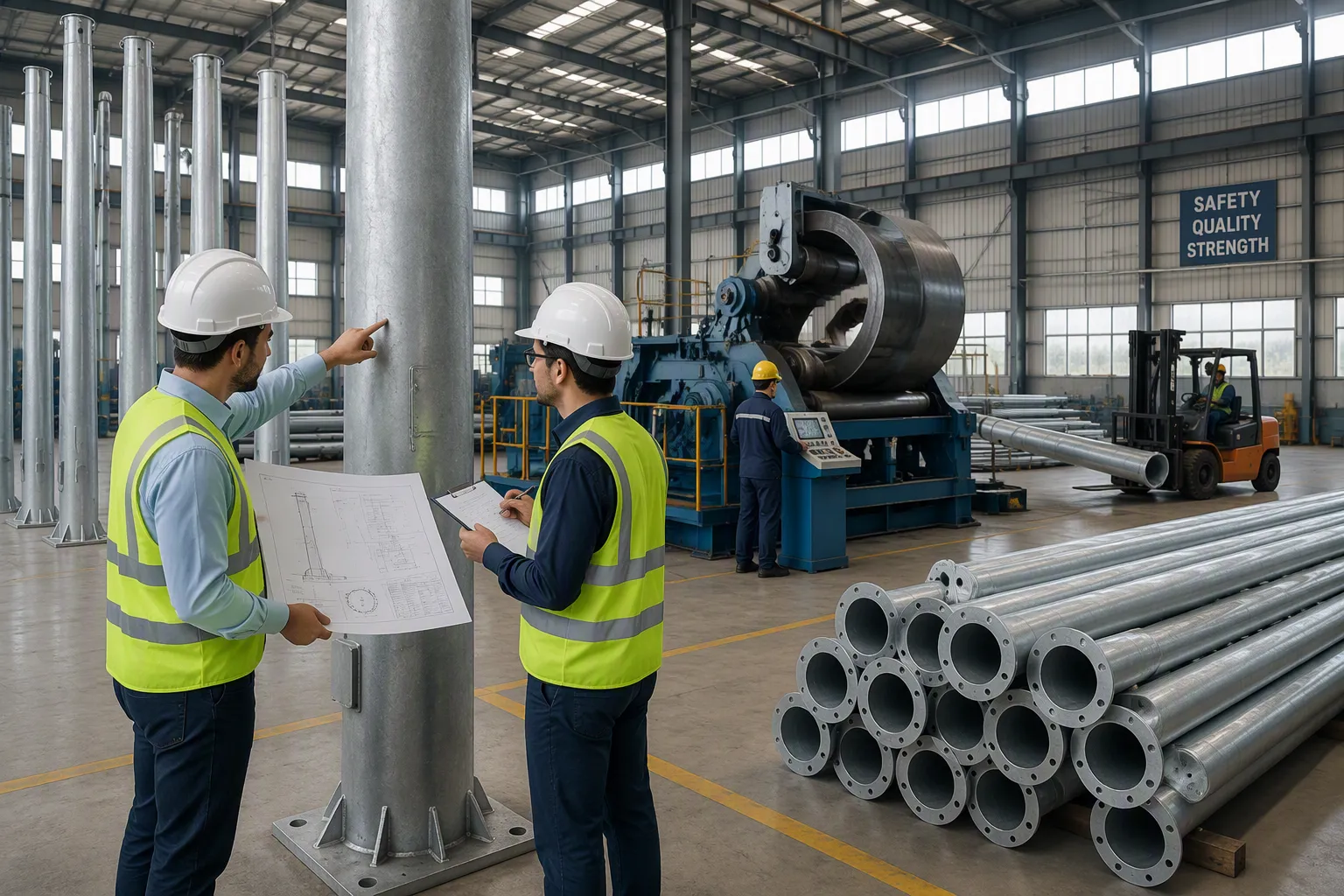
Morelux has more than 15 years of experience on every project. The company has a 45,000 m² production area and over 200 professional engineers. This size allows custom work for clients around the world. Buyers can ask for wholesale orders or one-of-a-kind custom designs.
Custom Steel Tubular Pole Design for Different Infrastructure Needs
Morelux provides custom steel tubular pole solutions for different infrastructure projects. Pole height, shaft shape, mounting arrangement, base design, and accessories can be adjusted to match the application.
Customers can provide drawings, equipment details, or project specifications as a starting point. The design can then be developed around the required installation conditions and final use.
Engineering Support for Pole Dimensions, Loads and Configurations
Morelux provides engineering support throughout the custom design process. Engineers review key project inputs such as pole dimensions, equipment loads, wind conditions, and mounting requirements.
This support helps customers select suitable pole configurations and refine the design before production. Morelux works with recognized standards including AASHTO, AS/NZS, BS EN, and MS according to project requirements.
Manufacturing and Surface Treatment for Consistent Pole Quality
Morelux combines CNC cutting, forming, welding, and surface treatment within its pole manufacturing process. Production is followed by dimensional and surface inspections to maintain consistency between finished poles.
Available finishes include hot-dip galvanizing, powder coating, and duplex coating systems. These options allow the pole surface to be matched to different outdoor environments and project requirements.
FAQs About Steel Tubular Poles and Their Applications
What Is a Steel Tubular Pole Used for in Outdoor Infrastructure?
A steel tubular pole is used to support equipment above ground in applications such as street lighting, floodlighting, CCTV, traffic signals, signs, telecom infrastructure, and utility projects. Different shaft designs and mounting configurations can be selected according to the application.
What Is the Difference Between Tubular and Conventional Steel Poles?
A tubular steel pole has a hollow shaft, which can provide structural strength with efficient material use. Conventional steel poles may use different structural forms, so the choice depends on the required load capacity, dimensions, installation method, and project design.
How Are Steel Tubular Poles Protected Against Outdoor Corrosion?
Steel tubular poles are commonly protected with hot-dip galvanizing, which creates a zinc layer over the steel surface. Powder coating can provide an additional barrier and color finish, while duplex coating systems combine galvanizing with additional coatings for demanding environments.
How Do You Choose the Right Steel Tubular Pole for a Project?
Selection should consider pole height, equipment weight, wind conditions, mounting configuration, foundation requirements, and installation environment. The required dimensions and structural configuration can then be determined based on the project’s specifications.
Can Steel Tubular Poles Be Customized for Height and Load Requirements?
Yes. Steel tubular poles can be customized in areas such as height, shaft dimensions, wall thickness, mounting arrangements, base design, and other project-specific details. Morelux provides engineering and customization support to develop poles according to project requirements.