There is no single ideal height for high mast lights. The right height depends on your project. Coverage area, lux requirements, and fixture specifications all play a role. A high mast lighting pole that works for a parking lot may fail at a stadium.
This post covers key variables, a quick reference table, a step-by-step calculation method, and common mistakes to avoid. Choosing the wrong height wastes energy. It also creates poor lighting and raises costs. These outcomes hurt safety and budgets.
Key Takeaways
- No one height works for every project. The right height changes based on area size, light needs, and fixture type.
- Larger spaces and brighter light need taller poles. For example, parking lots use 40-60 ft poles, while stadiums need 80-120 ft.
- Figure out the best height by using the area, lux goals, and beam angle. A simple formula gives you a starting point.
- Check your design with lighting software or an expert. This keeps things safe, saves energy, and helps you avoid costly mistakes.
- Think about maintenance and wind loads. Mid-hinged poles make repairs easier, and proper engineering handles strong winds.
How to Choose the Right Height for High Mast Lighting?
Why High Mast Lighting Does Not Have One Fixed Ideal Height
Many things make the ideal height different for each project. The size of the area, the light levels you need, and evenness of light all matter. Pole locations and mounting heights matter too. The way light spreads, how many fixtures you use, wind loads, and repair access also shape the choice. You must also check spill light, glare, and sky glow.
No single height works for every high-mast system. For example, the Federal Highway Administration says high-mast lighting means fixtures mounted at about 20 meters (roughly 66 feet) or higher. The Texas Department of Transportation says high-mast roadway lighting has a mounting height of 100 feet or more.
Since definitions differ, the project owner and design team should check which standards fit the site. A high mast lighting pole for a parking lot follows different rules than one for a highway interchange.
Typical Steel High Mast Heights for Large Outdoor Applications
High mast poles commonly range from about 15 m (49 ft) to 50 m (164 ft) or more. For large industrial and logistics areas, 20–40 m (66–131 ft) is a common range.
| Height | Typical Large Industrial Applications |
|---|---|
| 20 m | Small logistics and storage yards |
| 25 m | Medium industrial and distribution yards |
| 30 m | Large logistics, container, and mining yards |
| 40 m | Large ports and major industrial zones |
For standard industrial parks, 18–20 m is often suitable for main roads and general areas, while larger open yards may require 25 m or more.
Pole height and spacing directly affect coverage. Required illuminance, fixture quantity, beam angle, aiming, and obstructions also influence the final height. For example, parking areas may require around 20–50 lux, while stadium applications can require 500–1500 lux depending on the activity.
The goal is to balance coverage, uniformity, glare control, maintenance, and project cost. A pole that is too short may create dark areas and excessive glare, while one that is too tall can increase unnecessary cost.
Key Factors That Determine the Ideal High Mast Light Height
Coverage Area and Required Lighting Levels for High Mast Design
The required height depends on the coverage area and target lighting level. Larger sites generally require greater mounting heights or carefully planned pole spacing to achieve uniform illumination.
The final height should be confirmed through project-specific photometric calculations rather than a fixed height range. Morelux can support high mast lighting projects based on the required coverage, lighting performance, and site specifications.
Luminaire Quantity, Wattage and Beam Angle Affecting Pole Height
The number and arrangement of luminaires affect how light is distributed across the site. Higher-output fixtures can cover larger areas, while beam angles determine how widely the light spreads from the mounting point.
For a high mast lighting pole, fixture quantity, optical distribution, mounting height, and aiming should be evaluated together. Photometric simulation helps determine whether the selected combination provides the required coverage and uniformity.
Site Conditions, Obstructions and Surrounding Environment
The surrounding site can limit the practical height of a steel high mast. Buildings, cranes, trees, power lines, and other structures may block light or restrict the available installation space.
Wind exposure is another consideration, particularly in open areas such as ports, airports, and industrial yards. The final pole height and structural design should account for local site conditions and applicable wind requirements.
Maintenance Access and Lowering System Requirements for Steel Masts
Maintenance requirements can also influence the high mast design. Taller structures may use lowering systems that bring the luminaire assembly down to ground level for inspection and servicing.
Morelux offers configurations such as mid-hinged and other maintenance-oriented lighting pole designs. The lowering method can be selected according to pole height, equipment arrangement, access conditions, and the project’s maintenance strategy.
Recommended High Mast Heights for Different Outdoor Applications

The suitable height of a high mast lighting pole varies by application, site size, and required coverage. The ranges below can be used as preliminary references, while the final height should be confirmed through project-specific lighting and structural calculations.
High Mast Lighting Heights for Roads, Interchanges and Highways
Roads and highway interchanges commonly use high mast poles in the 20–40 m range, depending on road layout, coverage requirements, and pole spacing. Larger interchanges may require taller poles or additional lighting points.
For these applications, the steel pole should be positioned to provide consistent illumination across lanes, ramps, and merging areas. Pole placement and mounting height should be coordinated with the road geometry and surrounding infrastructure.
High Mast Heights for Parking Lots, Yards and Industrial Areas
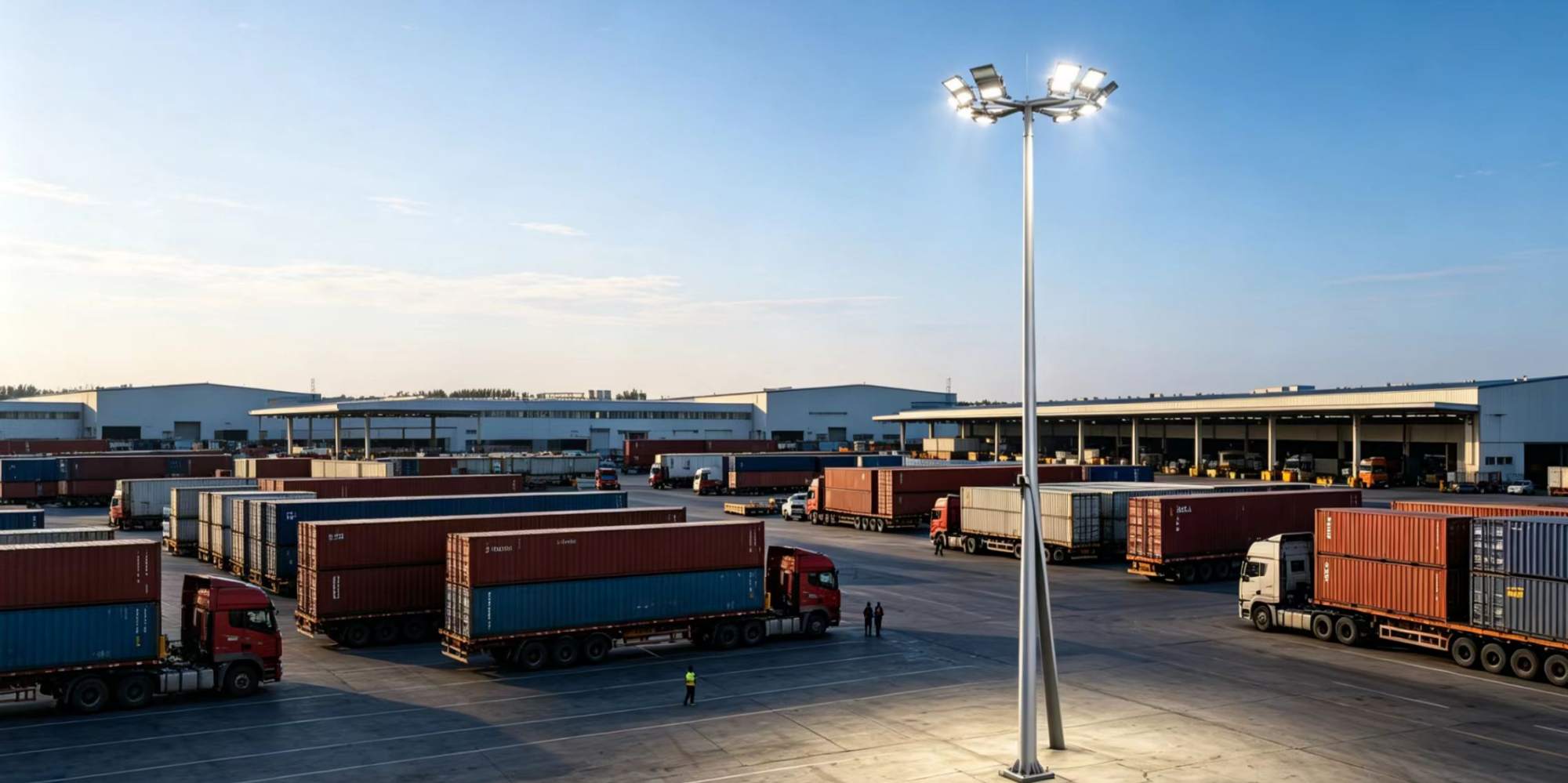
Parking lots generally use high mast lighting poles around 20–25 m, while larger industrial and logistics yards may require approximately 25–40 m. Very large open sites can require taller structures when fewer lighting points are preferred.
The final height depends on the site layout and the areas that need illumination. Industrial yards with containers, equipment, storage racks, or vehicle movements may also require adjustments to avoid blocked or uneven lighting.
High Mast Lighting for Airports, Ports and Large Sports Facilities
Airports, ports, and large sports facilities often require taller high mast poles because of their wide and open coverage areas. Heights of approximately 30–50 m may be considered for large sites, depending on the application and lighting design.
At airports and ports, pole locations must account for aircraft operations, cranes, containers, buildings, and other equipment. Sports facilities also require careful positioning to provide suitable illumination while controlling glare for players, spectators, and cameras.
How to Determine the Right Height for a High Mast Light
Step 1: Define the Area and Required Lighting Performance
Start with the project specification and define the area to be illuminated. The design basis should identify the required illuminance, uniformity, glare limits, and other applicable lighting criteria.
These requirements vary by application. A parking area, highway interchange, industrial yard, and sports facility may all require different lighting performance. The high mast lighting pole height should therefore be selected from the project requirements rather than a fixed height.
Step 2: Evaluate Fixture Distribution and Mounting Requirements
Next, review the number, arrangement, and mounting position of the luminaires. The fixture layout should match the site geometry and the areas that require illumination.
For multi-fixture high mast systems, the mounting arrangement also affects how light is directed across the site. Pole height, fixture position, and aiming direction should be considered together to create an effective lighting layout.
Step 3: Compare Coverage, Uniformity and Pole Height Options
Compare several height options instead of selecting the tallest or shortest pole immediately. A higher pole may cover a larger area, while a lower pole may require more lighting points.
The preferred steel high mast is the option that provides sufficient coverage and uniformity without creating unnecessary glare, spill light, or excessive structural cost. Site layout and pole spacing should be considered as part of the same design.
Step 4: Validate the Design With Professional Lighting Calculations
The proposed height should be verified with professional lighting calculation software. Tools such as DIALux or AGi32 can evaluate illuminance, uniformity, fixture aiming, and light distribution across the actual site layout.
The final design should also be reviewed for structural requirements, including wind loads, pole dimensions, foundation conditions, and equipment loads. Morelux can provide engineering support for high mast lighting pole projects based on the required specifications and site conditions.
Our Steel High Mast Solutions for Different Project Requirements

Morelux provides steel high mast solutions for different outdoor lighting projects, with customization from design through production. Pole height, structure, mounting arrangement, and surface finish can be developed according to project specifications.
Custom Steel High Mast Design for Height, Load and Site Conditions
Each high mast lighting pole can be configured according to the required height, equipment load, site layout, and installation conditions. Morelux supports different pole configurations and mounting options to suit highways, industrial yards, ports, airports, and large outdoor facilities.
Customers can provide drawings, equipment information, or project requirements as the basis for customization. The design is then adjusted to match the intended application rather than relying on a fixed standard configuration.
Engineering Support for Wind Loads, Fixtures and Structural Design
Morelux provides engineering support for custom high mast projects, including wind load assessment, fixture mounting, structural calculations, and design drawings. Engineers review the relevant project inputs to develop a suitable pole structure.
Designs can be prepared according to applicable international standards and project requirements. This engineering support helps ensure that the steel high mast is suitable for its specified equipment, site conditions, and structural loads.
Galvanized Steel Protection and Manufacturing for Outdoor Projects
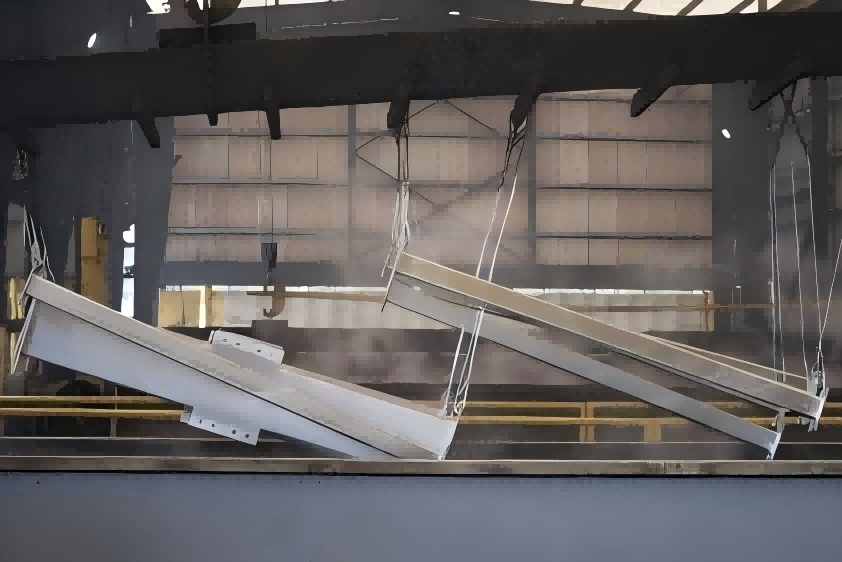
Morelux manufactures high mast poles using processes such as CNC cutting, forming, welding, and surface treatment. Production controls help maintain consistent dimensions and structural quality across custom orders.
Hot-dip galvanizing provides corrosion protection for outdoor steel structures, while powder coating or duplex coating can be specified for additional protection and appearance requirements. These finishes can be selected according to the project’s environment and expected service conditions.
FAQs About High Mast Light Height and Steel Pole Design
What Is the Typical Height Range for High Mast Lighting Systems?
High mast lighting systems commonly range from about 20 m to 40 m, while larger projects may require taller structures. Morelux manufactures high mast poles from 12 m to 45 m, with height customized according to project requirements.
What Is the Ideal Height for a High Mast Light in a Parking Lot?
There is no fixed height for every parking lot. The suitable height depends on the lot size, lighting layout, required coverage, and surrounding conditions, so the final height should be confirmed through a project-specific lighting design.
Does a Taller High Mast Light Always Provide Better Coverage?
No. A taller pole can cover a wider area, but excessive height may increase structural requirements and place light outside the intended area. The best high mast lighting pole balances coverage, uniformity, pole spacing, and project requirements.
What Information Is Needed to Select the Right High Mast Height?
Key information includes the site dimensions, required lighting performance, luminaire quantity and weight, mounting arrangement, wind conditions, obstructions, and maintenance requirements. Morelux can use these project inputs to support pole height, structural design, and foundation recommendations.