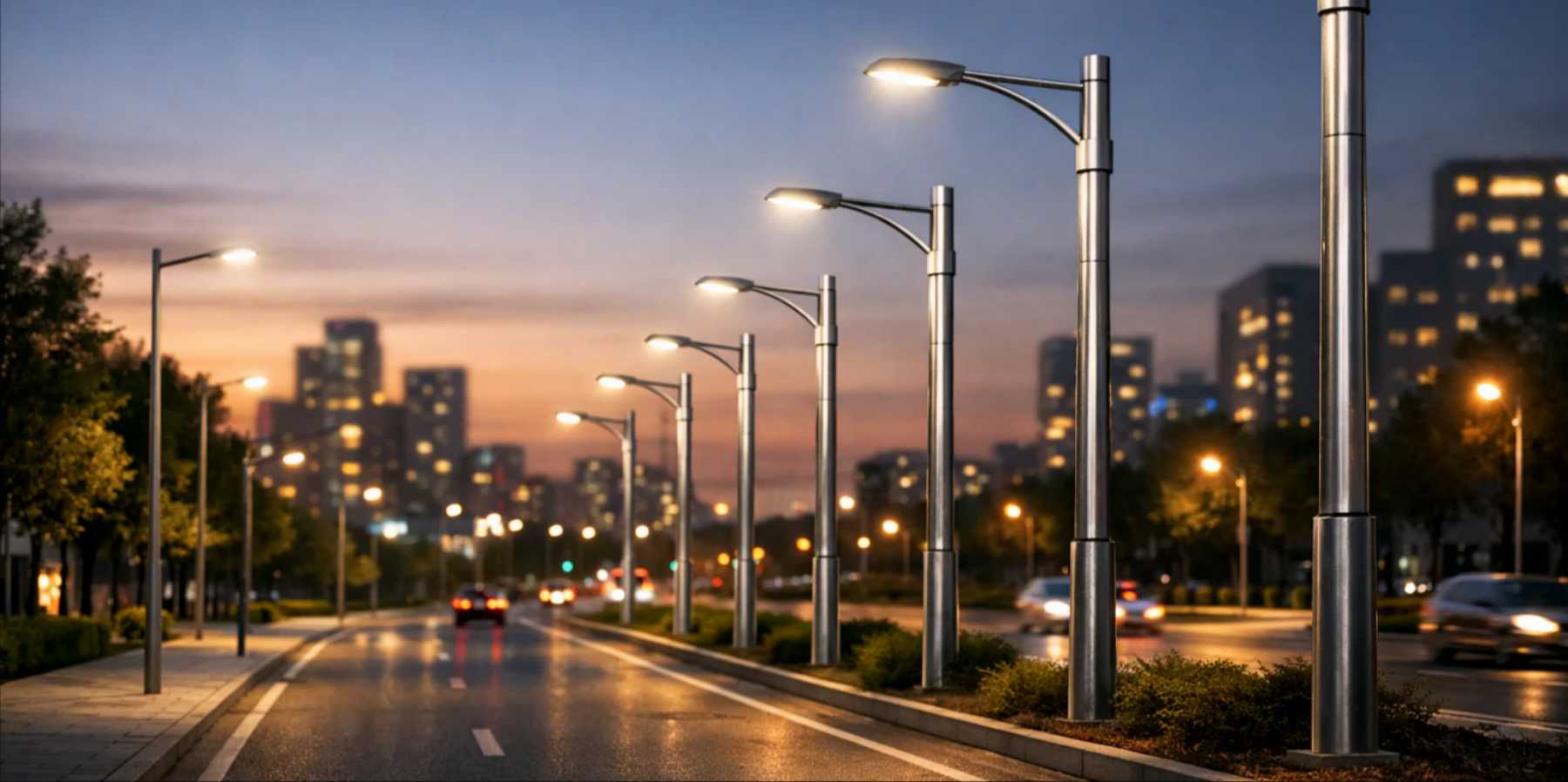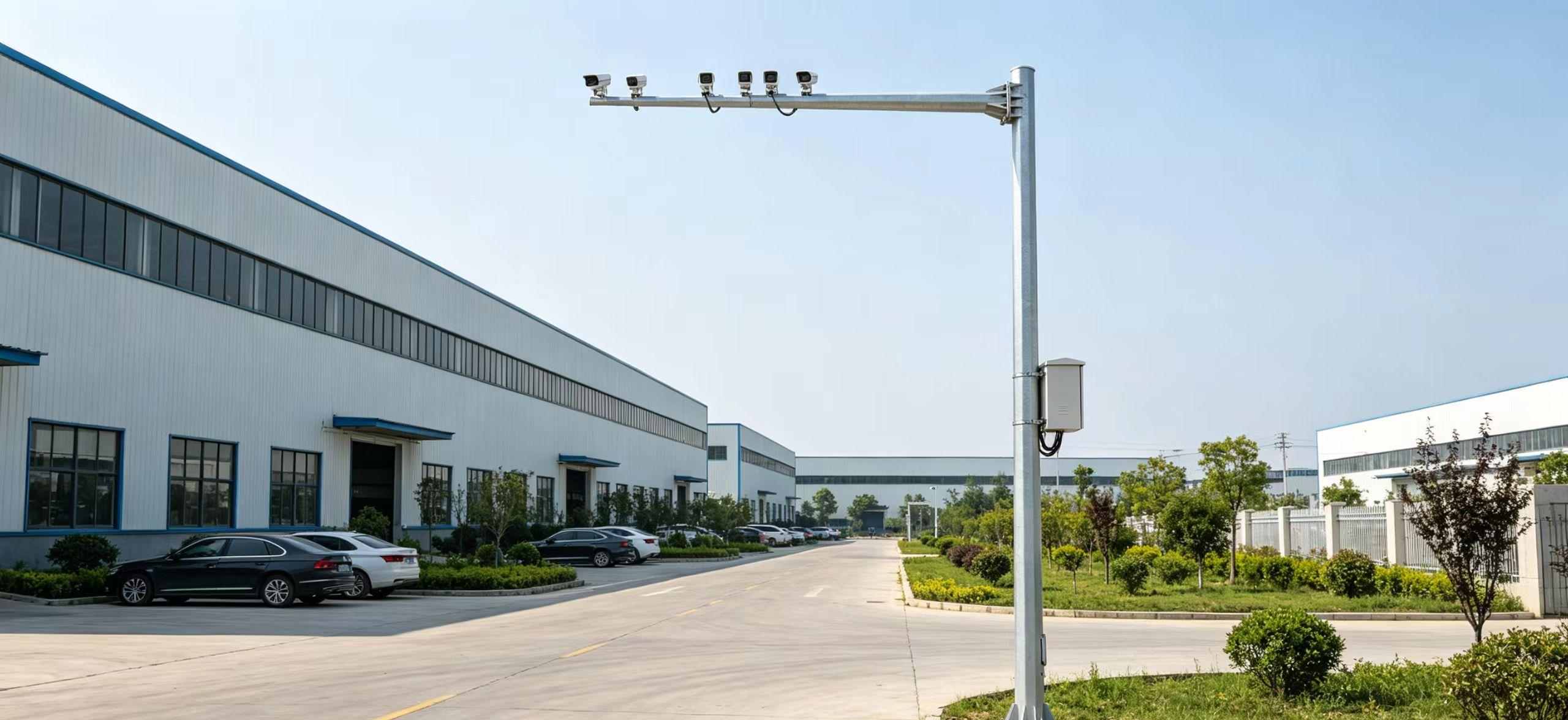

Yes, octagonal steel poles are standard products. Manufacturers build them to well-known industry standards. Several standards groups guide this work. ASTM sets rules for materials and testing. ISO covers international quality requirements. AWS addresses welding practice. AASHTO governs structural supports for highway signs, lights, and traffic signals. These organizations publish specifications for design, manufacturing, and performance. A standard octagonal pole follows set rules for steel grade, dimensions, coating, and load capacity. Buyers can compare products from different suppliers on equal terms. This article explains what is standardized, which specifications matter, and where these poles work best. Engineers and project teams get a clear picture of the requirements behind each pole.
Key Takeaways
- Octagonal steel poles follow well-known standards like ASTM, ISO, and AASHTO to ensure quality and safety.
- These standards set the rules for steel grade, size, coating, and load capacity.
- Hot-dip galvanizing keeps poles from rusting and helps them last longer, especially in tough environments.
- Good design looks at wind speed, fixture weight, and soil conditions to keep the pole stable.
- Customization lets you change the height, taper, and finish while still meeting standard requirements.
Which Standards Apply to Octagonal Steel Poles?
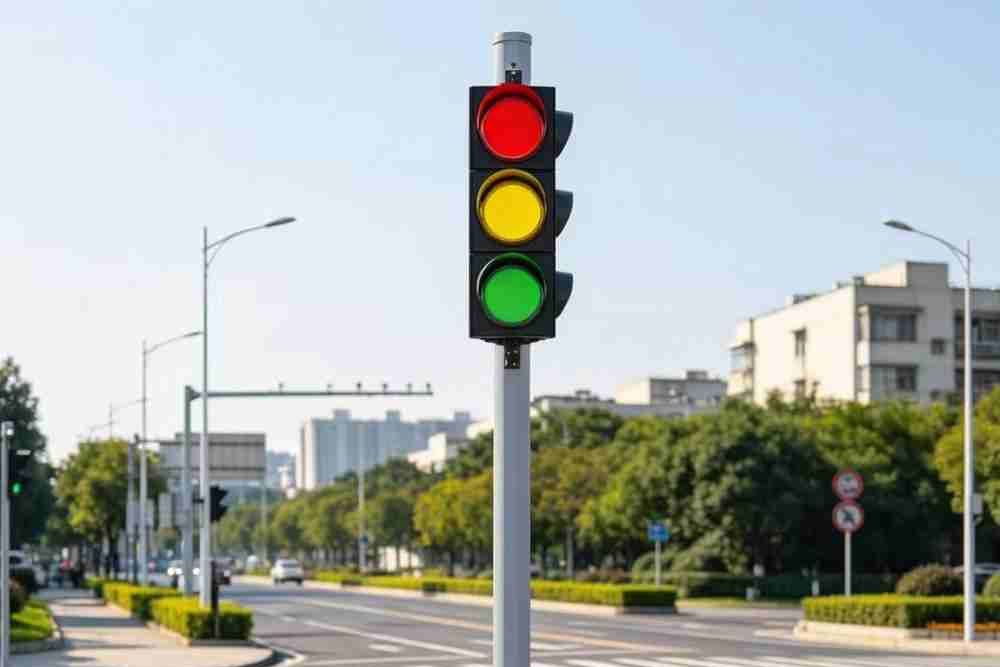
Published specifications define minimum technical requirements for design, engineering, manufacture, testing, inspection, and performance. These documents give buyers and engineers a shared reference point. A pole that meets a named standard has passed defined checks for steel quality, dimensional tolerance, coating thickness, and load capacity. This shared language removes guesswork from procurement.
How International Standards Guide Octagonal Steel Pole Design
Designs can be based on the AASHTO Standard Specifications for Structural Supports for Highway Signs, Luminaires, and Traffic Signals. This document sets out load combinations, deflection limits, and fatigue checks for poles along roadways. Engineers use it to confirm that a pole will carry its own weight, the luminaire, and wind pressure without too much movement.
The eight flat sides of an octagonal pole give it the most structural rigidity. Each flat face works like a stiffened panel. This shape limits torsion and flexure under lateral loads. Civil engineers choose this variant first for high-wind applications because the geometry resists twisting better than a plain round section of similar weight. The flat faces also make fixture mounting and arm attachment easier.
Morelux products are designed and tested to BS EN, AASHTO, AS/NZS, and MS specifications. This range covers European, American, Australian/New Zealand, and Malaysian markets. So a single project can specify octagonal steel poles against the code that governs its site.
Which Regional Codes Apply to Octagonal Lighting Pole Projects?
Regional codes turn broad international principles into local legal requirements. The table below sums up the main references for Europe and North America.
| Region | Applicable Codes / Standards | Scope |
|---|---|---|
| Europe | EN 40 | Lighting columns: structural design, materials, and verification |
| Europe | ISO 1461 | Hot-dip galvanized coating verification |
| Europe | IEC 60598 | Electrical components of luminaires/equipment |
| Europe | CE marking | Applies to integrated electrical equipment (not a bare pole) |
| North America | AASHTO LRFD | Pole calculations for wind, dead load, vibration, and foundation forces |
| North America | ASTM A123 | Galvanized coating on fabricated steel components in relevant markets |
| North America | IEC 60598 | Electrical parts require separate evaluation |
A project team should confirm which code the local authority enforces before finalizing the pole schedule. EN 40 governs structural verification in Europe. AASHTO LRFD governs the load calculations in North America. Coating checks follow ISO 1461 in Europe and ASTM A123 in North American markets. Electrical components fall under IEC 60598 and need separate evaluation from the bare pole. CE marking applies to integrated electrical equipment, not to an unadorned pole. These distinctions matter at the specification stage. A pole that satisfies EN 40 may still need a separate electrical assessment for its luminaire. Clear code mapping prevents costly redesign later.
What Material and Structural Requirements Define Standard Octagonal Steel Poles?
Standard octagonal steel pole specifications cover steel grade, pole height, wall thickness, taper, base plate, and anchor bolts. These parameters must work together to meet structural loads and installation requirements. Final dimensions should be verified through engineering calculations before fabrication.
How Structural Steel Grades Affect Octagonal Pole Performance
Steel grade determines yield strength and load-bearing capacity. MORELUX offers steel poles using grades such as S235, S275, and S355, depending on project requirements. The selected grade should match the required strength, fabrication process, and applicable standards. Proper welding and inspection also help ensure reliable shaft and base plate connections.
How Pole Height, Wall Thickness, and Taper Affect Pole Design
Pole height, wall thickness, and taper determine structural strength, stiffness, and material requirements. Taller poles generally experience greater bending forces and wind exposure, requiring calculations to establish suitable dimensions.
| Parameter | Typical Consideration |
|---|---|
| Pole height | Depends on application and mounting requirements |
| Wall thickness | Selected according to height, loads, and steel grade |
| Taper | Adjusted to distribute material and resist bending |
| Base plate and anchor bolts | Designed to transfer loads safely to the foundation |
These specifications should not be treated as fixed values for every project. MORELUX provides customized octagonal steel poles, with dimensions determined by structural calculations and applicable design standards.
How Eight-Sided Shaft Geometry Supports Lighting Pole Structures
An octagonal steel pole has eight sides that provide a practical structural profile for outdoor lighting applications. Its geometry supports the distribution of bending stresses, while the tapered design can place more material near the base, where bending demands are often higher.
The final performance depends on shaft dimensions, steel grade, wall thickness, wind loads, and fixture configuration. Base plate connections and foundation design must also be coordinated to ensure overall structural stability.
What Corrosion Protection Standards Apply to Octagonal Steel Poles?
Roadway and highway lighting is a main use for these poles. Many designs follow AASHTO rules for highway signs, luminaires, and traffic signals. A pole beside a highway faces rain, road salt, and steady vibration for many years. The quality of the coating decides how long it lasts.
Hot-dip galvanizing is the usual protection. ISO 1461 sets the coating requirements for fabricated steel. For poles made from sections 6 mm or thicker, the standard requires a minimum local coating of 70 μm and a minimum mean coating of 85 μm. ASTM A123 is an accepted alternative in buyer specifications. Galvanizing gives two layers of defense. The zinc acts as a physical barrier. It also protects the steel sacrificially if the coating is scratched.
| Standard / Specification | Scope | Key Requirement |
|---|---|---|
| ISO 1461 | Hot-dip galvanized coatings on fabricated steel | 70 μm local minimum; 85 μm mean minimum for sections ≥6 mm |
| ASTM A123 | Alternative coating standard for steel pole procurement | Accepted alternative to ISO 1461 |
| Duplex coating | Galvanizing plus organic paint for coastal or severe industrial sites | Extends service life by roughly 1.5–2.5 times versus galvanizing alone |
| Third-party inspection | Coating thickness verification (SGS, BV, TÜV, Intertek) | Magnetic gauge measurement at multiple points along the pole |
Service life changes with the environment. A typical maintenance-free span is 30–50 years inland. Severe marine (C5) sites drop to about 15–25 years. Rural (C2) sites can reach 85 years or more. High-wind and coastal areas favor octagonal steel poles because the flat faces resist torsion and flexure. The same shape that handles wind load also suits exposed shorelines, where duplex coating is the recommended choice.
Modern urban lighting projects value the clean geometric look of the eight-sided shaft. It balances structural strength with a tidy appearance along streets and plazas. Buyers should name the coating standard, the minimum thickness, third-party inspection, and duplex coating for severe sites in the purchase specification.
How Are Octagonal Steel Poles Designed for Wind and Fixture Loads?
Wind is the main force in most pole designs. Engineers treat a pole as a non-building structure and follow a clear load path from basic wind speed to final shaft stress. The ASCE 7 Directional Procedure in Chapter 29 covers this category. Figure 29.4-1 gives shape coefficients for round, square, hexagonal, and octagonal sections. So an octagonal shaft is checked with its own coefficient, not a generic one.
How Wind Speed and Exposure Conditions Affect Pole Design
The calculation follows a fixed order:
- Read the basic wind speed from the ASCE 7 maps.
- Set the exposure coefficient from the site category and reference height, plus the topographic factor for nearby hills.
- Compute velocity pressure as 0.00256 times the exposure, topographic, and elevation factors times the square of wind speed, in lb/ft² with wind speed in mi/h. The elevation factor may be taken as 1.0.
- Set the internal pressure coefficient from the enclosure classification.
- Convert velocity pressure to design pressure for the chosen method.
Exposure category matters as much as wind speed. An open coastal site builds pressure faster with height than a sheltered urban lot.
How Luminaire Weight and Projected Area Influence Wind Loads
Fixture data sets the upper limit of the design. Manufacturers publish an effective projected area (EPA) for each luminaire. EPA equals projected area times drag coefficient. Arms, brackets, cameras, and solar frames add their own EPA and weight to the total.
Wind force equals velocity pressure times gust factor times force coefficient times projected area. Position matters too. A load far from the base creates a larger moment. Combined mounted-item EPA is checked against the pole’s allowable capacity at the design wind speed. Round, octagonal, and polygonal galvanized utility poles each suit different duties, and octagonal steel poles remain the common choice for highway lighting. Morelux supports this work with design drawings, structural calculations, wind load analysis, and technical recommendations. It can also customize square, tapered, round, tubular, hexagonal, straight, curved, single or double arm, galvanized, or powder-coated shafts within standard limits.
What Base and Installation Requirements Apply to Octagonal Steel Poles?
The base connection carries every load from the shaft into the ground. A weak base ruins even a good shaft design. So installation rules treat the base plate, the anchor bolts, and the concrete foundation as one system.
How Base Plates and Anchor Bolts Support Pole Stability
The base plate spreads the shaft load across the concrete. Its size comes from the bending moment at the base, which grows with pole height, arm length, and fixture weight. A taller pole with a long double arm needs a bigger plate than a short single-arm unit.
Anchor bolts resist uplift and overturning. Bolt size and quantity must match the base plate and the foundation design. The bolt circle, edge distance, and embedment depth all belong in the approved drawing. Loose tolerances here cause alignment problems on site. The earlier pole schedule should list bolt size and quantity before fabrication begins.
How Foundation Design Depends on Soil and Site Conditions
Soil decides the foundation. Local soil tests should set the foundation depth, diameter, and reinforcement. Different ground conditions demand different designs:
- Soft clay and filled-up land need deeper, wider, and more heavily reinforced foundations than firm native soil.
- Coastal and high-moisture sites call for corrosion-resistant poles to protect the buried section and base.
- Wind load and safety govern the foundation design for octagonal poles, tubular poles, and high mast systems alike.
Custom octagonal pole designs are guided by local soil conditions. This step supports safer, longer-lasting installations. A qualified professional should check the final pole, foundation, and connection dimensions before construction.
Our Octagonal Steel Pole Manufacturing and Customization Solutions
MORELUX is a Malaysian steel pole manufacturer with over 15 years of experience and a 45,000 m² production facility. The company supplies customized octagonal steel poles to infrastructure partners in more than 30 countries, with options for pole dimensions, finishes, and mounting configurations.
How MORELUX Customizes Octagonal Pole Heights and Wall Thicknesses
MORELUX customizes pole height, wall thickness, taper, base plates, brackets, and surface finishes according to project requirements. Wall thickness and taper are determined by pole height, wind loads, fixture loads, and applicable structural standards rather than fixed catalog values.
How Engineering and Quality Control Support Project Specifications
MORELUX supports project requirements through structural calculations, technical drawings, and hot-dip galvanizing in accordance with applicable standards, including ASTM A123 and ISO 1461. Quality checks can cover coating thickness, welding, dimensions, and structural specifications.
For coastal or demanding environments, additional protective coatings can be considered based on exposure conditions. Buyers should confirm applicable standards, inspection documentation, and wind-load requirements before production.
Frequently Asked Questions About Octagonal Steel Pole Standards
Which Standard Applies to Octagonal Steel Lighting Poles?
The applicable standard depends on the project location and application. Common requirements include AASHTO for highway structures, BS EN standards for relevant European projects, and AS/NZS standards for Australian and New Zealand projects. MORELUX can customize octagonal steel poles to meet applicable project specifications.
Are Octagonal Steel Poles Required to Meet ISO 1461?
ISO 1461 applies to hot-dip galvanized coatings on fabricated iron and steel products, rather than the structural design of the pole itself. When galvanizing is specified, buyers should confirm coating requirements and inspection criteria.
Can Octagonal Steel Poles Be Customized for Local Wind Conditions?
Yes. Pole height, wall thickness, steel grade, taper, and base plate design can be adjusted according to local wind speeds and fixture loads. MORELUX provides wind load analysis and structural calculations to support project-specific designs.
What Documents Verify Octagonal Steel Pole Compliance?
Buyers should request material test certificates, structural calculations, technical drawings, galvanizing inspection reports, and relevant quality inspection records. The required documents depend on the project standards and contract specifications.