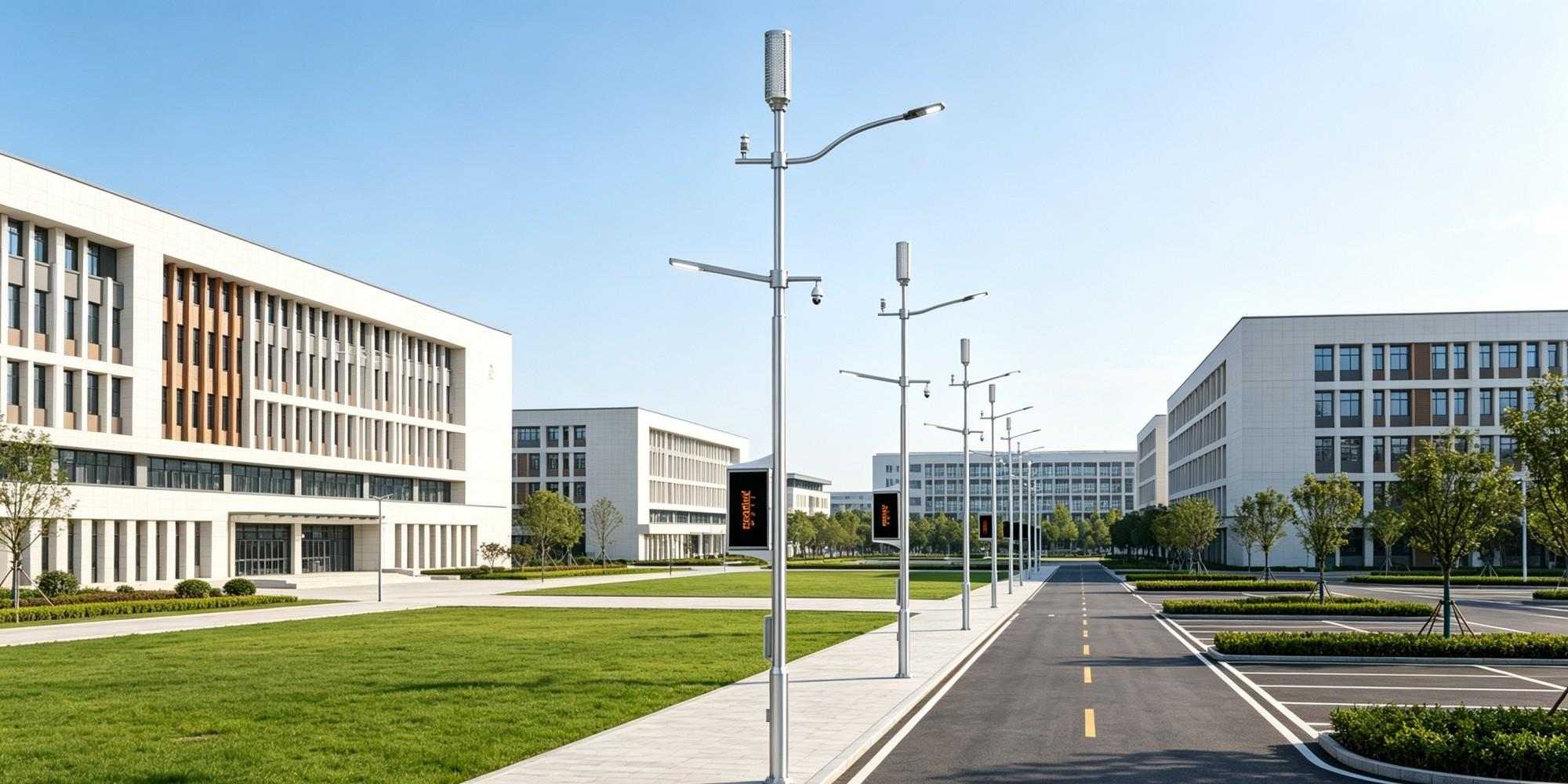
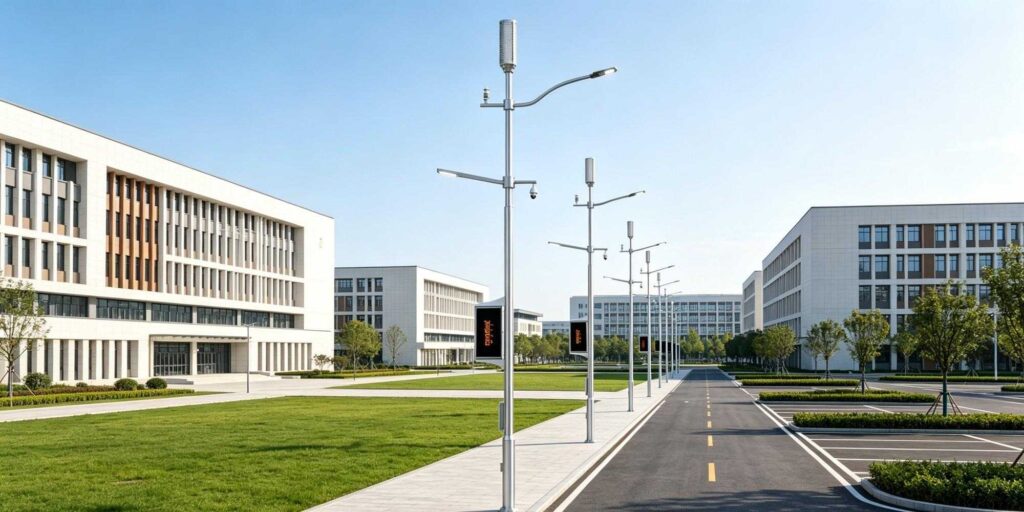
The newest outdoor lighting pole trends for 2026 focus on smart tech, solar power, tunable white light, minimalist and sphere shapes, sustainable materials, and modular systems. These features improve safety, cut costs, and boost curb appeal. The market for smart poles will reach USD 4.0 billion this year. A custom lighting pole from a maker like Morelux can now include cameras and sensors.
Key Takeaways
- Smart light poles use sensors and apps to save energy and make places safer.
- Solar and hybrid poles lower power bills and work in faraway places.
- Built-in LED designs and simple shapes make outdoor spaces look clean and modern.
- Poles that are friendly to the dark sky cut down on light pollution and keep wildlife safe.
- Custom poles made from eco-friendly materials last longer and need less upkeep.
Why Are Outdoor Light Pole Trends Changing in 2026?
Outdoor light pole trends are changing because people want safer streets, lower energy bills, and nicer-looking areas. Smart sensors and motion detection are very important now. These tools make a light pole get brighter when someone walks by and dim when the area is empty. This saves energy and makes the light last longer. Even better, it makes homes and businesses safer. A study by the New York City Police Department and the New York Housing Authority found that areas with better LED lights saw 36% fewer crimes at night.
A study by the New York City Police Department and the New York Housing Authority showed that neighborhoods with improved LED lighting saw 36% fewer crimes during the night.
Modern designs and warm light colors also cause this change. Homeowners and property managers now pick light poles that look nice and feel inviting. Warm white light in the 2700K–3000K range makes a cozy glow. This range shows off buildings, yards, and community spaces. Buyers and renters often like properties in well-lit areas that look high-quality. Better lighting also makes it easier to use spaces at night. Parks, walking trails, and outdoor seats become safe and pleasant after dark. This added use helps the neighborhood feel closer and makes nearby properties worth more.
Savings over time matter too. LED lights use up to 75% less energy than older lights. Less maintenance means you fix and replace things less often. These savings make a property more appealing to buyers and renters. A custom light pole from a maker like Morelux can mix smart controls, warm light, and strong materials. This helps property owners stay up to date with new trends.
Trend 1: Smart Light Poles With Connected Lighting Technology
Integrating Lighting Controls, Sensors, and Connected Functions
Modern smart light poles let you control lights through an app. Owners can create different light settings for each event. For example, warm and dim light works well for a dinner party. Bright and cool light helps with security checks. This makes outdoor areas more helpful.
People can change the light color from warm to cool with tunable white tech. This helps set the right mood for different things. Warm light gives a cozy feeling for parties. Cool light makes it easier to see for work or safety.
Motion sensors are very important in smart lighting. They notice movement and change brightness on their own. Lights stay low when the area is empty. They get brighter when someone or a car comes near. This way saves power and reduces light waste.
San Diego switched old streetlights to smart LED lights. The new ones had motion sensors and cameras. Energy use went down by 60%. Crime rates dropped by 30%. This shows how smart lighting really works.
Morelux makes custom steel poles with smart lighting controls. Their poles work with sensors and connected features. Owners can improve their lighting setup. They get more control over energy use and safety.
Using Smart Poles to Support Connected Outdoor Infrastructure
Smart poles are not just for light. They act as points for communication networks. They can hold 5G gear and Wi-Fi hotspots. That makes them useful for smart city projects.
Smart poles have IoT sensors that gather environmental info. They check air quality, noise, and traffic. City offices use this data to plan. The poles form a network that helps the city run better.
Barcelona changed streetlights to sensor poles. The poles sense motion and change light levels. Cameras watch traffic and spot dangers. This saves power and makes people safer.
Amsterdam has more than 40,000 LED streetlights with sensors. They collect data on air, noise, and traffic. Planners use this info to make better choices. One pole can do many jobs.
Morelux makes custom steel poles for these uses. Their poles can add cameras, sensors, and communication gear. This makes them a smart choice for today’s projects that will last.
Trend 2: Solar and Hybrid Light Poles for Energy Independence
Combining Solar Power With Efficient Outdoor Lighting Systems
Solar-powered lighting poles are a top sustainable trend in 2026. The global solar lighting market is worth USD 11.0 billion this year. It should grow at a compound annual growth rate of 9.8% from 2026 to 2033, hitting USD 21.3 billion. Solar LED street lights already hold a 54.2% revenue share, which shows how fast adoption is rising.
These systems give clear, practical benefits. They offer energy independence and cut grid dependency. Property owners save a lot on electricity costs over time. Solar poles also help sustainability goals and government renewable targets. They work reliably in remote and off-grid spots where trenching is costly or impossible. Maintenance needs are lower than conventional lighting because there are fewer moving parts.
Morelux has proven this approach works at scale. The company delivered 74 solar poles to Singapore, showing reliable performance in real projects. A custom lighting pole from Morelux pairs efficient LEDs with battery storage. This setup gives steady light from dusk until dawn, even on cloudy days.
Using Hybrid Designs for Flexible and Reliable Lighting Supply
Hybrid light poles mix solar power with grid connection. This design gives you the best of both worlds. Solar handles part of the load during sunny periods. The grid covers the rest when sunlight is limited. This keeps brightness steady during long cloudy stretches.
Hybrid systems offer strong installation flexibility. Wiring needs are lighter because solar carries much of the workload. This makes setup easier in parks, industrial zones, and trails. Business parks and retail areas gain because hybrid tech keeps these spaces lit during outages or peak grid demand.
The long-term value is compelling. Initial costs are higher than traditional systems. However, lower electricity use, fewer maintenance cycles, and longer fixture lifespan make hybrid systems financially attractive. Morelux makes these poles with durable finishes. The company supports wholesale and custom orders for diverse projects.
Trend 3: Integrated LED Designs With Cleaner Pole Profiles
Integrating LED Fixtures for Sleeker and More Compact Pole Designs
Integrated LED designs are taking the place of older lights that bolt onto the pole’s outside. Now the light is built inside the pole. This makes a smooth shape with no wires or bulky parts sticking out. Homeowners get a clean look that matches modern yards and driveways.
Recycled aluminum and composite materials are often used for these poles. They resist rust and bad weather. They also last many years without fading. A pole made from recycled aluminum stays strong in rain, snow, and sun.
Morelux gives steel poles a galvanized or powder-coated finish. Galvanizing adds a zinc layer to protect the steel. Powder coating adds a tough color coat. Both stop rust and need little care. Homeowners can choose a finish that fits their property and never paint again.
Reducing Visual Clutter With Modern Lighting Pole Configurations
Visual clutter is a common issue in public spaces and homes. Too many poles, wires, and fixtures make a messy look. New setups use fewer, taller poles to fix this. A 20-foot pole spreads light over a wider area. This wider beam means fewer poles are needed for good light. The result is fewer poles in view and a cleaner outdoor look.
Bollard lights are another way to cut clutter. These short lights work well in busy areas and along paths. They light up walking surfaces without adding tall poles. Parking lot walkways, public plazas, and outdoor spaces all gain from this.
Smart lighting controls also help. Occupancy sensors, timers, dimmers, and adaptive controls cut wasted energy. Lights stay dim when empty and brighten when needed. This keeps comfort high while saving power. Together, these designs make outdoor spaces look neat and work well.
Trend 4: Minimalist and Architectural Light Pole Designs
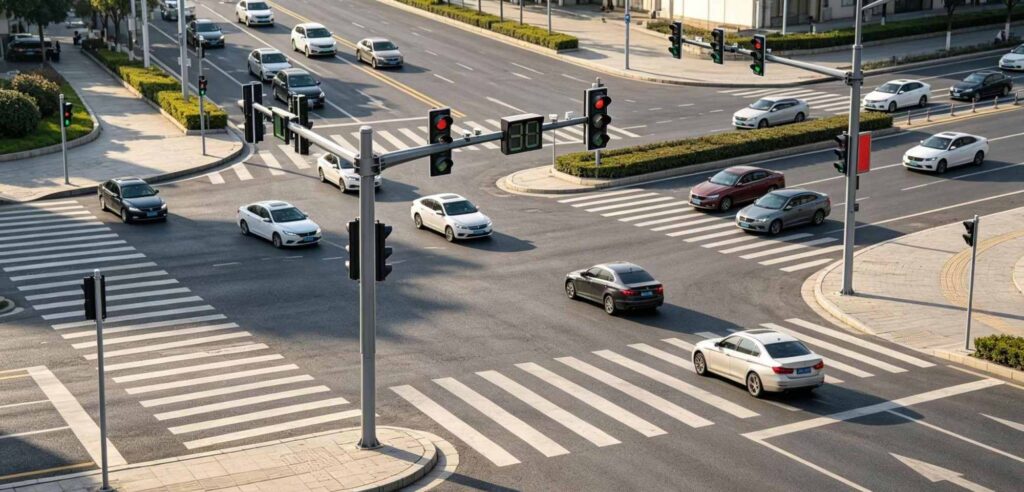
Using Simple Pole Profiles to Complement Modern Urban Spaces
Today’s lighting poles have smooth, simple shapes. These designs let poles fit in with many different places. They don’t look like plain, boring objects anymore. Poles come in lots of colors and finishes. Homeowners can pick a pole that matches their property’s style. Shorter decorative poles are great for gardens and paths. Taller ones work for business and city areas that need wide light.
The shape of the pole matters for how it looks. Designs go from clean modern lines to fancy traditional forms. This choice helps designers pick poles that fit the setting. The table below shows how different styles match different places.
| Pole style | Aesthetic role | How it complements landscapes |
|---|---|---|
| Retro | Adds nostalgic character | Fits historic or classic settings |
| Contemporary | Provides clean lines | Blends with sleek urban design |
| Traditional | Offers ornate interest | Complements formal environments |
| Custom | Matches specific themes | Aligns with project identity |
A well-picked lighting pole does both a useful job and a visual one. It shows off project features and makes things safer. Simple shapes don’t fight with modern buildings. Instead, they make them look better.
Matching Light Pole Design With Contemporary Architectural Styles
Outdoor lamp posts act as building features that add visual charm. They go well with different landscaping themes and building fronts. Styles range from old Victorian to clean modern designs. Materials like cast aluminum, stainless steel, and weather-resistant polymers last a long time. Finishes such as matte black, bronze, or brushed nickel can fit the setting.
Designers follow some best practices when picking fixtures. They mix two to three finishes or metals at most. Contrasting colors like black and brass make a bold look. Similar warm or cool tones like chrome and nickel keep a unified look. At least one trait must match across fixtures.
| Architectural context | Recommended fixture style | Design rationale |
|---|---|---|
| Georgian Revival home | Custom lanterns with fretwork detail | Integrates with architectural style |
| Modern outdoor space | Asian-inspired lanterns on pergola | Creates exotic look with modern comforts |
| Contemporary patio | Outdoor sconce as art | Reinforces modern aesthetic |
Placing them well along walkways creates a warm feel. Morelux makes custom poles with finishes that fit any building style. Good lighting turns a simple lighting pole into part of the home.
Trend 5: Dark-Sky-Friendly Poles With Better Glare Control
Directing Light More Precisely to Reduce Glare and Light Spill
Dark-sky-friendly poles point light down at the ground, not up at the night sky. This cuts glare and skyglow. It also helps wildlife and people stay healthy. Warm color temperatures under 3000K work well because blue light bounces around more in the air. A full cut-off lens stops light from going up. Shields keep light in the area where it should be. Dimming lowers brightness when you don’t need full power.
Special optics make this happen. Narrow beam angles, like a 32° default, keep light aimed at the surface you want. Fixtures with adjustable angles let installers fine-tune where the light points. A built-in laser pointer helps them aim it just right during setup. NEMA distributions like 4H4V, 3H3V, and 2H2V control how far light spreads side to side and up and down. Fixtures set at 0° tilt with strict backlight control work best near building walls.
| Dark-Sky-Friendly Feature | How It Reduces Light Pollution |
|---|---|
| Warm CCT (2000–3000K) | Emits less blue-spectrum light, which scatters easily and adds to skyglow |
| Full cut-off / low-glare (U0) lenses | Direct light downward and prevent upward emission |
| Shields | Block, redirect, or recycle light to keep it within the intended zone |
| Dimming | Matches light levels to actual need and lowers overall pollution |
Supporting Responsible Outdoor Lighting With Better Fixture Placement
Where you put the pole matters just as much as the fixture itself. A well-placed lighting pole keeps light out of the direct view of walkers and drivers. The right height and tilt keep beams on the areas you want to light. Motion sensors and timers stop lights from running when no one needs them. Adaptive dimming setups, like scheduled curfew or traffic-based lighting, cut waste during slow hours.
Modular poles help with this goal. Add-ons like cameras, Wi-Fi extenders, and sensors let one pole do several jobs. Layered lighting design uses ambient, task, and accent layers to add depth without using too much light. Morelux CCTV poles and telecom monopoles show how one structure can hold lighting and communication gear at the same time. This means fewer poles on a site and a cleaner night sky.
Trend 6: Multi-Functional Smart Poles for Connected Public Spaces
Combining Lighting With Cameras, Sensors, and Communication Equipment
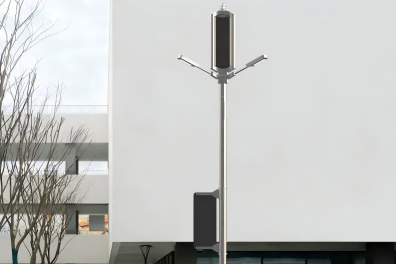
A smart city pole is one platform that holds many technologies. It mixes smart LED lighting with safety cameras, Wi-Fi spots, traffic tools, and environmental sensors. These poles also carry emergency communication systems, digital signs, and 5G small cell gear.
Integrated smart poles join adaptive LED lighting, cameras, LiDAR sensors, and communication hubs. Cameras and LiDAR work as a team to spot vehicles, cyclists, and walkers in any weather. LiDAR gives 3D mapping while protecting privacy. Poles have Wi-Fi hotspots, USB charging, EV charging, SOS buttons, and touch panels. This turns plain intersections into connection hubs.
The safety results can be measured. Brighter lighting cut nighttime outdoor crime by 36%. Smart lighting upgrades led to a 60% drop in serious nighttime crimes. Pedestrian injuries also fell by half.
Morelux makes custom steel poles with special mounting interfaces for CCTV cameras. These brackets match pole design and support fixed, PTZ, and multi-directional setups. Internal cable routing channels keep wiring safe from weather. Morelux also offers wholesale options for large projects.
Designing Poles to Support Multiple Urban Infrastructure Functions
Good design begins with the property layout. Check where people walk, drive, and gather. Then pick solar or wired power based on sunlight access and grid proximity. Choose color temperature to match the setting. Warm light around 2700K to 3000K fits residential areas. Cooler light works for security zones.
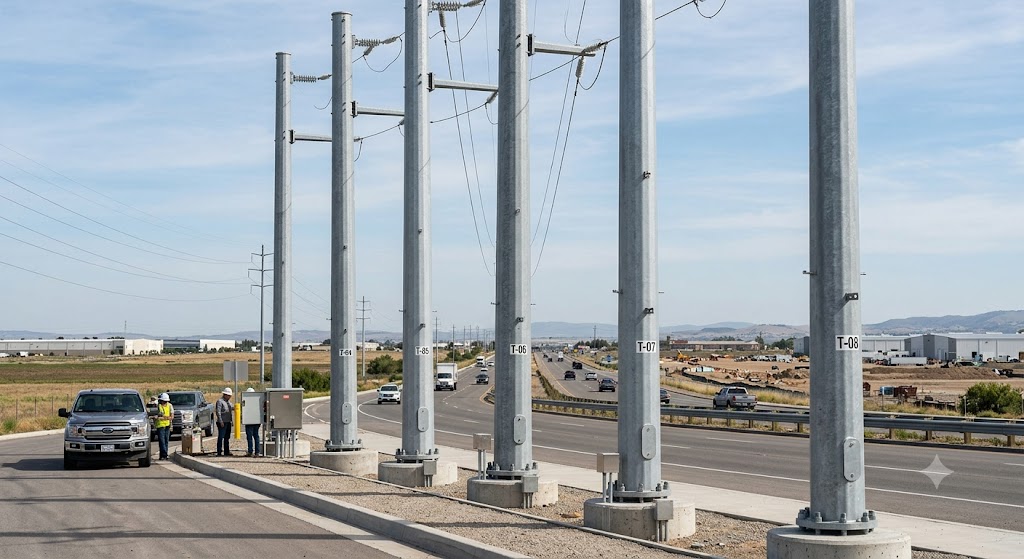
Concrete light poles serve both functional purposes such as providing lighting for safety purposes at night as well as adding visual interest to the urban landscape.
Modern LED street lights use up to 75% less energy than traditional bulbs. This lowers electricity bills and greenhouse gas emissions. Regular maintenance must be planned. Ignoring it can lead to technology malfunctions.
Morelux provides OEM and engineering support for complex projects. A custom lighting pole from Morelux can connect with pedestrian pathways, traffic signals, and public transportation. This creates a unified urban environment.
Trend 7: Sustainable Materials and Long-Life Pole Protection
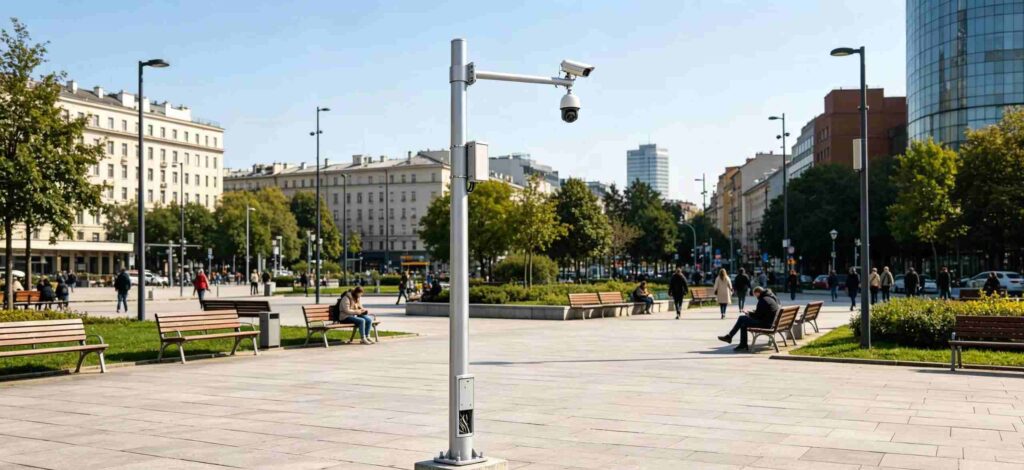
Choosing Durable Steel Poles for Long-Term Outdoor Applications
The material you pick decides how long a lighting pole lasts outside. Aluminum is great for coastal and city spots. It handles tough weather when paired with C4 or C5 corrosion protection and raw anodization. This treatment cuts carbon dioxide emissions during coating. Aluminum also recycles again and again without losing quality. Other green options include reclaimed wood, recycled metals, and composite materials. These lower the carbon footprint of manufacturing and often come from local sources, which cuts transportation emissions. Their durability means fewer replacements and less waste over time.
Galvanized steel gives you another strong option. The zinc coating reacts with air to form zinc oxide, zinc hydroxide, and zinc carbonate. These compounds protect the steel from moisture and oxygen. Hot-dip galvanizing can make poles last up to 75 years. Under normal conditions, galvanized steel can last up to 50 years. The zinc also provides sacrificial protection. If the coating gets scratched, the zinc corrodes first and shields the steel underneath. This makes galvanized poles a smart choice for long-term outdoor use.
Improving Corrosion Resistance With Advanced Surface Protection
Powder coating adds a tough layer that resists UV rays and corrosion. Electrostatic application shields the surface from things that cause rust. Epoxy-based powders stick extremely well to metal. Their polymeric matrix and functional fillers form a barrier that is nearly impossible to pass through. The curing process melts and fuses the powder into a smooth, even finish. This ensures proper adhesion and a durable protective layer.
Preparation matters just as much as the coating itself. Thorough cleaning removes contaminants with alkaline cleaners or mechanical blasting. Chemical conversion pretreatment, such as iron phosphate, zinc phosphate, or zirconium-based formulas, creates a bond between the metal and powder. This step greatly improves corrosion resistance. For outdoor poles, UV-resistant topcoats like polyurethane or polyester may be needed. These topcoats stop degradation while keeping corrosion resistance intact. A custom lighting pole from a manufacturer like Morelux can combine galvanized steel with powder-coated finishes. This dual protection helps poles withstand rain, sun, and temperature swings for decades.
Trend 8: Custom Light Pole Designs for Project-Specific Needs
Customizing Pole Height, Shape, Mounting, and Structural Requirements
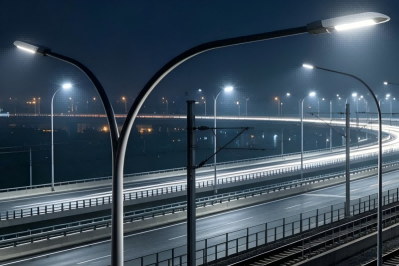
Every project has its own lighting needs. A custom pole can fix problems that standard poles cannot. Pole height controls how far light spreads and how much glare reaches the ground. Flood light poles are usually 20 to 50 feet tall. High mast poles are 50 to 100 feet for big places like stadiums and highways.
Pole shape changes how well it works and how long it lasts. Round poles let you aim lights in all directions and handle wind better. Square poles hold heavy lights in one direction. Coastal areas with strong winds do well with round straight poles. Parking lots with many heavy fixtures often need square poles.
Mounting options give installers careful control. Adjustable brackets let workers aim light right where needed. Single-arm, twin-arm, and top-mounted setups change how the beam lands at night. They also affect how the pole looks during the day. A maker like Morelux can customize these features for any site.
Adapting Light Poles to Different Sites, Loads, and Applications
Site conditions guide every engineering choice. Soil type tells whether to bury the pole or use a concrete base. Rocky ground may need drilling tools for anchors. Soft soils often need bigger concrete bases for stability.
Wind loads matter a lot in storm areas. Poles are built to handle winds from 90 to 150 mph, depending on height and location. Engineers use local weather data and standards like ASCE 7 to design these loads. Frost depth is important in cold places. Foundations must sit below the frost line to stop movement and tilting.
Corrosion protection changes by location. Coastal sites near saltwater need stronger coatings. Morelux offers galvanized and powder-coated finishes for these tough conditions. LED lights now turn 80 to 90 percent of energy into light. This cuts lighting energy use by up to 75 percent compared to older bulbs. A custom pole from Morelux combines these savings with strong build for long-lasting use.
“When you pick a modern landscape lamp pole, you choose tech that improves both function and look. These new ideas help you meet the needs of today’s communities and projects.
Our Approach to Developing Light Poles for Emerging Trends
MORELUX develops steel lighting poles around practical project requirements, including outdoor lighting, infrastructure, structural loads, and long-term use. Custom engineering allows different pole designs to be adapted to changing applications.
Designing Steel Poles Around New Lighting and Infrastructure Needs
MORELUX starts with the project requirements and application. Pole height, shape, arm configuration, material, and surface treatment can be selected according to the intended use.
The engineering process considers factors such as wind load, luminaire weight, Effective Projected Area (EPA), and applicable standards. This helps create steel light poles that balance structural performance with project-specific requirements.
Supporting Different Pole Configurations for Evolving Applications
Different applications require different pole configurations. MORELUX offers square, tapered, round, tubular, octagonal, and hexagonal steel poles, with options for single- and double-arm designs.
The company also provides specialized poles for solar lighting, high mast lighting, stadiums, CCTV, traffic signals, telecom, and smart lighting applications. This range allows pole configurations to adapt to different outdoor infrastructure needs.
Combining Practical Performance With Modern Outdoor Pole Design
Modern light pole design needs to balance appearance with structural performance and durability. MORELUX provides straight, curved, and decorative steel pole designs for projects where visual integration is also important.
Surface options include hot-dip galvanizing, powder coating, painted finishes, and duplex coating systems. Combined with customized dimensions and configurations, these options help create outdoor light poles suited to both functional and aesthetic project requirements.
FAQs About New Outdoor Light Pole Trends in 2026
What Outdoor Light Pole Designs Are Trending in 2026?
In 2026, outdoor lighting projects are increasingly using designs that combine lighting with additional functions and modern streetscape requirements. Smart lighting poles, decorative poles, multifunctional poles, and integrated smart city poles are among the solutions offered by MORELUX.
Steel poles can also be customized in square, round, octagonal, tapered, and other configurations to match different structural and architectural requirements.
Are Smart Features Becoming More Common in Light Poles?
Smart lighting poles are becoming an important part of connected outdoor infrastructure. MORELUX integrates LED lighting with options such as surveillance cameras, Wi-Fi, 4G/5G communication, environmental sensors, digital displays, and emergency communication systems.
These multifunctional poles allow several technologies to share one structural platform and can be customized according to the project’s requirements.
Are Solar Light Poles a Growing Outdoor Lighting Trend?
Solar lighting poles are increasingly used for off-grid and sustainable outdoor lighting applications. MORELUX solar lighting poles are designed to support solar panels, batteries, and LED fixtures, with optional integration of smart devices such as cameras, Wi-Fi, and sensors.
They are suitable for applications where independent solar-powered lighting is required, including parks, recreational trails, and other outdoor areas.
How Do New Light Pole Designs Improve Outdoor Lighting?
New light pole designs improve lighting by giving projects more flexibility in pole height, shape, arm configuration, mounting, and integrated equipment. For example, double-arm poles can support lighting on both sides, while high mast poles provide large-area illumination with tall structures.
MORELUX also provides customized pole dimensions, wall thickness, arm length, base design, and mounting configurations, allowing the steel light pole to be matched to specific lighting and structural requirements.